







Teacher's Day reminiscences: Honoring my teachers and mentors
By Sonny Coloma


ENDEAVOR
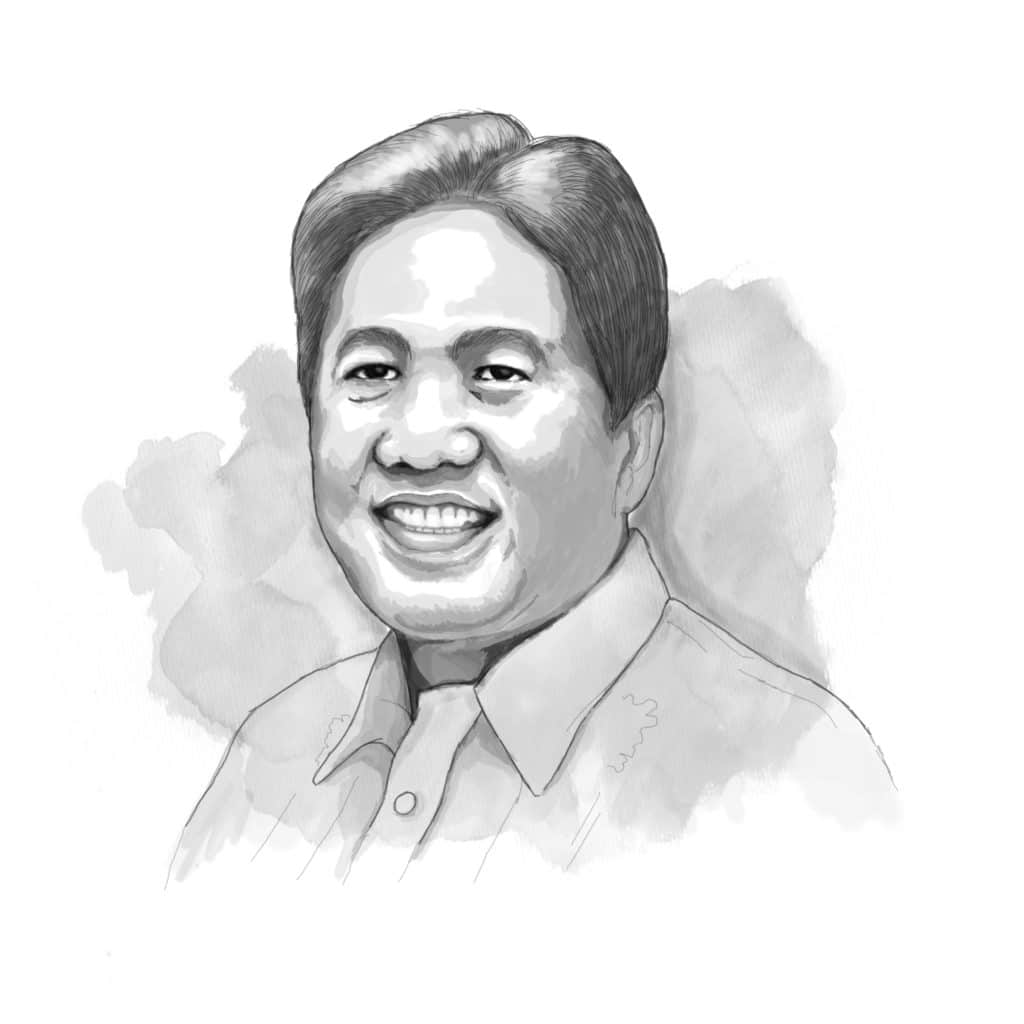
After graduating from college almost five decades ago, I began working as editor of a magazine for bank employees. But it’s my vocation as a teacher that truly defines my work history. I write on the eve of the global observance of World Teacher’s Day that was proclaimed by UNESCO on Oct. 5, 1994.
I had taught college students in St. Scholastica’s College and Colegio de San Juan de Letran and graduate school students at the University of the East – teaching after office hours, between 1974 and 1976. In June 1988, I was accepted to teach at the Asian Institute of Management (AIM) where I earned my MBA degree in 1978. From then until end-August 2016 – a period spanning 28 years – I had served as a professor.
By tradition, a professor holds the highest rank in a college or university; and is “a person who affirms a faith in, or allegiance to something.” It is this latter definition that is more meaningful to me. If “to write is already to choose,” then, indeed, to teach is to affirm or profess what one believes to be true or good.
To contribute my share to good governance, I opted to take sabbatical leaves from AIM to work in government, in the administration of Presidents Corazon Aquino, from 1989 to 1991; Joseph Ejercito Estrada, from 1998 to 2000; and Benigno S. Aquino III, 2010 to 2016.
While memory serves, allow me to recall with you, readers, the teachers who made the deepest imprint on my character.
At age five, my parents enrolled me in St. Mary’s Academy on P. Burgos St., in front of the Pasay City Hall. My kindergarten homeroom teacher was Miss Luz David. On the first day of school, I lost my way after recess. Ms. David pulled me out of the line for grade two and guided me back to our assigned classroom. Equally memorable were my other homeroom advisers and teachers: Mrs. Juanita de Leon, grade one; Ms. Milagros Urbano, grade two; Mrs. Magdalena Palanca Villacrucis, grade three; and Mrs. Rosita Cadiz Mauleon, grade four.
In grade five, I transferred to Don Bosco Technical Institute in Makati, which was closer to our residence in Barangay Pio del Pilar. I could walk to school, or take a short jeepney ride, then walk three short blocks to the campus on the corner of Pasong Tamo (now Chino Roces street) and Pasay Road (now called Arnaiz street).
Our grade five class adviser was Mr. Olympio Lozano, who taught Language and Reading, with a Cebuano accent. In grade six, it was Ms. Tita Turiano from Colegio de Santa Isabel, Naga City, a Math teacher. My high school homeroom advisers were Mr. Antonio Caspellan, first year, an English teacher; Mr. Valentin Nepomuceno, second year, a Pilipino teacher; Mr. Regino Apostol, third year, a Chemistry teacher; and Mr. Florencio Fajardo, fourth year, an English teacher.
Don Bosco also offered technical-vocational courses in drafting, machine shop, electronics, and printing. One of our favorite teachers was Mr. Eusebio Queyquep, Jr., who had a unique surname and humorous vein. Equally memorable was our Pilipino teacher and assistant principal, Mr. Basilio Rufino, who did a daily commute using the PNR train, from Calumpit, Bulacan to the Pio del Pilar station near South Superhighway – then walked to the Don Bosco campus; and our History professor, Mr. Andres Seno, who taught us about Bosnia and Herzegovina long before the conflict there erupted and gained worldwide coverage via CNN. Our Physics teacher was Mr. Ruben Nimo and our Trigonometry teacher was Mr. Mauro Gapuz, who hailed from Bauang, La Union, hometown of my Lolo Valentin Gapuz Balagot, my mother’s father.
During my college years at the University of the Philippines, I had the good fortune of being taught by excellent teachers. Dr. Herminia Yap, our English professor, patiently drilled us on the fundamentals, giving frequent quizzes where I could not get a grade higher than 2.0 (around 85 percent). But I was overwhelmed with joy after getting my class card with a final grade of 1.0. It turns out that her method was to develop patience, persistence, and determination to learn. Our Spanish professor was Mrs. Angustias Bello, the mother of our Speech I professor, Yolanda Belo-Pajaro, from whom I gained confidence in extemporaneous public speaking.
In the political science department, among my professors were Clarita Carlos, who served briefly as National Security Adviser in the early phase of the current Marcos administration; and Christopher Gotanco, who opted for a career shift to professional management after obtaining an MBA degree from AIM. Ms. Solita Collas-Monsod was my professor in Economics 11 that was taught at the AS theater to nearly a hundred students.
I am also humbled by the realization that I have become the teacher of been my teachers’ children. Among them is Francisco ‘Jay’ Bernardo III, a TOYM awardee who is also a recipient of the Ernst & Young Entrepreneur of the Year Award. He was my student at the MBA program and, like his father Jun who as dean hired me as an AIM professor, became, too, my fellow faculty member.
My days and years as an AIM Professor were highlighted by spirited faculty meetings that saw the genesis and evolution of many pathfinding academic programs, such as the Master in Development Management (MDM) and Master in Entrepreneurship (ME) programs; and the inception of the Washington SyCip Policy Center which we deliberated on during a faculty conference at Camp John Hay in Baguio City. AIM’s drive to become a center for development management was initiated by its first High Distinction graduate, Eduardo A. Moratò, Jr., who served later as dean.
To all my esteemed teachers: Maraming salamat po! Thanks for selflessly sharing knowledge and wisdom that have enabled me to make a lifelong commitment to being a teacher and manager of the learning process.
May your tribe increase!