






 Philippines
National
Health experts call for collaborative efforts, heightened awareness amid rising dengue-related deaths
Philippines
National
Health experts call for collaborative efforts, heightened awareness amid rising dengue-related deaths
Health experts call for collaborative efforts, heightened awareness amid rising dengue-related deaths
Concerns raised as PH ranks third globally in dengue-related deaths


The Department of Health (DOH) revealed that the Philippines faced a perplexing situation in which the country saw a decrease in overall dengue cases but a notable increase in fatalities due to mosquito-borne illness.
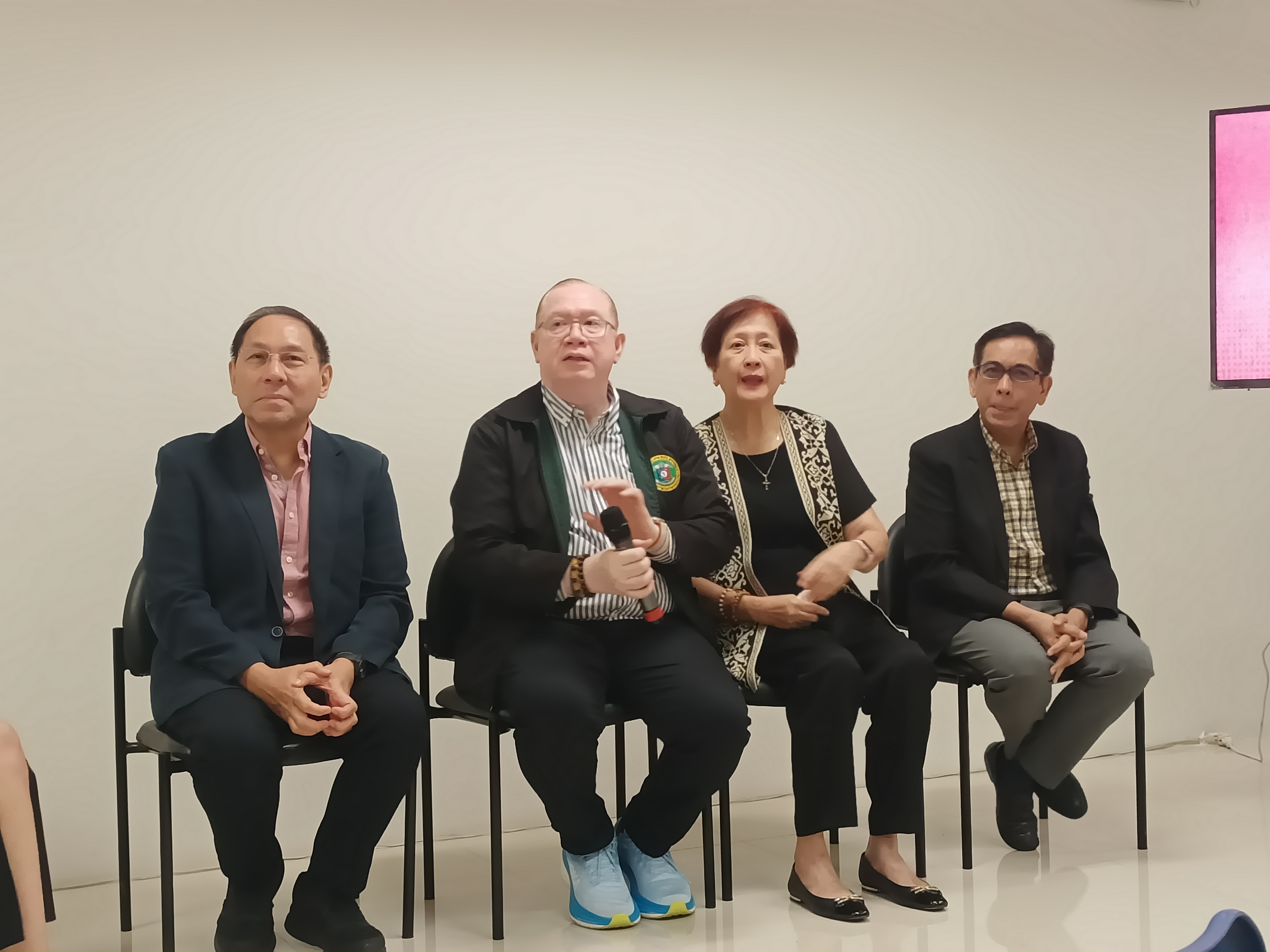
This statement was made during the "Dialogue on Dengue: Protecting Our Children from the Epidemic" conference on Friday, Feb. 2, by health experts led by DOH Undersecretary Dr. Enrique Tayag.
As stated by Tayag, the Philippines ranked third globally in terms of dengue-related deaths, sparking concerns despite a significant drop in nationwide dengue cases.
"Hindi namin binibilang 'yung actual na bilang ng mga namatay, ang aming pang sukat dito ay ang case fatality rate at ilang porsyento ang namatay dahil sa dengue (We do not count the actual number of deaths; our measure here is the case fatality rate and the percentage of those who died due to dengue)," Tayag said.
He said that although there was improvement, the high incidence of dengue-related deaths remains a critical issue, especially among children.
Tayag highlighted that dengue became one of the indicator diseases for the DOH because it is an illness where not only the DOH takes action but all Filipino citizens are involved.
"Sapagkat ang dengue, bagamat sinasabi natin ay dala ng lamok, kung bakit naman ito bumababa at tumataas, madaling sabihin natin ang ginagawa ng DOH na four strategy, pero ito ay may kinalaman din talaga sa nagci-circulate na zero type or strain (Because dengue, although we say it is brought by mosquitoes, it's the dengue virus. Why it goes up and down, we can easily say it's related to what the DOH is doing with the four strategies, but it also truly involves the circulating zero type or strain)," he said.
Tayag explained that there are four types, namely types one, two, three, and four, and anyone can develop all four. With each infection, there is a risk of a person being hospitalized.
"Halimbawa nakagat ka ng lamok, at ang nakuha mo ay type one, at sa pagdaan ng buwan, at taon type one ulit ay hindi ka na magkakasakit kasi pareho nang type one (For example, if you get bitten by a mosquito and acquire type one, and as the months and years pass, if you get type one again, you won't get sick because it's the same type one)," he explained.
He also added that the risk increases only if all four types circulate simultaneously, meaning a person may experience dengue repeatedly.
He urged the public to remain vigilant and adopt preventive measures, as dengue remains a major health concern.
Moreover, the Dean and Center Director of the College of Public Health, University of the Philippines Manila, Vicente Y. Belizario, Jr., emphasized the integrated approach required for dengue prevention and control, involving not just the DOH but the active participation of communities.
He stressed the need for effective communication and community engagement in raising awareness.
"Tungkol sa pagkamatay dulot ng dengue, pwedeng maiwasan 'yan through early diagnosis and treatment, ito ay mama-manage (Regarding deaths caused by dengue, that can be avoided through early diagnosis and treatment; it will be managed)," Belizario said.
Furthermore, the breeding grounds of mosquitoes should be given attention after rain, and during El Niño, when rainfall is insufficient, people store water, creating potential breeding sites for mosquitoes.
"Kinakailangan may mga takip 'yan. Mahalaga rin talaga ang communication sa public health at ang tawag dito ay health promotion (Covers are needed for those. Communication in public health is also really important, and this is called health promotion)," he said.
Belizario also appealed to the media to raise awareness about it because each person has a role in raising awareness to prevent dengue.
If someone has dengue, he said that the DOH's goal is early diagnosis and treatment.
On the other hand, highlighting preventive measures, the former Dean of the College of Public Health at the University of the Philippines Manila and the vaccine expert, Nina Gloriani, emphasized the importance of an "integrated" approach involving collective efforts and advocated for the addition of vaccination to the preventive measures against dengue.
"Hopefully, we can add vaccination because developments are happening, and as scientists, we look at what's happening all over the world to address preventive vaccines for diseases," said Gloriani.
She added that besides vaccination, surveillance is also needed, and efforts using technology are necessary to monitor what is happening.
Moreover, in response to concerns about the age-related severity of dengue, Vice President of the Philippine Federation of All Professional Associations, Benito Atienza, clarified that the illness does not discriminate based on age and urged the public to be aware of its viral nature.
"Walang pinipiling edad ang dengue at hindi ito pambata lang. Mayroong mga doktor din na namatay sa dengue kasi nagkulang lang sila sa early diagnosis, 'yun pala dengue na, ang akala nila ay sa bata lang (Dengue does not discriminate based on age; it's not just a disease for children. There are doctors who have also died from dengue because they lacked early diagnosis; they thought it was only for children)," Atienza said.
He emphasized the need for early diagnosis and complete blood count monitoring.
He also mentioned that the media can encourage Filipinos that dengue prevention is a multisectoral effort, with health centers present, emphasizing the importance of communication and community involvement.
"Usually, many children contract dengue because it's a daytime-biting mosquito, especially in schools. That's why we encourage children to wear pants and long sleeves in white because mosquitoes on dark clothing may go unnoticed," said Atienza.
He also emphasized the importance of those with fever seeking medical check-ups, as the origin of the fever is often unknown.
Atienza pointed out that children should be aware of dengue, and parents should educate them on how it is contracted and prevented so that they are aware and can take precautions.
"The most important thing if there's a fever is to seek medical attention immediately because, remember, dengue worsens when the fever is gone. We don't just look at the platelet count but also the overall condition of the child," he noted.
Atienza also added that children with a fever should not become dehydrated; they should drink water and consult a doctor because when the fever subsides, it becomes more critical for those with dengue.
"Ang mga bata dapat umihi ng every six hours, 'pag hindi umihi after six hours, paniguradong dehydrated ito (Children should urinate every six hours; if they don't urinate after six hours, it's a sign of dehydration)," he said.
Atienza also provided practical tips for parents, urging them to educate children about dengue prevention and ensuring they seek immediate medical attention if symptoms arise.
As the Philippines grapples with this alarming trend, health experts are calling for a united effort, combining awareness, preventive measures, and community involvement to curb the rise in dengue-related fatalities.