







ACRES to work with DHSUD vs scammers


CEBU CITY – An organization of accredited real estate salespersons assured that it will work closely with the Department of Human Settlements and Urban Development (DHSUD) to prevent the proliferation of “colorum” real estate developers and unlicensed agents across the country.
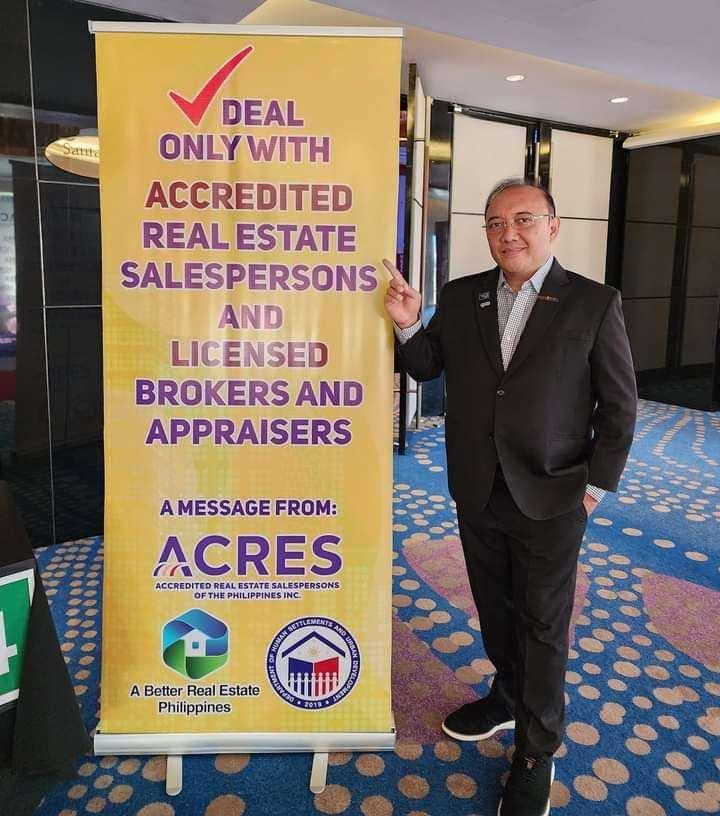
ANTHONY Leuterio, president of the A Better Real Estate Philippines (ABREP), warns the public against real estate scammers during the ACRES Summit on Wednesday, August 16, in Cebu City. (Contributed photo)
The Accredited Real Estate Salespersons of the Philippines (ACRES) made the assurance during the ACRES Summit dubbed as “Responsible Real Estate Marketing; For Sustainable Public Trust” in a hotel here on Wednesday, August 16.
During the summit, lawyer Carla M. Colaljo from DHSUD urged ACRES members to help minimize if not eradicate the existence of real estate “scammers” who victimize property buyers, including Overseas Filipino Workers (OFWs).
ACRES national president Chris Malazarte said that as the economy recovers and the prospects for real estate in the Philippines are brisker than ever, fraudulent real estate dealers, including pseudo groups that posed as developers to victimize buyers, are also expected to rise.
Due to lack of manpower, the government led by DHSUD “can only do so much” to curb or eliminate the presence of colorum players.
With this, ACRES will encourage its thousands of members around the Philippines to report and monitor activities of unlicensed agents and brokers as well as colorum developers.
With an estimated of over 50,000 unlicensed real estate salespersons selling properties without a license, or worse “scam” buyers, there is a need for stakeholders to act now in collaboration with the government, said Dr. Eduardo Ong, chairman of the Philippine Federation of Real Estate Service Professionals.
Likewise, Anthony Leuterio, president of the A Better Real Estate Philippines (ABREP), warned that with the expected boom in real estate next year, there is a tendency for the number of colorum players to also rise.
Leuterio said the number one target of scammers are OFWs whose huge share of remittances are invested in real estate.
“If there is a demand, there might be people who will take advantage," Leuterio noted.
ACRES data showed that the biggest buyer of real property in the Philippines are OFWs with a P700-billion market value a year.
This is some 30 to 40 percent of their remittances to the country.
Historically, Leuterio said OFW buyers are easy prey for scammers, although there are also a lot of buyers who are not residing abroad who are also victimized.
“ACRES is here to educate the public and encourage those who have no license to take the Professional Regulations Commission's new entry-level training,” Leuterio said.