






 Technews
Gogolook and Scam Watch Pilipinas forge alliance to spearhead scam-free Pilipinas initiative
Technews
Gogolook and Scam Watch Pilipinas forge alliance to spearhead scam-free Pilipinas initiative
Gogolook and Scam Watch Pilipinas forge alliance to spearhead scam-free Pilipinas initiative
Gogolook partners with Scam Watch Pilipinas, combining technology and grassroots efforts to empower Filipinos in the battle against scams and cyber fraud
By Len Amadora


At A Glance
- Gogolook collaborates with Scam Watch Pilipinas to combat scams and fraud in the Philippines through its anti-scam app, Whoscall.
- Whoscall has significantly increased its user base in the Philippines since its launch, highlighting the demand for effective scam protection measures.
- Scam Watch Pilipinas, supported by Truth360 led by Jocel De Guzman and Manila Bulletin with Art Samaniego, focuses on educating Filipinos about cyber fraud.
- The partnership aims to empower Filipinos with tools and knowledge to identify, report, and prevent cyber fraud, supporting the mission for a Scam-Free Pilipinas.
- High-level representatives from both organizations, including Manwoo Joo and Mel Migrino from Gogolook, and Art Samaniego and Jocel De Guzman from Scam Watch Pilipinas, have officially signed an MOU to formalize their collaboration.
Gogolook, a leading TrustTech company in the region, recently entered the Philippines by launching its flagship service, Whoscall. It has officially joined forces with Scam Watch Pilipinas to develop a comprehensive approach to empowering Filipino citizens to combat scams and fraud in the country. This collaboration marks a significant milestone in the mission for Scam-Free Pilipinas, bringing together Gogolook's expertise and Scam Watch Pilipinas's grassroots initiative.
Gogolook entered the country in August 2023 and has seen overwhelming success with its pioneer service, Whoscall. The anti-scam app has grown its active users by more than 30 times since its launch, proving a growing need for applications that provide added security and safety measures against malicious phone numbers and links for free. Whoscall, developed by Gogolook, a listed company in Taiwan, is designed to identify incoming calls, detect scam or harassment numbers, filter spam text messages, and scan malicious links, providing users with a robust defense against fraudulent activities. It has a significant presence in the region, particularly Taiwan, Thailand, and Malaysia.
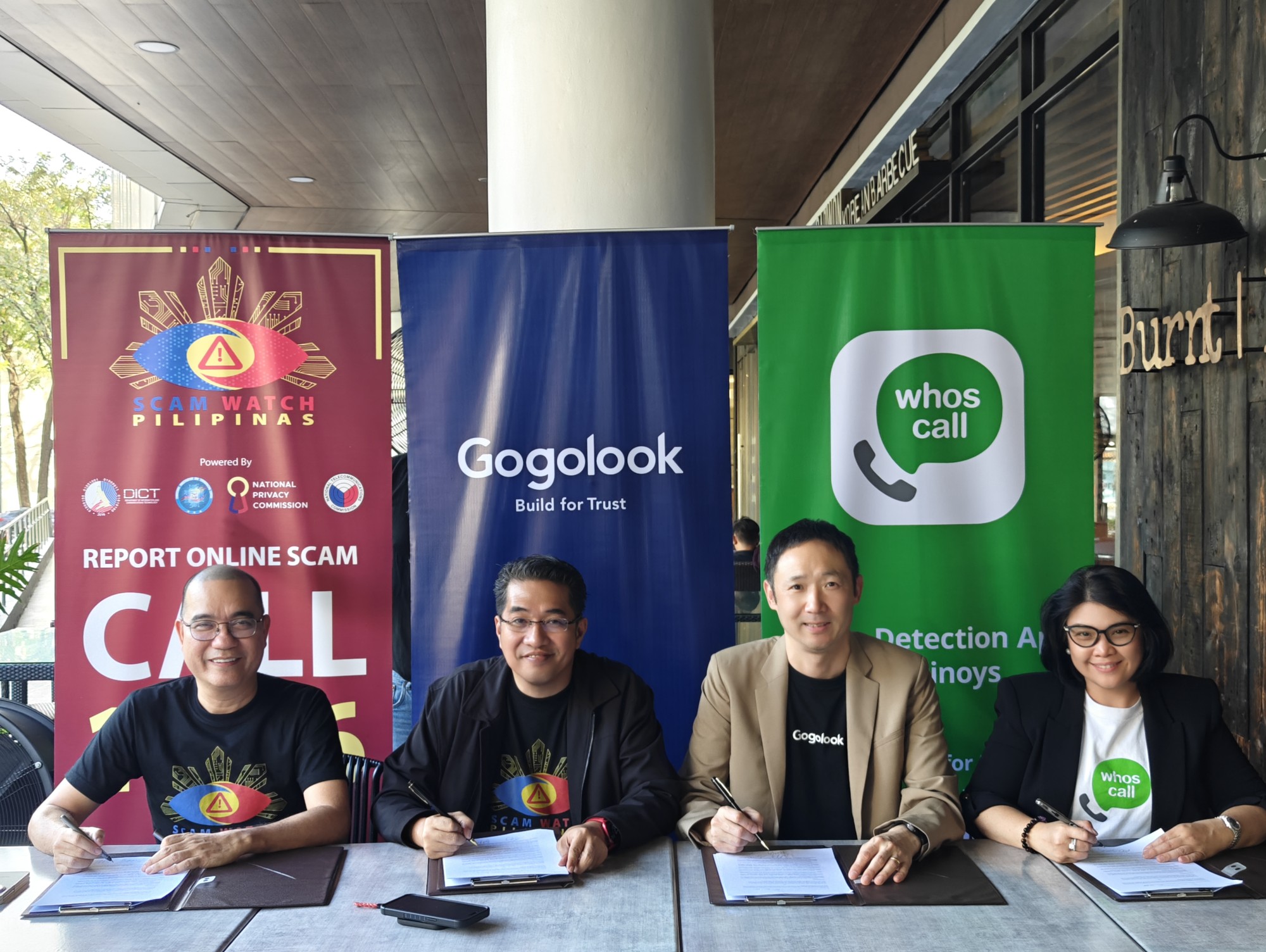
Scam Watch Pilipinas, the national citizen arm of the Philippine government, operates as a private initiative dedicated to educating Filipinos about cyber fraud. Initiated by Truth360, founded by PR expert Jocel De Guzman and journalist Art Samaniego, the group relies on private funding to spearhead its mission, emphasizing the importance of community engagement in the fight against scams, bringing the power Philippine citizens to aid in the fight against the growing threat of scams and fraud.
Through Whoscall, Gogolook and Scam Watch Pilipinas will collaborate to empower users to take control of their communication environment. With its ability to identify and block scam calls, Whoscall aligns perfectly with Scam Watch Pilipinas' objectives of educating Filipinos about cyber fraud, promoting vigilance against scams, and encouraging them to take action against them, starting with equipping themselves with protection tools and being proactive in reporting any suspicious numbers and links to the proper channels.
Manwoo Joo, Gogolook's COO, expressed enthusiasm about the partnership, stating, "Gogolook is honored to join forces with Scam Watch Pilipinas in the campaign for a Scam-Free Pilipinas through its anti-scam application Whoscall. Our commitment to identifying scam calls, messages, and links aligns seamlessly with the goals of Scam Watch Pilipinas, and together, we aim to empower Filipinos to take an active stand for a safer digital environment for all."
Mel Migrino, Gogolook's Country Representative for the Philippines and Regional Director for Information Security and Alliances, emphasized the importance of the collaboration. "Gogolook's partnership with Scam Watch Pilipinas enables us to work together in empowering Filipinos to take action, whether it be reporting through the Whoscall application or contacting the CICC hotline 1326. Our joint efforts can also improve users' security posture and cyber awareness through Whoscall."
Jocel De Guzman, Founder of Truth360 and Scam Watch Pilipinas commended the partnership, stating, "Scam Watch Pilipinas is delighted to have Gogolook on board, bringing in the effective anti-fraud solution Whoscall. We need to have a more holistic approach against scammers. This collaboration strengthens our resolve to combat scams and fraud by equipping Filipinos with the means to identify, report, and prevent cyber fraud. Together, we can build a united front against scammers and create a safer digital landscape for all."
CICC (Cybercrime Investigation and Coordinating Center) Undersecretary Alexander K. Ramos praised the collaboration between the two parties. The CICC fully supports both to help protect the country against the growing issues of cyber fraud and scams.
As part of this partnership, Gogolook, through Whoscall and Scam Watch Pilipinas, will actively engage with the community through various channels, including social media, educational campaigns, and collaborative initiatives to ensure that every Filipino is empowered to contribute to achieving the vision of a Scam-Free Pilipinas.