







Over 100 fake PWD IDs discovered in Bacolod


BACOLOD CITY – More than 100 fake Persons with Disabilities (PWDs) identification (ID) cards were discovered in this city, said Alma Gustilo, officer-in-charge of the Department of Social Services and Development (DSSD), based on their recent monitoring.
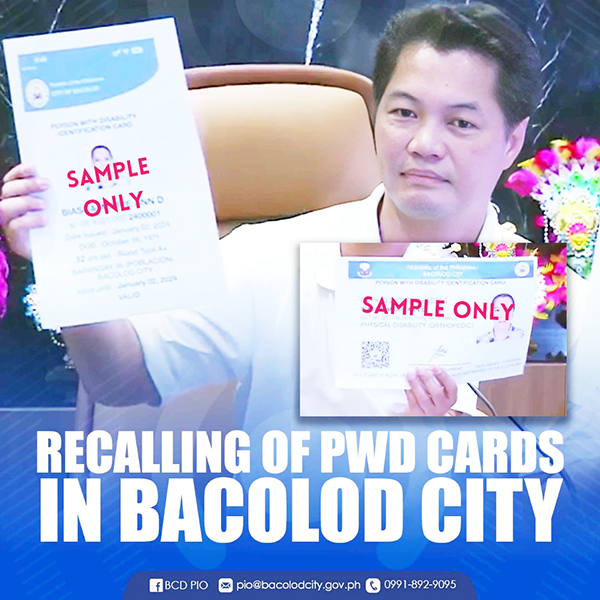
Gustilo said they will have to check if these are being produced here, adding that fake PWD IDs were printed on a different kind of paper, the PWD numbers are mixed up, and the encoded type of disabilities are wrong.
Mayor Alfredo Abelardo “Albee” Benitez has ordered the recall of 12,000 existing PWD IDs here to ensure data security with the use of the QR code system and replacement with PVC cards.
READ: https://mb.com.ph/2024/2/5/bacolod-recalls-12-000-pwd-i-ds
Gustilo said that the figure has probably not been updated as based on their database, only 7,000 PWDs have registered here.
She said that she will ask Benitez if they can extend the use of the existing PWD IDs and booklets in business establishments until February 29, pending the processing of their new PWD ID cards.
Gustilo said the city will issue a temporary PWD certificate with validity.
PWDs can process their new PWD ID cards at the Government Express Office at SM City Bacolod and Bacolod Express Service Office at the Ayala Malls Capitol Central, she added.
For bedridden PWDs, Gustilo said that they will tap the PWD presidents in barangays to assist them in getting a new PWD ID card.