






 Philippines
Metro Manila
Bulacan farmer loses half of palay harvest to hungry Maya birds
Philippines
Metro Manila
Bulacan farmer loses half of palay harvest to hungry Maya birds
Bulacan farmer loses half of palay harvest to hungry Maya birds


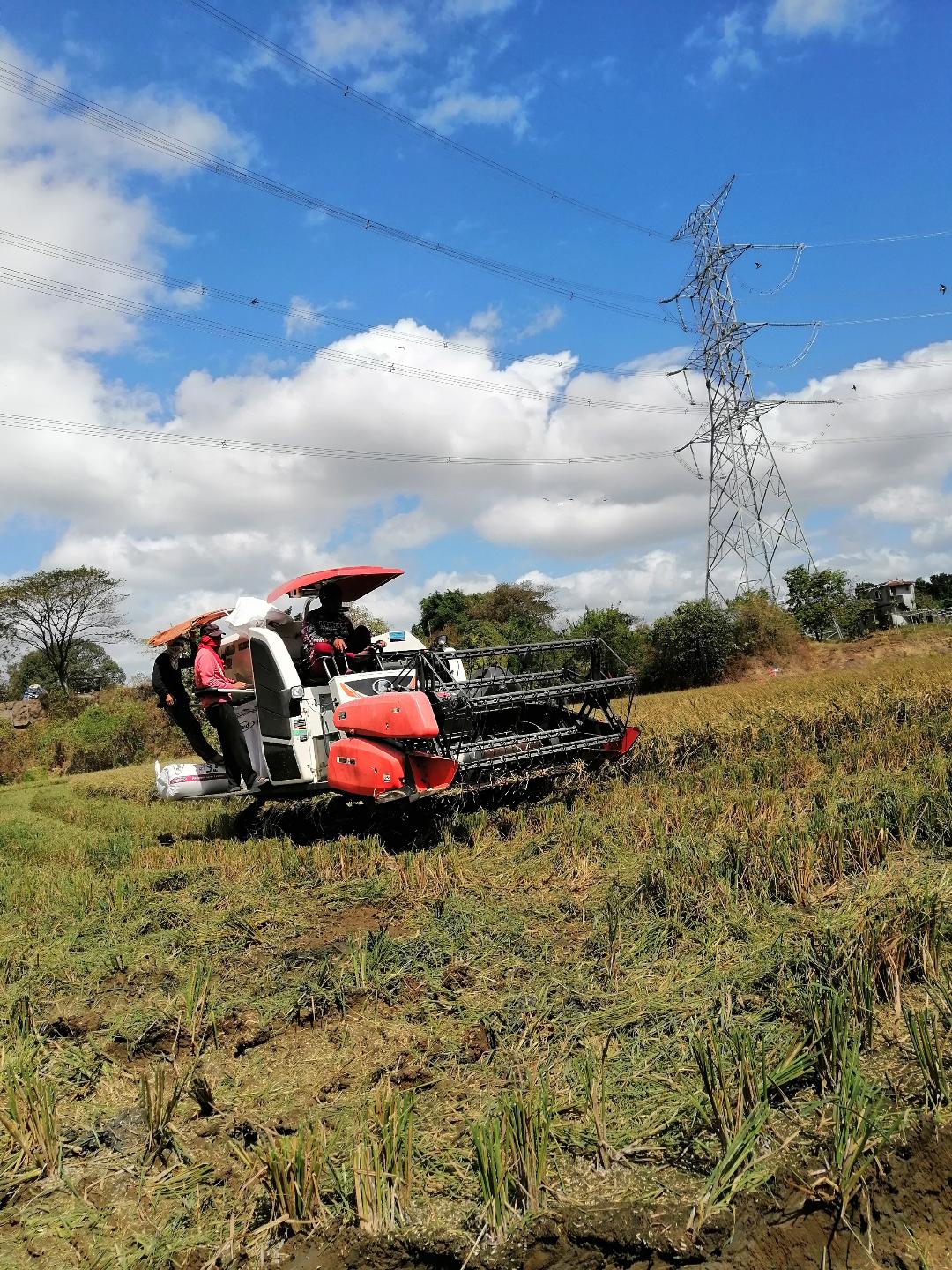
The palay planted on a one-hectare land in Sitio Gulod, Barangay San Vicente, Sta Maria, Bulacan was harvested on Sunday, Feb. 11, 2024, using a Kubota Harvester. (Freddie Velez)
A farmer in Sitio Gulod, Barangay San Vicente in the town of Sta, Maria in Bulacan lost almost half of his expected palay harvest to invasive Maya birds and is urging both the local and national governments to look at the plight of small farmers like him.
"Lugi ako sa naaning palay kinain kasi ng mga ibong Maya," (I incurred a big loss in my palay harvest because almost half of it was eaten by sparrows) said Bobot Fulgencio as he gazed forlornly at his one-hectare rice farm on Sunday, Feb.11.
Fulgencio said he was expecting to harvest 70 sacks of palay like he used to in previous years but because of invading sparrows at the rice paddy, he was only able to harvest 40 sacks of palay.
"Iba na talaga ang panahon ngayon, dahil pati mga ibon ay sobrang pasaway na, kahit may mga tao sa paligid na nagbabantay ay tuloy pa rin ang panginginain nila ng palay, hindi na takot, kapit sa patalim ika nga parang taong gutom na gutom," (Times have changed because even the birds have become uncontrollable and even when there are watchmen in the rice paddy, the birds, driven by hunger, continue to eat our palay),' Fulgencio said.
Fulgencio told the Manila Bulletin that both the national and local government officials should look at the plight of small farmers and provide them with the necessary assistance.
"Kung tatamarin ang mga magsasaka sa buong mundo at hihinto na sa pagtatanim at pamamalaisdaan, walang kakainin ang mga tao, dahil walang mabibiling pagkain kahit saan. Kaya napakahalagang tao ang magsasaka sa buong mundo (If farmers in the whole world will stop what they are doing, people will go hungry because there will be no more food available in the market. This is why farmers are very important)," he added.
Jimmy Rivera, president of the Farmers Association in Barangay San Vicente, Sta Maria and the owner of the Kubota Harvester, said Maya birds, green leafhoppers, other pests, and diseases are some of the problems facing small farmers like Fulgencio.
He said the 40 sacks of palay harvested by Fulgencio were at a loss despite the increased price of unhusked rice from P17 to P19 per kilo to P23 to P26 per kilo.
"Kung mabibili ang palay ni Fulgencio ng P23 per kilo, ang 50 kilos ng isang sako ng palay niya ay aabutin lamang ng P1,150. Malaki ang lugi dahil sa laki ng puhunan (If Fulgencio's palay harvest can be bought at P23 per kilo, the 50 kilos of palay per sack will only cost P1,150 and this is a big loss for him due to the big capital)," Rivera said.