






 Business
The Stock Market
Apex Mining expects lower production, shipments due to landslide
Business
The Stock Market
Apex Mining expects lower production, shipments due to landslide
Apex Mining expects lower production, shipments due to landslide


Apex Mining Co. Inc. reported that it is operating on a lower capacity following a landslide near its Davao de Oro mine site, affecting its gold and silver production while sales are expected to be reduced.
In a disclosure to the Philippine Stock Exchange (PSE), the Razon-controlled mining firm said the landslide occurred in Barangay Masara, Maco, Davao De Oro after the province was battered by heavy rains.
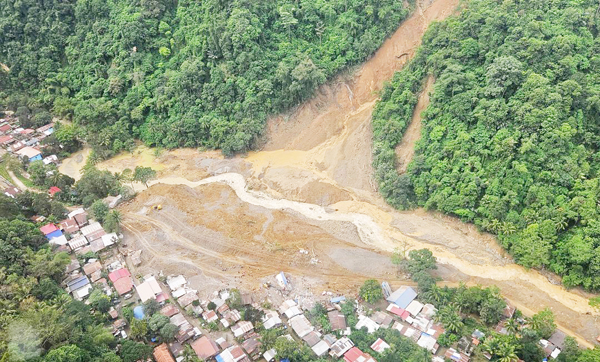
The area where the slide happened is outside the mine operations area of the company but is used as a vehicle terminal for buses and jeepneys servicing the employees, its service providers and members of the community.
Apex said it is on limited operations while it is focused on fully supporting the rescue operations of the local government units by providing equipment, manpower and food supplies to affected residents, including its employees.
“From February 7 to present, the milling activities are reduced within the range of 50 percent to 80 percent. Shipment and sale of metal products produced in January were completed before the landslide occurred,” Apex Mining said.
It added that “it is expected that a lower volume of gold and silver ounces will be produced and sold in the following shipment due to the limited operations."
“Strategies will be implemented to address production gaps once the rescue, retrieval and clearing operations have been completed,” it also said.
The landslide is about 500 meters away from the company gate. Three buses and one jeepney rented to ferry the employees and service providers from the outgoing 7PM shift were buried during the landslide.
All these vehicles have been recovered but the company incident command center reported nine Apex Mining employees were recovered dead from the landslide site, and one was injured and is currently being treated in a hospital.
Search and rescue operation continues to look for 9 unaccounted for or missing employees. Their efforts are hampered by moderate to heavy rains, minor landslides, and earthquake.
Because of this incident, Apex Mining said it operates on a limited capacity due to limited access at the mine site to service its incoming employees, deliveries of supplies and other service supports.
“Personnel from safety, security, community relations, general services, geologists, heavy equipment machine operators were deployed and continue to assist in the search, retrieval, rescue, and relief operations,” the firm said.
It also ensures power supply at the mining site to maintain the necessary ventilation and dewatering of the active underground tunnels where a limited manpower operates. Ore stockpiles mined in the previous days are also being milled.