







13 barangays in Butuan City placed under state of calamity


BUTUAN CITY – The Sangguniang Panglungsod (SP) on Wednesday, February 7, declared 13 barangays here under a state of calamity due to heavy rain and flood from the low-pressure area the past few days in the Caraga region.
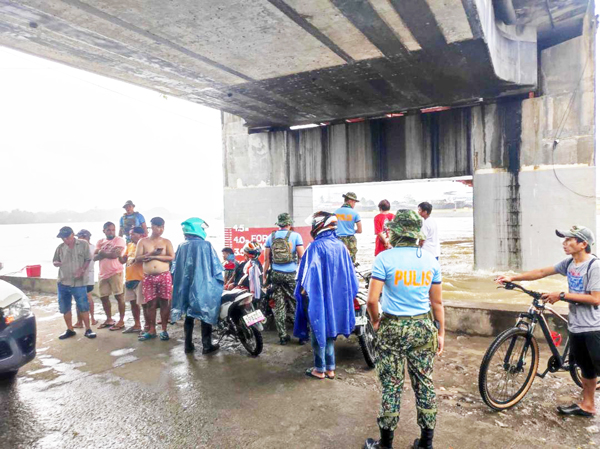
POLICE evacuate residents living in riverside barangays in Butuan City as the Agusan River has reached critical level. (Photo courtesy of PRO 13-RPIO via Mike U. Crismundo)
The SP unanimously passed a resolution declaring a state of calamity after validating the devastating effects of the flood from the upper stream of the Agusan River in Agusan del Sur and Davao de Oro since Monday, Feb. 5.
The 13 barangays were Aupagan, Bit-os, Buhangin, Florida, Golden Ribbon, Mahay, Mandamo, Maon, Pangabugan, Tungao, Baan, Riverside, and Dankias.
In order for a barangay to be declared under a state of calamity, at least 15 percent of the affected population must be in need of emergency assistance pursuant to National Disaster Risk Reduction and Management Council Memorandum Order No. 60, Series of 2019.
In an interview on Thursday morning, February 8, the action and monitoring center of the Butuan City Social Welfare Office (BCSWO) said about 4,287 families or 14,879 individuals were affected by flood.
They are staying 48 evacuation centers, 42 organized by the city government and six outside designated evacuation centers.
The BCSWO said the city government has extended assistance to flood victims amounting to P2,602,375.
Mayor Ronnie Vicente C. Lagnada here ordered an all-out relief operation for flood victims. “No one will be left in this crisis, every victim must be given immediate assistance.”
Lagnada ordered the City Disaster Risk Reduction and Management Council to conduct forced evacuation in flood-prone areas, particularly those within the riverside, and bring flood victims to designated evacuation centers here.
Some schools were used as evacuation centers. Classes were suspended in this city due to inclement weather.