






 Philippines
National
Tolentino, Padilla back defense bills to address problems in West PH Sea
Philippines
National
Tolentino, Padilla back defense bills to address problems in West PH Sea
Tolentino, Padilla back defense bills to address problems in West PH Sea


As unrest over the Philippine-China territorial claims over the West Philippine Sea (WPS) continues, Senator Francis "Tol" Tolentino cited salient provisions on bills seeking to update the 1935 National Defense Act and revitalize the Self-Reliant Defense Posture (SRDP).
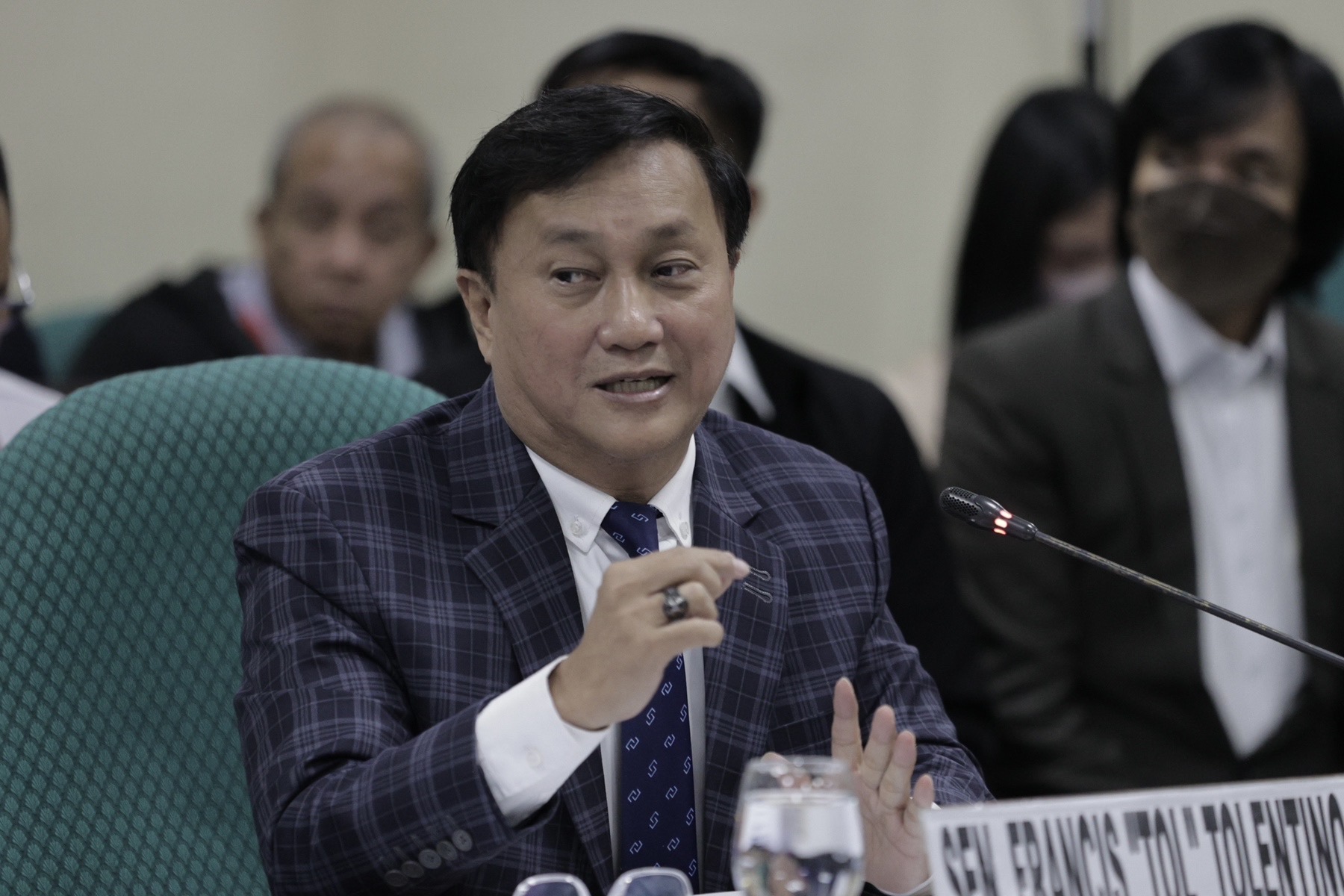
Sen. Francis Tolentino (Senate PRIB Photo)
During a public hearing on Monday, August 7 of the Senate Committee on National Defense chaired by Senator Jinggoy Ejercito Estrada, Tolentino said the two measures could effectively improve the country's defense capabilities.
Tolentino particularly emphasized a provision making military service obligatory for all able-bodied citizens, which he said should be pursued.
He also highlighted the need to enhance research and development and the cybersecurity capabilities of the country, along with the Reserved Officer Training Corps. (ROTC).
Senator Robinhood C. Padilla, on the other hand, called for the institutionalization of mandatory participation of all citizens in national defense to supplement and provide support to the Armed Forces of the Philippines (AFP) when needed; and the reinstatement of the phrase "imminent danger", as a basis for martial law declaration in the Constitution.
"It is very clear in the Constitution that all of our citizens, at all times, should be ready to defend our country," Padilla said in Filipino.
Padilla also reiterated that the ongoing deliberations in the committee regarding filed bills seeking to strengthen the national defense posture of the country are very important amid ongoing several global conflicts, such as the Russia-Ukraine war.
"We are all talk, we lack effort. I hope that in this hearing, we will realize that we are already sailing in turbulent waters," he added.