







Globe secures P15-B loan from Metrobank for capex


Globe Telecom, the communications unit of Ayala Corporation, has raised P15 billion from term loan facilities with Metropolitan Bank & Trust Company (Metrobank).
In a disclosure to the Philippine Stock Exchange (PSE), the firm said the loans will be used to finance its capital expenditures (capex), debt refinancing, and general corporate requirements.
Globe said it invested P37.7 billion in capex as of the first half of 2023, 25 percent lower than the same period last year, “consistent with the company’s efforts to bring free cash flow back to more sustainable levels.”
A majority or about 90 percent of the capex spending was allocated to data network builds to meet the consumers’ escalating demand for data.
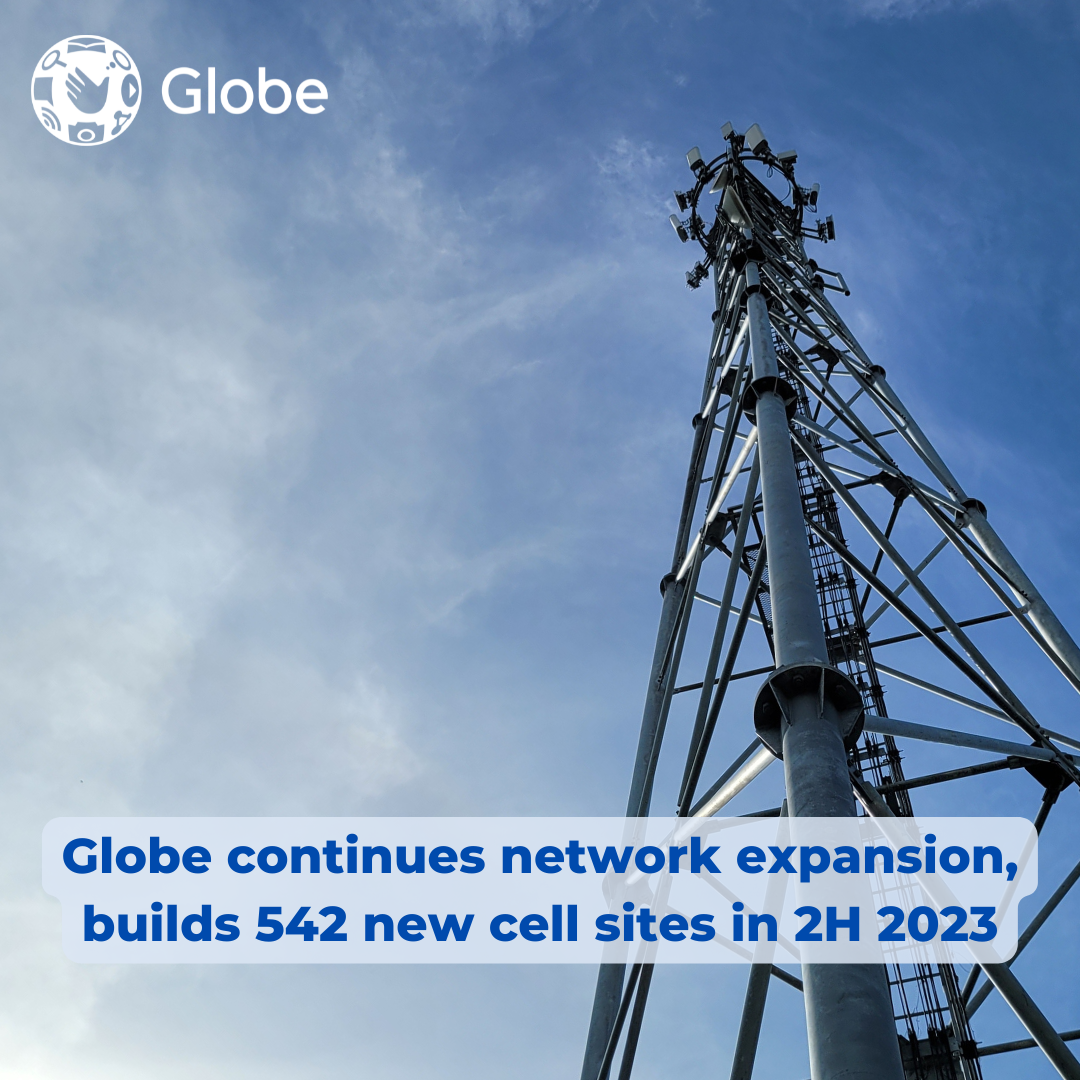
As of June 2023, Globe built 542 new cell sites, and upgraded 5,087 mobile sites to LTE in order to meet the rising data demands of its customers.
The company also deployed around 148 thousand fiber-to-the-home (FTTH) lines, significantly lower than last year’s rollout to maximize the utilization of its existing fiber inventory.
As a 5G pioneer in the Philippines, Globe continues to deploy 5G wireless technology nationwide, firing up 356 new 5G sites across the Philippines, increasing its 5G outdoor coverage to 97.44 percent of the National Capital Region and 91 percent of key cities in Visayas and Mindanao.
Globe has reduced its total capex budget for 2023 by 30 percent to $1.3 billion from the $1.9 set aside for 2022 when capex investment peak after the company took advantage of the streamlined permitting process which allowed it to fast-track expansions.
The company intends to further bring down its capex budget to $1 billion by next year as it now has a significant backbone for its network.
By easing capex intensity, Globe aims to optimize capex spending in the next few years by focusing on maximizing utilization of existing fiber assets and taking advantage of the arrangements made with tower companies to maximize tower builds.