







Yukien Andrada earns Player of the Week nod


At A Glance
- The third-year cager logged 20.0 points on a staggering 53.35% shooting clip from three-point range while also grabbing 3.0 rebounds in two games from November 14 to 19 as the Mendiola crew cruised to back-to-back wins to enter the Final Four picture.<br>
Bucking one of the toughest slates of games in the season, San Beda University is peaking at the right time as the Final Four race heats up in the NCAA Season 99.
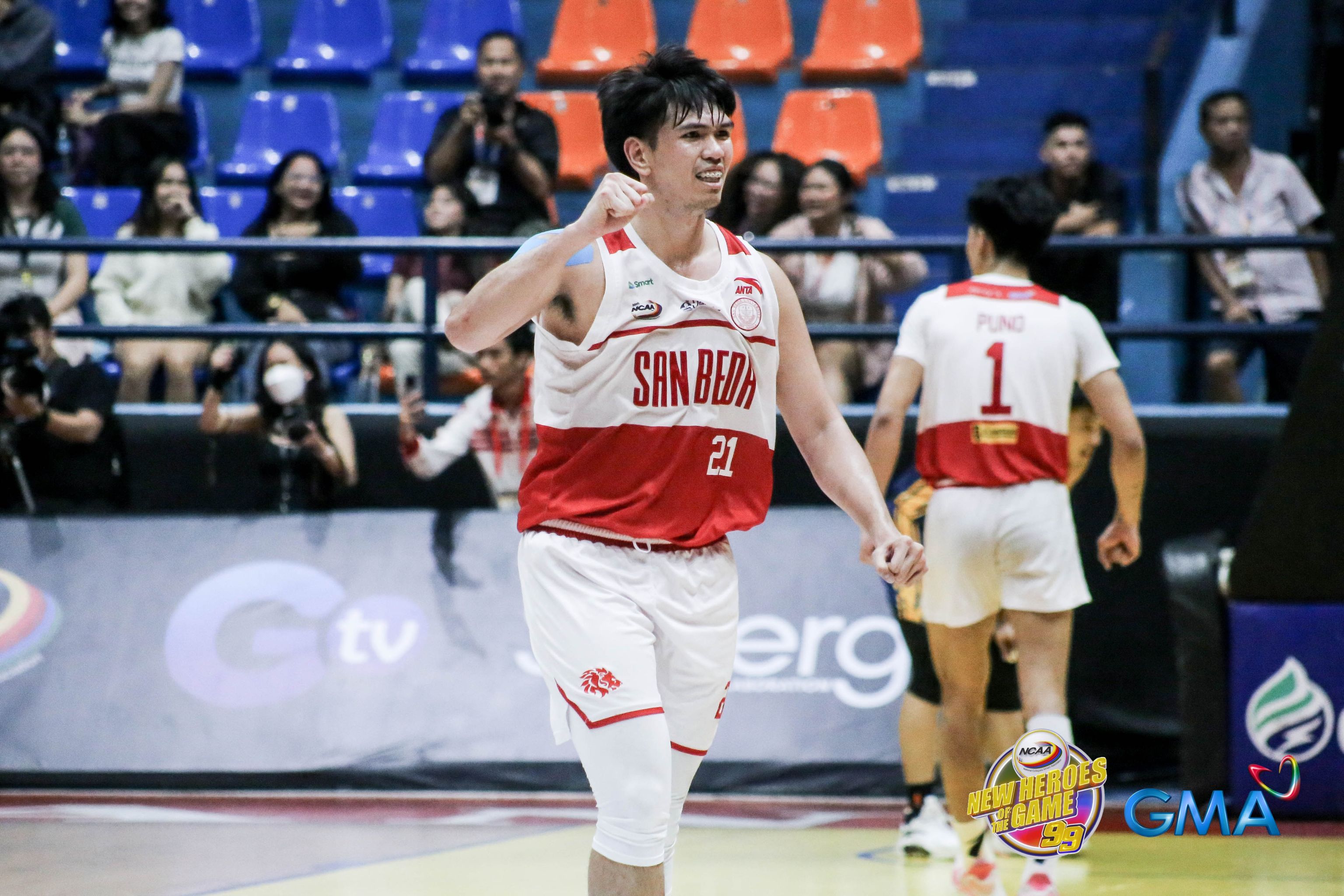
And one of the catalysts for the resurgent Red Lions was Yukien Andrada.
The third-year cager logged 20.0 points on a staggering 53.35% shooting clip from three-point range while also grabbing 3.0 rebounds in two games from November 14 to 19 as the Mendiola crew cruised to back-to-back wins to enter the Final Four picture.
With Andrada fueling the Red Lions, he was hailed as the Collegiate Press Corps NCAA Player of the Week presented by major sponsor San Miguel Corporation and backed by minor sponsors Discovery Suites and Jockey.
Andrada, a product of San Beda juniors program, edged out Lyceum’s Enoch Valdez and Perpetual’s Jielo Razon for the weekly honors deliberated by the print and online covering the beat.
Reeling from back-to-back losses to Perpetual and Mapua, San Beda rose and bounced back with two consecutive wins against heavyweight foes in College of St. Benilde and Jose Rizal U.
The six-foot-five forward started his impressive week with a 22-point performance against the Blazers on November 15, presiding over their pivotal 65-61 victory. He then followed it up with 18 points, three rebounds, and two steals in a 74-69 escape act against the Heavy Bombers.
With two elimination round games left and two semifinal spots still up for grabs, Andrada claimed that he and his teammates are determined to finish strong and barge their way into another Final Four appearance.
“We talked about it for the past week ever since we lost to Mapua, sinasabi talaga namin na we still have control sa fate namin papunta sa Final Four. So, ‘yun nga, we’ll just focus on our game, one-by-one, and we will never give up,” he said.
The 22-year-old is also relieved to help out San Beda now that he is back at full strength after a nagging left hamstring strain back in Round 1.
“Sabi nga sa akin ni coach Yuri, yung ibang players sa ibang teams nagstep-up na eh, nagpe-peak na rin. So sinabihan na rin ako na, especially coming off an injury, na I have to step up na yung laro ko and hindi lang puro si Jacob [Cortez] or yung other teammates ko,” her added.
“I think it’s the right time for me, and everything is peaking for me right now.”