







DOH-10 pushes safe sex vs HIV


CAGAYAN DE ORO CITY – The Department of Health-Northern Mindanao (DOH-10) reiterated on World AIDS Day on Friday, December 1, that safe sex practices remain one of the most effective ways to prevent infections from Human Immunodeficiency Virus (HIV).

THE Department of Health-Northern Mindanao office in Barangay Carmen, Cagayan de Oro City. (Franck Dick Rosete)
DOH-10 Infectious Diseases Cluster Head Dr. Wellaflor Kindom-Brito said that HIV status will remain confidential and the only person who can divulge the information is the individual infected by the virus.
Hence, safe sex practices are vital, she said. “At the end of the day, we are all accountable for our own health. So, have yourselves protected,” Brito said in a press conference on Friday.
The Health official said they recorded 436 newly confirmed HIV cases in the region from January to August this year, bringing the cumulative total to 3,095 since it was first detected in Northern Mindanao in 1991.
This city has the highest number of HIV cases, with over 1,000, followed by Bukidnon with more than 500.
Two-hundred fourteen HIV-related deaths were recorded, 30 of which were logged in the first eight months of this year.
Northern Mindanao ranked sixth among regions in the country with the highest number HIV cases as of May 2023, according to the DOH Epidemiology Bureau HIV/AIDS and ART Registry of the Philippines.
The National Capital Region was first with 290 cases, followed by Calabarzon (213), Central Luzon (149), Central Visayas (101), Davao region (98), and Western Visayas (97).
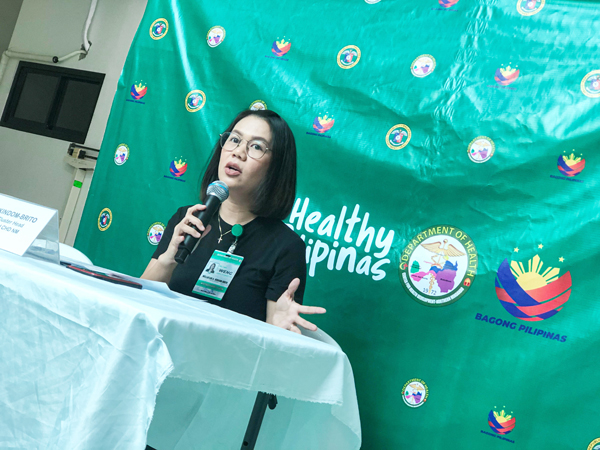
DEPARTMENT of Health-Northern Mindanao Infectious Diseases Cluster Head Dr. Wellaflor Kindom-Brito answers questions from the media during the World AIDS Day press conference at the DOH-10 office on Friday, December 1. (Franck Dick Rosete)
Brito said that Pre-Exposure Prophylaxis (PrEP) for HIV can now be obtained at the Northern Mindanao Medical Center (NMMC) in this city. This DOH Region 10-run hospital started dispensing PrEP last March.
PrEP, she said, is given to non-HIV-infected individuals but with risky behavior for infection. There is a criteria for a person to be eligible for the prophylaxis, Brito added.
The United States Centers for Disease Control and Prevention said PrEP “reduces the risk of getting HIV from sex by about 99 percent.” It also “reduces the risk of getting HIV from injection drug use by at least 74 percent,” adding that it is less effective when not taken as prescribed.
Despite this, Brito reiterated safe sex practices, as people taking PrEP are not safe from other sexually transmitted infections.
Brito reminded that once a person is infected with HIV, it will last forever but it can be treated using treatment drugs.
If people living with HIV are religiously taking their medicines, it would come to a point where the viral load would be reduced and become untransmittable. This means that HIV-infected individuals, Brito said, are no longer contagious, but they are still not allowed to donate blood.
“If we know people who are in doubt or afraid because they feel that it’s the end of their lives already, then let’s remind them that our medicines and our treatment for HIV are actually effective,” Brito said.
HIV treatment drugs in the region can be obtained from the the Northern Mindanao Medical Center (NMMC) in this city, Mayor Hilarion A. Ramiro Sr. Medical Center in Misamis Occidental, Bukidnon Provincial Medical Center in Malaybalay City, Maramag Rural Health Unit in Bukidnon, and the Adventist Medical Center-Iligan.
The DOH-10 is planning to expand treatment hubs and confirmatory sites in the region and said that there is an additional hub in Valencia City in Bukidnon this year. It also targets treatment hubs in Lanao del Norte, Camiguin, and Talakag town in Bukidnon.
The State Health department, Brito said, is also ensuring communication between the regional offices to have enough medicines for people living with HIV.