

ADVERTISEMENT

PlayStation Portal falls short: A limited vision for Sony's handheld ambitions

The PlayStation Portal's restricted features and connectivity issues raise questions about its future in Sony's gaming ecosystem

Published Nov 14, 2023 07:13 am

At A Glance

  • The PlayStation Portal is primarily designed for remote play, allowing users to stream PS5 games within the same Wi-Fi network, limiting its use to the home environment.
  • The device features DualSense-style controllers that are fixed and do not detach, offering a different experience compared to other handheld consoles.
  • The PlayStation Portal does not support other apps or integrate with Sony's cloud subscription model, limiting its functionality to gaming only.
  • The Portal requires the same Wi-Fi connection as the PS5, restricting its use to areas where the user's PS5 is connected, and a strong internet connection is essential for optimal play.
  • Despite its current limitations, there is potential for future enhancements, such as backward compatibility or increased portability. However, the Portal currently stands as a niche product primarily targeting existing PS5 owners, rather than competing directly with other handheld gaming devices like the Nintendo Switch or Steam Deck.
Portal.png

Scour the internet, and you will find reviews of the PlayStation Portal (the sort of "PSP" remake, if you will), and things aren't looking too bright.

Frankly, I don't know what else we should have expected. Since Sony released details about the Portal, it's become quite an anomaly in the resurging trend of handheld consoles. 
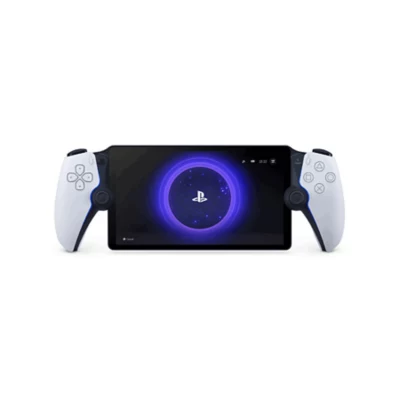
The PlayStation Portal is a companion device for the PS5. It is used to stream your PS5 games that you already own in your system. It does not link to Sony's cloud subscription model. There aren't any other apps in it, so there is no YouTube and all. The DualSense-style controllers attached between the screen don't come off.

The PlayStation Portal is just for remote play. You use it when lying in bed, in the bathroom, or when your family kicked you off the TV. You can't even take the Portal to your work, school, or anywhere that uses a different Wi-Fi access than your PS5. You must have the same Wi-Fi for the Portal and the PS5 to remote play the games you have there. And you will need a good internet connection to even make it remotely playable. There are some reports that, despite having over 100Mbps, play experiences have been varied.

I have another question I can't find the answer right away. Can you at least use the Portal as another controller? Or perhaps allow multiplayer between the PS5 and the Portal? It would be quite nice to have that kind of feature. If not, well, what's another layer of shame atop everything else mentioned already?

It would have been great if the Portal would allow you to connect to Sony's vast collection of cloud-based games. It would also be great if you could, somehow, at the very least, transfer game data between the PS5 and the Portal–perhaps via re-download–but that could be open to exploits in some way that Sony still hasn't figured out or are currently future-proofing against.

As it stands, the Sony PlayStation Portal is a very niche device aimed at many (but not all) PlayStation fans. It's not a Switch/Steam Deck killer. Sony doesn't even seem to be trying to woo new PlayStation users into their ecosystem–why would they, though? As of July this year, Sony has sold over 40 million PS5 units and is just interested in catering for that market.

The Portal seems an anomaly in this growing space. Valve is putting out a new Steam Deck OLED, Lenovo has the Go, ASUS with the Ally, Logitech and Ayaneo are solid contenders as well, and the Nintendo Switch is still going strong with new games coming out through 2024 plus the heavily rumored next-gen Nintendo console to be announced next year. It seems so strange for Sony, a purveyor of innovation who has had handheld experience with the original PSP and the Vita, to hesitate to take another step forward.

As I see it, though, Sony is merely preparing the stage for the next five or so years as they gradually roll out the desired new features. It also gives Sony enough time to smoothen out any potential technical stuff that needs polishing. Who knows, maybe in the long run, the Portal will become the access point for backwards compatibility and hopefully, more portability as well. 

ADVERTISEMENT
.most-popular .layout-ratio{ padding-bottom: 79.13%; } @media (min-width: 768px) and (max-width: 1024px) { .widget-title { font-size: 15px !important; } }

{{ articles_filter_1561_widget.title }}

.most-popular .layout-ratio{ padding-bottom: 79.13%; } @media (min-width: 768px) and (max-width: 1024px) { .widget-title { font-size: 15px !important; } }

{{ articles_filter_1562_widget.title }}

.most-popular .layout-ratio{ padding-bottom: 79.13%; } @media (min-width: 768px) and (max-width: 1024px) { .widget-title { font-size: 15px !important; } }

{{ articles_filter_1563_widget.title }}

{{ articles_filter_1564_widget.title }}

.mb-article-details { position: relative; } .mb-article-details .article-body-preview, .mb-article-details .article-body-summary{ font-size: 17px; line-height: 30px; font-family: "Libre Caslon Text", serif; color: #000; } .mb-article-details .article-body-preview iframe , .mb-article-details .article-body-summary iframe{ width: 100%; margin: auto; } .read-more-background { background: linear-gradient(180deg, color(display-p3 1.000 1.000 1.000 / 0) 13.75%, color(display-p3 1.000 1.000 1.000 / 0.8) 30.79%, color(display-p3 1.000 1.000 1.000) 72.5%); position: absolute; height: 200px; width: 100%; bottom: 0; display: flex; justify-content: center; align-items: center; padding: 0; } .read-more-background a{ color: #000; } .read-more-btn { padding: 17px 45px; font-family: Inter; font-weight: 700; font-size: 18px; line-height: 16px; text-align: center; vertical-align: middle; border: 1px solid black; background-color: white; } .hidden { display: none; }
function initializeAllSwipers() { // Get all hidden inputs with cms_article_id document.querySelectorAll('[id^="cms_article_id_"]').forEach(function (input) { const cmsArticleId = input.value; const articleSelector = '#article-' + cmsArticleId + ' .body_images'; const swiperElement = document.querySelector(articleSelector); if (swiperElement && !swiperElement.classList.contains('swiper-initialized')) { new Swiper(articleSelector, { loop: true, pagination: false, navigation: { nextEl: '#article-' + cmsArticleId + ' .swiper-button-next', prevEl: '#article-' + cmsArticleId + ' .swiper-button-prev', }, }); } }); } setTimeout(initializeAllSwipers, 3000); const intersectionObserver = new IntersectionObserver( (entries) => { entries.forEach((entry) => { if (entry.isIntersecting) { const newUrl = entry.target.getAttribute("data-url"); if (newUrl) { history.pushState(null, null, newUrl); let article = entry.target; // Extract metadata const author = article.querySelector('.author-section').textContent.replace('By', '').trim(); const section = article.querySelector('.section-info ').textContent.replace(' ', ' '); const title = article.querySelector('.article-title h1').textContent; // Parse URL for Chartbeat path format const parsedUrl = new URL(newUrl, window.location.origin); const cleanUrl = parsedUrl.host + parsedUrl.pathname; // Update Chartbeat configuration if (typeof window._sf_async_config !== 'undefined') { window._sf_async_config.path = cleanUrl; window._sf_async_config.sections = section; window._sf_async_config.authors = author; } // Track virtual page view with Chartbeat if (typeof pSUPERFLY !== 'undefined' && typeof pSUPERFLY.virtualPage === 'function') { try { pSUPERFLY.virtualPage({ path: cleanUrl, title: title, sections: section, authors: author }); } catch (error) { console.error('ping error', error); } } // Optional: Update document title if (title && title !== document.title) { document.title = title; } } } }); }, { threshold: 0.1 } ); function showArticleBody(button) { const article = button.closest("article"); const summary = article.querySelector(".article-body-summary"); const body = article.querySelector(".article-body-preview"); const readMoreSection = article.querySelector(".read-more-background"); // Hide summary and read-more section summary.style.display = "none"; readMoreSection.style.display = "none"; // Show the full article body body.classList.remove("hidden"); } document.addEventListener("DOMContentLoaded", () => { let loadCount = 0; // Track how many times articles are loaded const offset = [1, 2, 3, 4, 5, 6, 7, 8, 9, 10]; // Offset values const currentUrl = window.location.pathname.substring(1); let isLoading = false; // Prevent multiple calls if (!currentUrl) { console.log("Current URL is invalid."); return; } const sentinel = document.getElementById("load-more-sentinel"); if (!sentinel) { console.log("Sentinel element not found."); return; } function isSentinelVisible() { const rect = sentinel.getBoundingClientRect(); return ( rect.top < window.innerHeight && rect.bottom >= 0 ); } function onScroll() { if (isLoading) return; if (isSentinelVisible()) { if (loadCount >= offset.length) { console.log("Maximum load attempts reached."); window.removeEventListener("scroll", onScroll); return; } isLoading = true; const currentOffset = offset[loadCount]; window.loadMoreItems().then(() => { let article = document.querySelector('#widget_1690 > div:nth-last-of-type(2) article'); intersectionObserver.observe(article) loadCount++; }).catch(error => { console.error("Error loading more items:", error); }).finally(() => { isLoading = false; }); } } window.addEventListener("scroll", onScroll); });

Sign up by email to receive news.