







Lechon festival
This 2023 edition highlights why the dish remains a favorite
By Poch Eulalia


At A Glance
- Festival attendees were treated to an immersion in Cebuano's culinary pride as the festival puts the spotlight on the historical significance, unique flavors, and cooking methods of lechon.
Images by Juan Carlo de Vela

When you hear about Cebu, it’s hard not to think about one of its iconic dishes—lechon.
Generations have come to enjoy the pork dish for its crispy skin, tender meat, and rich flavors. It’s become a tradition for Filipino families to have lechon prepared for any big occasion. As such, it’s only fitting that the dish is celebrated annually during the Cebu Lechon Festival.
This year’s festival is already the sixth. It ran for three days, from Aug. 18 to 21, over at Megaworld’s Mactan Alfresco in Mactan Newtown, Lapu-Lapu City.
Festival attendees were treated to an immersion in Cebuano’s culinary pride as the festival puts the spotlight on the historical significance, unique flavors, and cooking methods of the dish. It’s a momentous occasion as well-known lechon houses like Ayer’s, Rico’s, and CNT from all over the province joined in, providing visitors with a diverse range of lechon varieties.
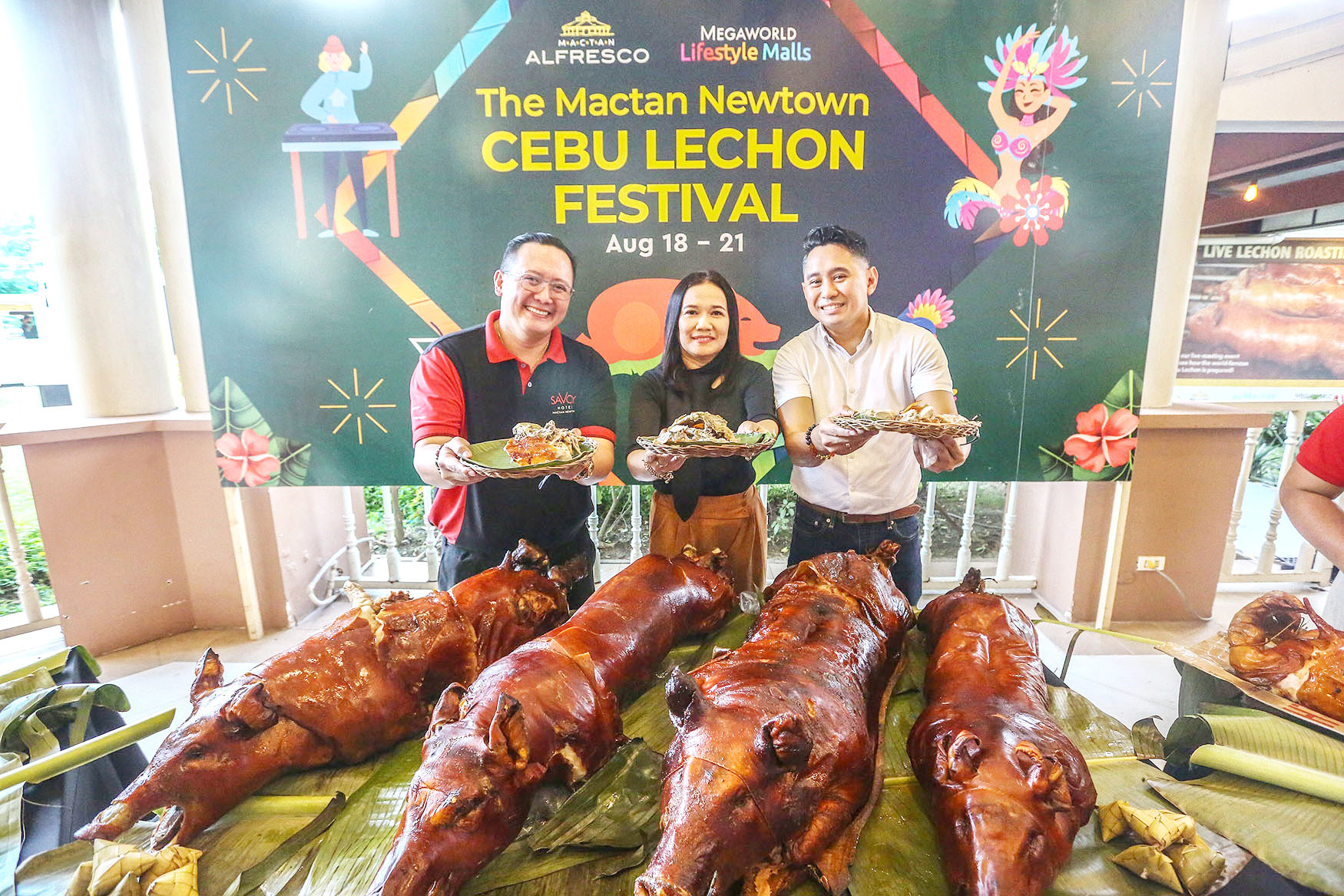
Highlights from the event include “A Roast to Remember,” chefs crafted whole pigs into delectable masterpieces during a live roasting session. There was also the Pork Party lechon food park that presented many lechon varieties. Perhaps the biggest moment of the special event though was the “Royalty of the Roast,” a grand parade with elaborate floats and lechon centerpieces.
Lechon wasn’t the only thing guests enjoyed at the Cebu Lechon Festival. Visitors were also treated to dance performances reflecting the city’s heritage, history, and values. Local bands also serenaded the crowds as part of the “Lechon and Listen” segment. It’s clear that the festival has done more than just sharing the love of lechon. It has helped shed light on the lively Cebuano culture for tourists and an appreciation for Cebu’s lechon-makers.

Aside from hosting events such as the Cebu Lechon Festival, Mactan Newtown is home to a bustling mix of residential condo units, office spaces, and academic facilities. It also features two Megaworld Hotels & Resorts properties, Savoy Hotel Mactan and Belmont Hotel Mactan, to provide an elegant stay for tourists.