







Hontiveros wants inquiry into alleged cyberattack from China


Enough of Charter change talks; let's concentrate on China.
Deputy Minority Leader Senator Risa Hontiveros on Tuesday, February 6 made the appeal as she sought an inquiry into the recent cyberattack against Philippine government agencies which authorities have traced to China.
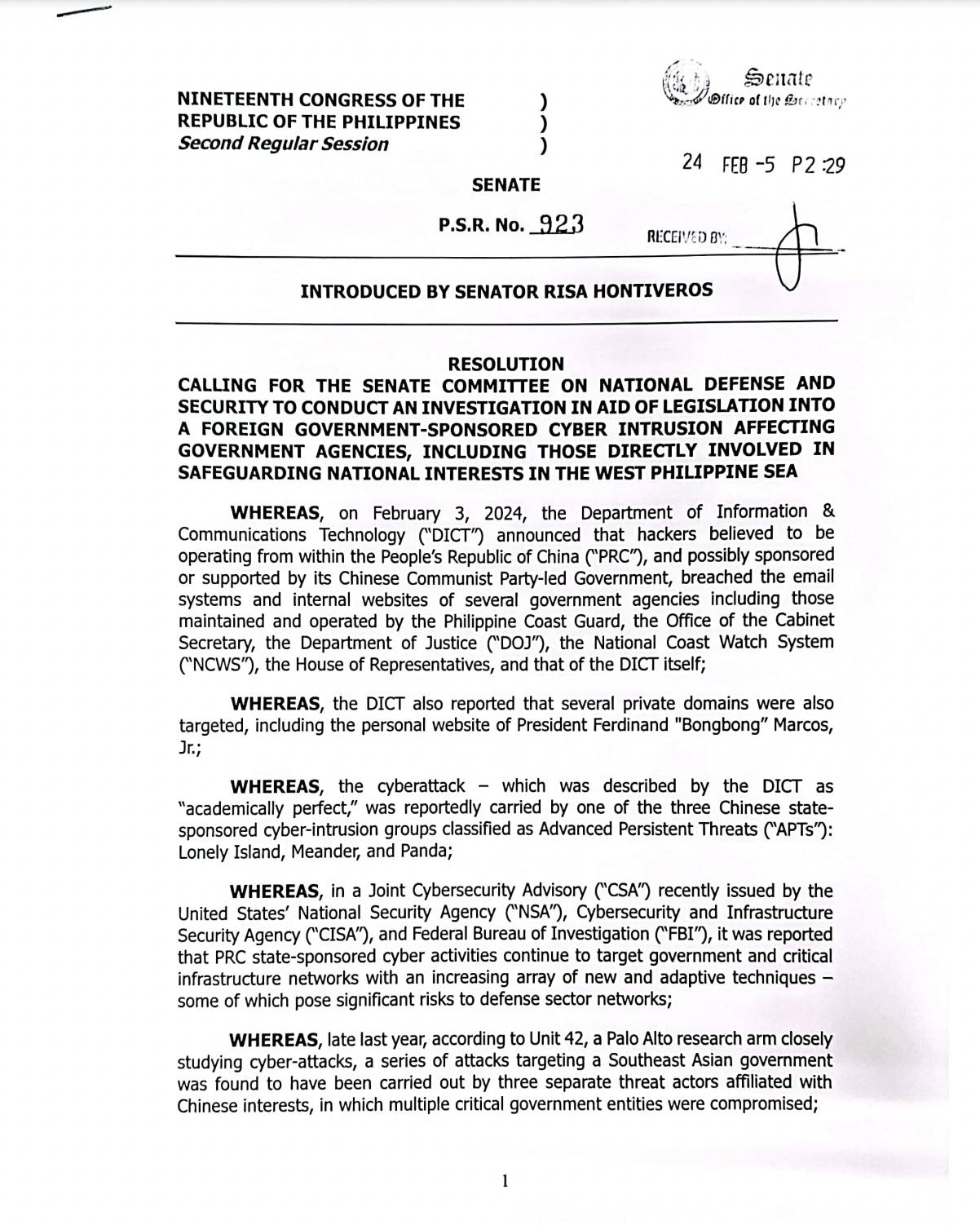
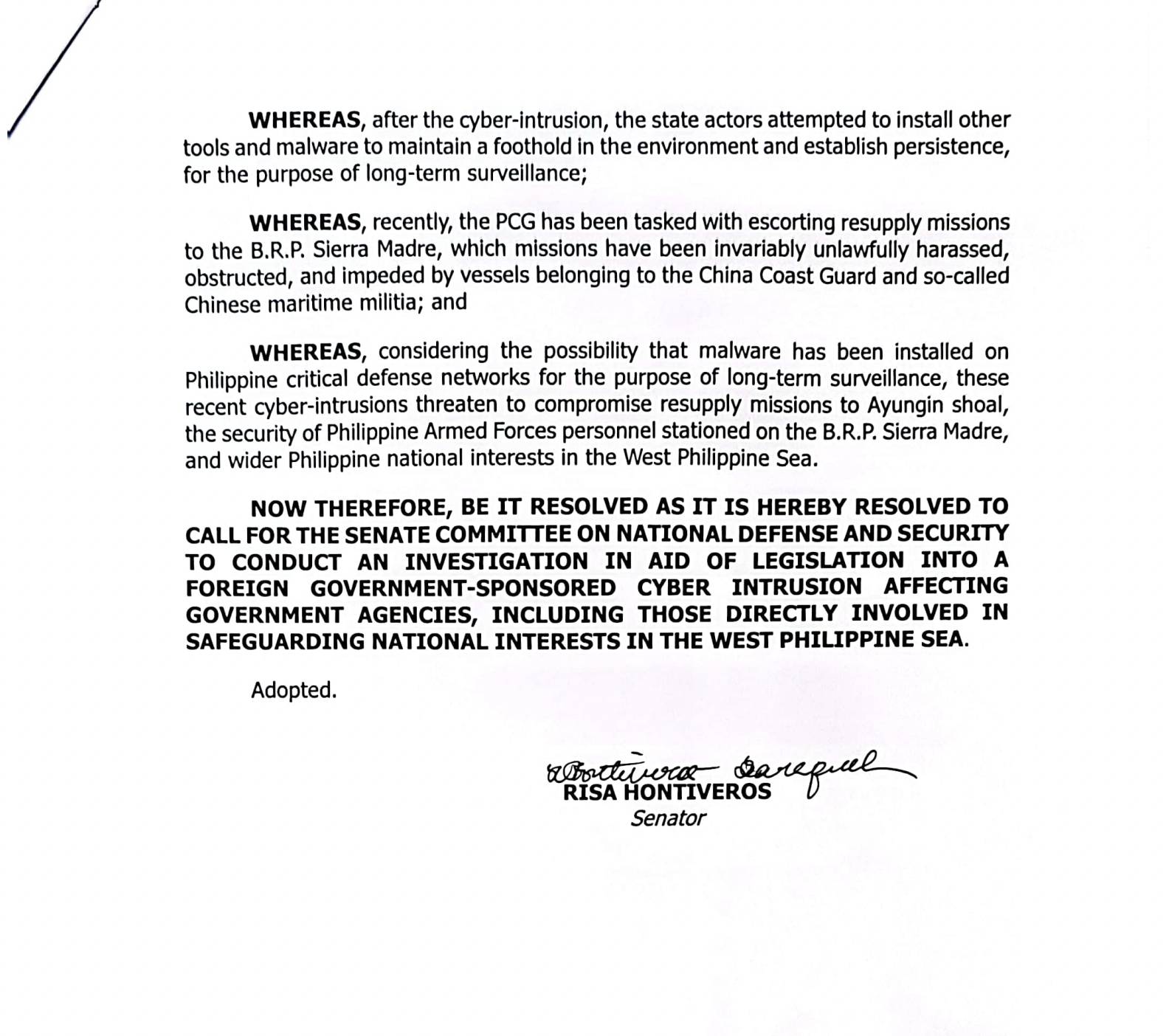
In filing Senate Resolution No. 923, Hontiveros pointed to the Department of Information and Communications Technology’s (DICT) recent discovery on the hacking attempt on the website of the Overseas Workers Welfare Administration (OWWA), Philippine Coast Guard (PCG), and the Department of Justice (DOJ).
The DICT have announced that the hackers are believed to be operating from the People’s Republic of China.
“Habang nagsasayang tayo ng oras para pag-usapan ang Charter Change, ang Tsina hindi tumitigil sa panghihimasok sa ating bansa (While we are wasting time talking about Charter change, China does not stop interfering in our country),” Hontiveros said in a statement.
“Imbes na ang enerhiya natin ay mapunta sa pagpapalakas ng mga batas para sa ating pambansang seguridad, nag-aaksaya tayo ng panahon para sa interes ng iilan (Instead of putting our energy into strengthening laws for our national security, we are wasting time for the interests of the few),” the minority senator lamented.
DICT officials also said that the hackers attempted to breach the systems of the agency itself, and that of the Office of the Cabinet Secretary, the National Coast Watch System, and the House of Representatives last Feb. 3, 2024.
“This is a major cyberattack. While we are all busy cleaning up the mess of the sham ‘People’s Initiative,’ China has taken advantage of the current instability in the country to strike at our vulnerabilities,” she said.
“Dapat ito ang pagtuunan ng pansin, hindi yung mga pekeng insiyatibo na nanggugulo lang sa mga Pilipino (This should be the focus, not the fake initiatives that only trouble the Filipinos),” the senator said.
Hontiveros said she is concerned that these Chinese hackers have already installed a malware on the country’s Coast Guard assets.
“If so, these recent cyberintrusions threaten to compromise resupply missions to Ayungin shoal, the security of Philippine Armed Forces personnel stationed on the B.R.P. Sierra Madre, and the wider Philippine national interests in the West Philippine Sea,” Hontiveros said.
“Tama na ang ChaCha; Tsina ang mas malaking problema. Let us stop wasting time on changing the Constitution. Unahin na natin ang mga problema sa ekonomiya at ang napakalaking banta na dala ng Tsina (Enough of Chacha; China is the bigger problem. Let us stop wasting time on changing the Constitution. Let's prioritize the economic problems and the enormous threat posed by China),” the senator stressed.