







Global aid effort intensifies for flood-stricken Libya


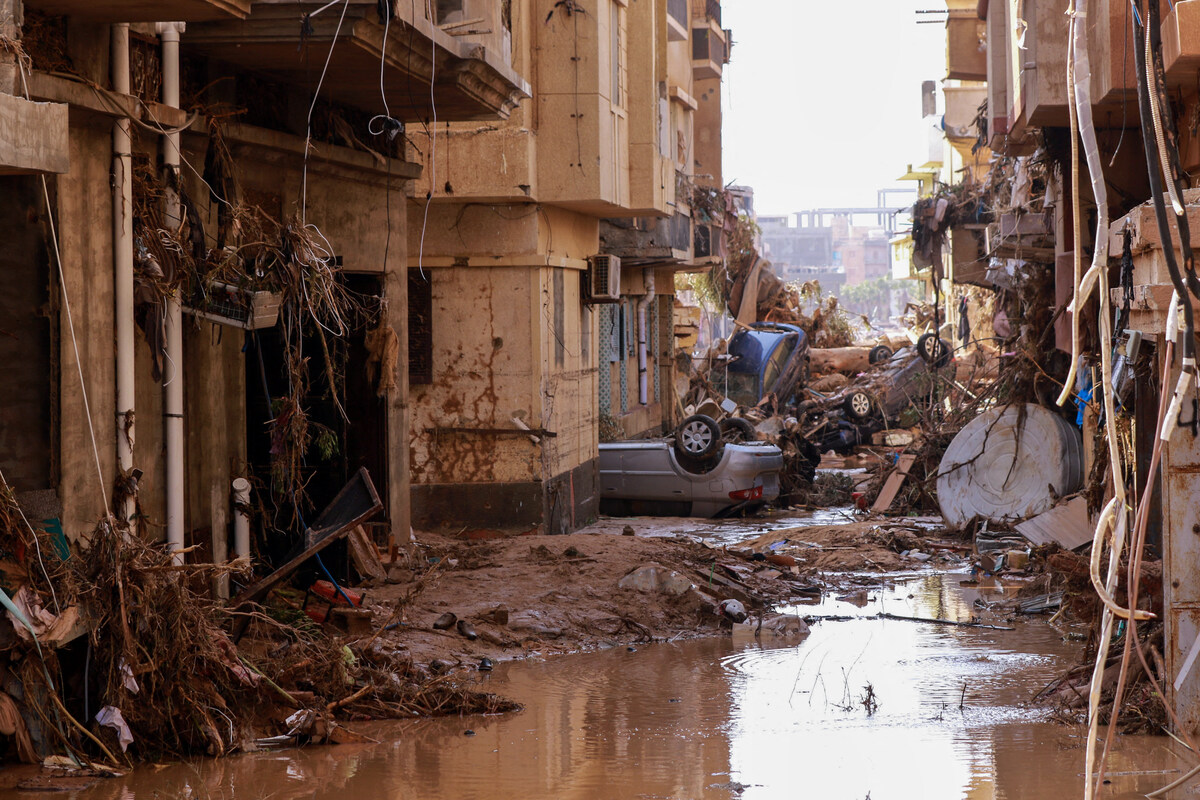
DERNA, Libya -- A global aid effort for Libya gathered pace Thursday after a tsunami-sized flash flood killed at least 4,000 people, with thousands more missing -- a death toll the UN blamed in part on the legacy of years of war and chaos.
The enormous surge of storm water burst two upstream river dams late Sunday and reduced the city of Derna to an apocalyptic wasteland where entire city blocks and untold numbers of people were washed into the Mediterranean.
"Within seconds the water level suddenly rose," recounted one injured survivor who said he was swept away with his mother in the late-night ordeal before both managed to cling onto and scramble into an empty building downstream.
"The water was rising with us until we got to the fourth floor, the water was up to the second floor," the unidentified man said from his hospital bed, in testimony published by the Benghazi Medical Center.
"We could hear screams. From the window I saw cars and bodies being carried away by the water. It lasted an hour or an hour and a half -- but for us, it felt like a year."
Hundreds of body bags now line Derna's mud-caked streets, awaiting mass burials, as traumatised and grieving residents search mangled buildings for missing loved ones and bulldozers clear streets of debris and mountains of sand.
"The scale of the flood disaster in Libya is shocking and it is heartbreaking," said UN Under-Secretary-General for Humanitarian Affairs and Emergency Relief Coordinator Martin Griffiths.
"Entire neighbourhoods have been wiped off the map. Whole families, taken by surprise, were swept away in the deluge of water. Thousands have died, tens of thousands are now homeless and many more remain unaccounted for."
- 'Wiped off the map' -
The floods were caused by hurricane strength Storm Daniel, compounded by the poor infrastructure in Libya, which was plunged into turmoil after a NATO-backed uprising in 2011 toppled and killed longtime dictator Moamer Kadhafi.
Libya is now divided between two rival blocs -- the UN-backed, internationally recognised government in Tripoli, and an administration based in the disaster-hit east.
UN World Meteorological Organization chief Petteri Taalas said many deaths could have been avoided if early warning and emergency management systems had functioned properly in the war-scarred country.
With better coordination, "they could have issued the warnings and the emergency management forces would have been able to carry out the evacuation of the people, and we could have avoided most of the human casualties," said Taalas.
He told reporters in Geneva that Libya's years-long conflict meant its meteorological "observing network has been very much destroyed, the IT systems have been destroyed".
"The flooding events came and there was no evacuation taking place, because there was not the proper early warning systems in place."
The UN, United States, European Union and many Middle Eastern and North African nations have either deployed or pledged to send rescue teams and aid including food, water tanks, emergency shelters, medical supplies and more body bags.
- 'Changing climate' -
Access to Derna remains severely hampered as roads and bridges have been destroyed and power and phone lines cut to wide areas, where at least 30,000 people are now homeless.
The catastrophe's true death toll remained unknown, and officials have provided conflicting numbers.
A total of 3,840 bodies had been recovered by Wednesday, said Lieutenant Tarek al-Kharraz, spokesman for the interior ministry of the administration ruling eastern Libya.
But many more may have been washed out to sea or buried in the sand by the wall of muddy water that tore through the city.
The International Federation of Red Cross and Red Crescent Societies has warned that 10,000 people are missing.
Aid has been sent or promised by numerous regional nations including Algeria, Egypt, Jordan, Kuwait, Qatar, Tunisia, Turkey and the United Arab Emirates as well as the Palestinians.
The United States has also pledged to help, and in Europe the aid effort has been joined by Britain, Finland, France, Germany, Italy and Romania.
Climate experts have linked the disaster to the impacts of a heating planet combined with Libya's decaying infrastructure.
Storm Daniel gathered strength during an unusually hot summer and earlier lashed Turkey, Bulgaria and Greece, flooding vast areas and killing at least 27 people.
"Storm Daniel is yet another lethal reminder of the catastrophic impact that a changing climate can have on our world," said UN High Commissioner for Human Rights Volker Turk.
Turk called on all sides in Libya "to overcome political deadlocks and divisions and to act collectively in ensuring access to relief.
"This is a time for unity of purpose: all those affected must receive support, without regard for any affiliations."