







Marcos: PH will defend its territory; not provoking trouble


President Marcos broke his silence over the recent issue in Scarborough Shoal, saying the Philippine government is steering away from causing any trouble or word war with China but it will continue to defend its territory.
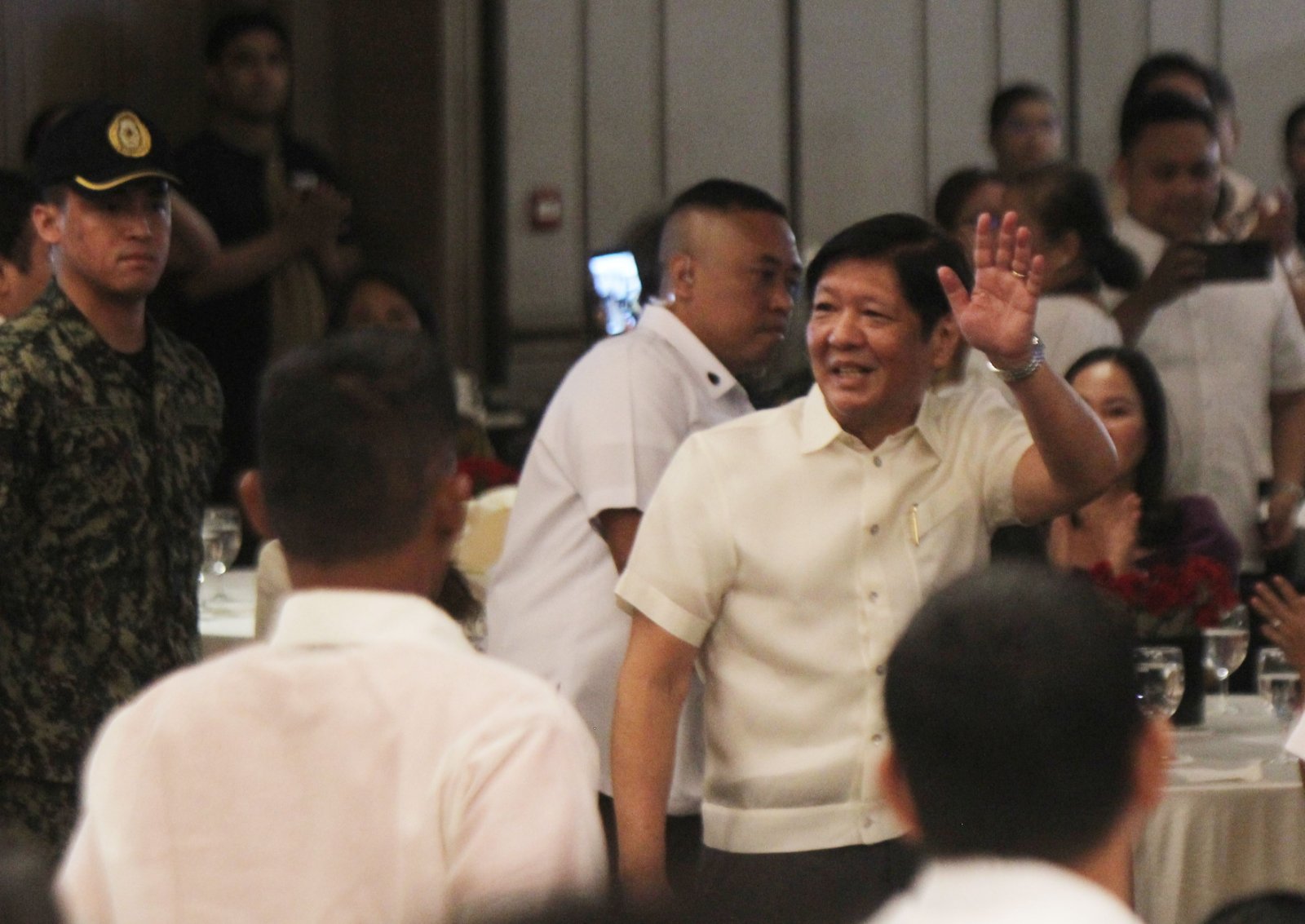
"[H]indi tayo naghahanap ng gulo (We are not provoking any trouble)," Marcos said in a media interview in Siargao Island, Surigao del Norte, on Friday, Sept. 29.
"Basta't gagawin natin, patuloy nating ipagtatanggol ang Pilipinas, ang maritime territory ng Pilipinas, ang karapatan ng mga fisherman natin na mangisda doon sa mga areas kung saan sila nangingisda daan daang taon na. Kaya't hindi ko maintindihan ba't nagbago nang ganito (What we will do is to continue defending the Philippines, its maritime territory, the rights of fishermen to fish in the areas where they have been fishing for hundreds of years now. So, I don't really understand why it changed like this)," Marcos added.
The President was questioning China Coast Guard's move to install a barrier in Bajo de Masinloc, stressing that it was only right for the Philippines to take down the barrier as it was inside the country's maritime territory.
He cited that fishermen were losing 164 tons of catch a day due to the 300-meter barrier.
"[I]n terms of taking down the barrier, I don't see what else we could do dahil talaga yung mga fisherman...Nung pinutol yung tali, yung mga nakapasok na fisherman, nung araw na yun, nakahuli sila ng 164 tons na isda. Sa isang araw pa lang yun. Yun ang nawawala sa ating mga fisherman (because the fishermen...when the barrier was taken down, on that day, the fishermen had 164 tons of catch. That's just in a day. And that is what they are losing)," Marcos said.
"Kaya't hindi naman maaari na lalagyan ng barrier na ganun at maliwanag naman na nasa loob ng Pilipinas 'yan (So it was not right to install a barrier there and it is clear that it was within the Philippine territory)," Marcos added.
The Chief Executive underscored that the move of the government to take down the barrier four days after it was discovered was to defend the country's territory and not to engage China in any trouble.
"Basta't kagaya ng sabi ko, umiiwas nga tayo sa gulo, umiiwas tayo sa mga maiinit na salita ngunit matibay ang ating pagdepensa sa teritoryo ng Pilipinas (Like what I said, we are avoiding trouble, we are avoiding engaging in word war, but our resolve remains strong in defending the Philippine territory)," Marcos stressed.
When asked if he ordered taking down all structures put by China within the country's economic zone, the President said he "cannot talk about" it as "many of these are operational issues."