






 Philippines
National
Marcos orders gov't agencies, embassies to work together in securing Pinoys in Israel
Philippines
National
Marcos orders gov't agencies, embassies to work together in securing Pinoys in Israel
Marcos orders gov't agencies, embassies to work together in securing Pinoys in Israel


President Marcos has ordered government agencies and Philippine embassies to work closely with each other to secure all affected Filipinos in the ongoing conflict between Israeli forces and Hamas militants.
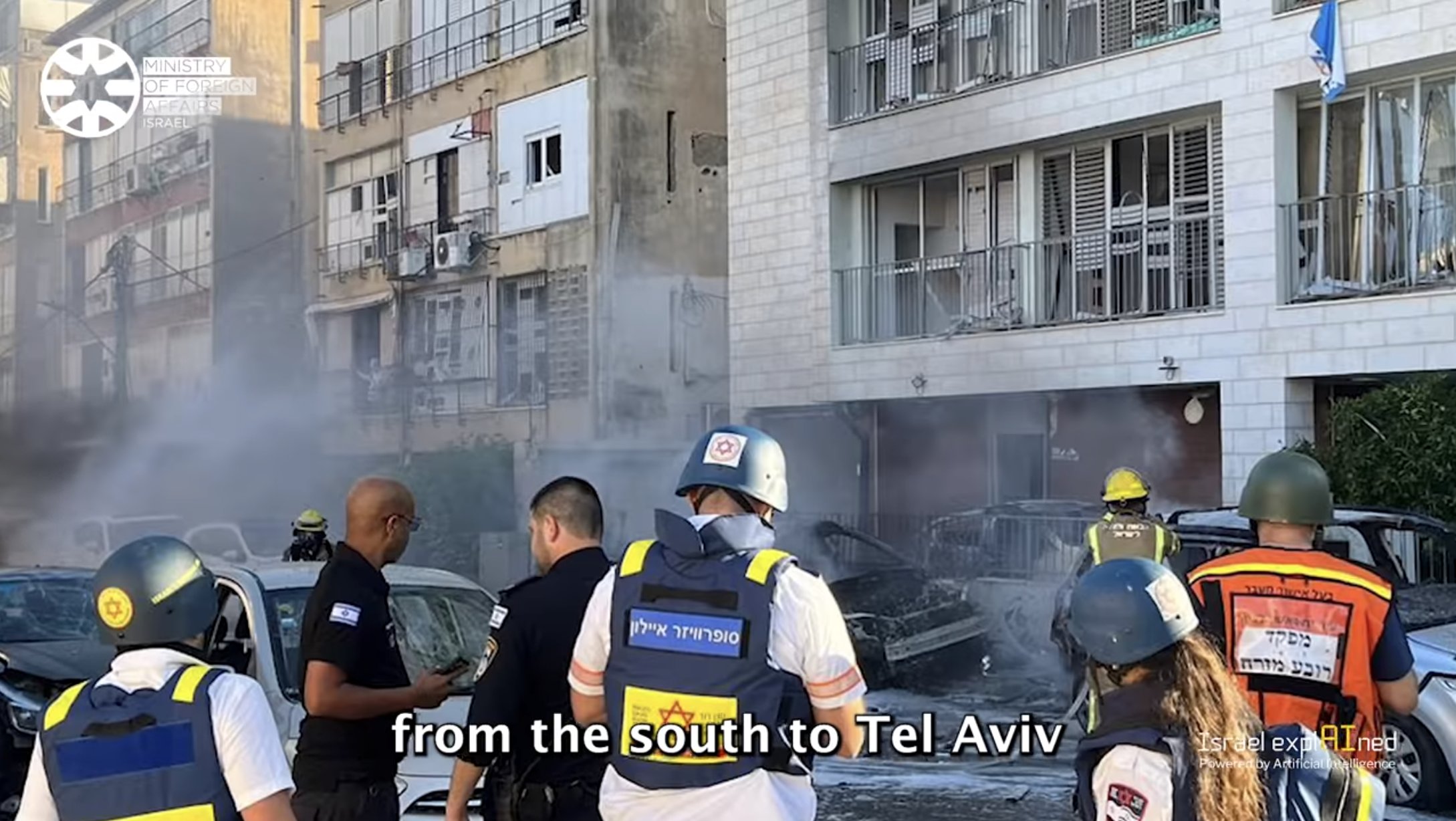
Malacañang said Marcos told the departments of Foreign Affairs and Migrant Workers to "closely coordinate with the Philippine Embassy in Tel-Aviv and the Migrant Workers Office in Israel to secure all Filipinos affected by the conflict between Israeli forces and the Palestinian militant group Hamas."
In a Palace briefing on Tuesday, Oct. 10, Foreign Affairs Undersecretary Eduardo De Vega said the President wants a whole-of-government approach in dealing with the situation.
"The President has given instructions to our agencies – it is a whole-of-government approach, it does not involve only the DFA (Department of Foreign Affairs) and the DMW (Department of Migrant Workers), including DMW-OWWA (Overseas Workers Welfare Administration) but we are meeting with other government agencies such as the DND (Department of National Defense), DSWD (Department of Social Welfare and Development), DOLE (Department of Labor and Employment), TESDA (Technical Education and Skills Development Authority) and other offices as we work together to ensure the safety and protection of our kababayans in Israel and Gaza," De Vega said.
"Let us remember that the situation is not just one which affects territory which is now in the state of Israel but also in Palestine, specifically in the Gaza Strip where there has been a shift in the [unclear] hostilities after the weekend where we saw and you have reported the Hamas attacks on the south of Israel," he added.
The Foreign Affairs official further said that aside from the Philippine Embassy in Tel-Aviv, they have also been coordinating with Philippine embassies in Amman, Jordan, which has jurisdiction over the Palestinian territories, and Cairo, Egypt because it is at the border of Gaza.
He added thaye are also part of the working group handling the situation of Filipinos in Israel and other affected areas.
He assured the public that "the government is on top of the situation."
"We’re doing everything we can," De Vega said.