







OCTA: Fewer Filipino families felt poor in Q4 2023
But more households experienced involuntary hunger


At A Glance
- During the same survey period, OCTA found that 14 percent of Filipino families, or an estimated 3.7 million households, experienced involuntary hunger in the previous three months.
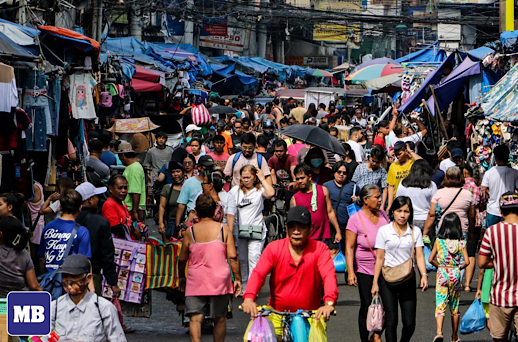
Around 45 percent of Filipinos or 11.9 million households considered themselves poor in the 4th quarter of 2023, based on the “Tugon ng Masa” (TNM) survey conducted by the OCTA Research.
The survey, which took place from Dec. 10 to 14, 2023, interviewed 1,200 respondents nationwide.
“This finding represents a slight decrease from the estimated 12.1 million families (at 46 percent) recorded in the third quarter TNM survey conducted last October 2023,” OCTA said in its report released on Friday, Jan. 26.
“The 1 percent decrease, representing approximately 270,000 families, aligns with the downward trend in self-rated poverty observed in the third quarter,” it added.
However, OCTA said that self-rated poverty in Mindanao increased by 10 percentage points, from 58 percent in October to 68 percent in December.
Balance Luzon also recorded a slight increase of one percentage point, from 37 percent to 38 percent.
Meanwhile, Metro Manila (41 percent to 28 percent) and Visayas (59 percent to 47 percent) saw a significant decrease of 13 and 12 percentage points, respectively.
“Compared with other major areas, Mindanao has the highest percentage of adult Filipinos who consider their families poor, accounting for 68 percent. In terms of socioeconomic classes, Class E has the highest percentage of adult Filipinos who consider their families poor, accounting for 68 percent,” OCTA said.
Self-rated hunger rises
During the same survey period, OCTA found that 14 percent of Filipino families, or an estimated 3.7 million households, experienced involuntary hunger in the previous three months.
“This finding is a 4 percent increase from the third quarter TNM survey conducted last October 2023 that recorded 10 percent, or an estimated 2.6 million families,” OCTA said.
“The 4 percent increase, which represents approximately 1.1 million families, deviates from the downward trends observed in the second and third quarters of 2023,” it pointed out.
Across major areas, Visayas had the highest self-rated hunger at 19 percent, followed by Mindanao (18 percent), Balance Luzon (11 percent), and Metro Manila (8 percent).
OCTA also noted that among those whose families experienced hunger in the last three months, 89 percent said they experienced hunger either “once or a few times,” while only 11 percent experienced hunger “often or always.”
11.1 million families are ‘food-poor’
Around 42 percent of Filipino families, or an estimated 11.1 million households, considered themselves to be “food-poor” in December 2023.
OCTA defined food poverty as individuals and households who struggle to obtain a sufficient and healthful diet.
The latest food poverty rate is “slightly lower by one percentage point recorded in the third quarter survey.”
OCTA reported that self-rated food poverty increased in Mindanao by 24 percentage points, reaching 71 percent in December, from 47 percent in September.
Meanwhile, other major areas have seen a decrease in self-reported poverty.
“Compared to other major areas, Mindanao has the highest percentage of adult Filipinos who consider their families food-poor (71 percent). Additionally, the lowest percentage of adult Filipinos who are uncertain if their family is food-poor was recorded in Mindanao (50 percent),” OCTA said.