







Trump fined $5,000 by New York judge for violating gag order


NEW YORK, United States - The New York judge presiding over Donald Trump's civil fraud trial fined the former US president $5,000 on Friday for not complying with a partial gag order and threatened him with possible jail time for future violations.
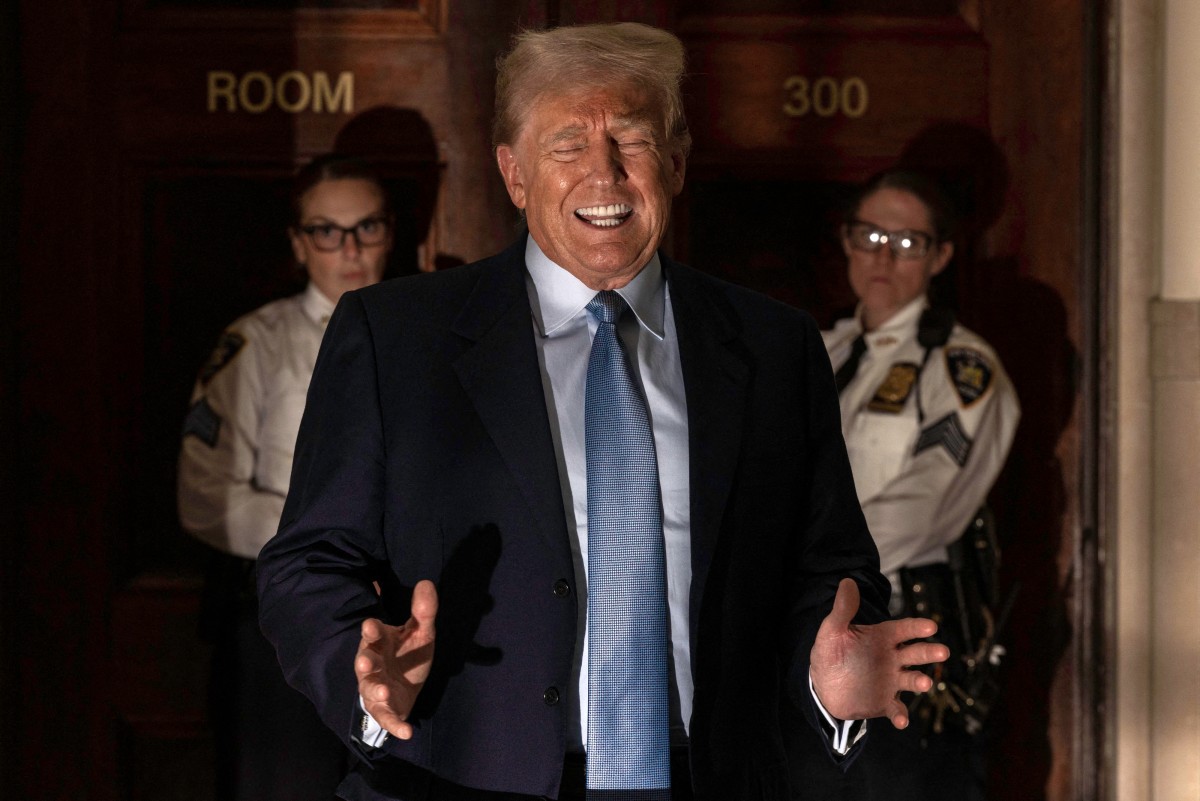
Former President Donald Trump
Judge Arthur Engoron ordered the 77-year-old Trump to pay the fine within the next 10 days to the New York Lawyers' Fund for Client Protection.
"Make no mistake: future violations, whether intentional or unintentional, will subject the violator to far more severe sanctions," Engoron said in a court filing.
"(These) may include, but are not limited to, steeper financial penalties, holding Donald Trump in contempt of court, and possibly imprisoning him pursuant to New York Judiciary Law," the judge added.
Engoron slapped a limited gag order on the former president on October 3 after he insulted the judge's principal law clerk in a social media post on his Truth Social platform.
The offending post was removed from Truth Social the same day, but the judge complained in his filing on Friday that it remained on a Trump 2024 campaign website for 17 days, until the court asked on Thursday that it be taken down.
Engoron said Trump's lawyers told him the violation of the gag order was "inadvertent."
"Giving the defendant the benefit of the doubt, he still violated the gag order," the judge said. "In the current overheated climate, incendiary untruths can, and in same cases already have, led to serious physical harm, and worse."
On October 3, as Trump sat at the defense table, Engoron said he was issuing a partial gag order "forbidding all parties from posting, emailing or speaking publicly about any of my staff."
Trump, the frontrunner for the 2024 Republican presidential nomination, and his two eldest sons are accused in the New York case of inflating the value of the real estate assets of the Trump Organization to receive more favorable bank loans and insurance terms.
Trump has personally attacked the judge on numerous occasions, calling him a "Trump-hating judge," but Engoron, in his verbal gag order, only ordered a halt to attacks on his court staff.
On Monday, the federal judge set to preside over Trump's trial for conspiring to overturn the 2020 presidential election also imposed a partial gag order on the former president.
US District Judge Tanya Chutkan ordered Trump not to publicly attack prosecutors, court staff or potential witnesses ahead of the trial scheduled to begin in Washington in March 2024.
On Friday, Chutkan temporarily lifted her narrow gag order, giving Trump's legal team time to prove why the former president's comments should not face restrictions as his case heads toward trial.