

ADVERTISEMENT

Rotary International marks significant achievement in fight to eradicate polio

Published Feb 27, 2024 07:57 am

Rotary International hailed the near-eradication of polio as one of the organization's most significant accomplishments in its long history.

"We began the polio eradication campaign over 30 years ago, and we began right here in the Philippines," said Rotary International President Gordon McInally during an exclusive interview with the Manila Bulletin on Tuesday, Feb. 27.

Screenshot (136).png
Rotary International President Gordon McInally (Manila Bulletin File Photo) 

"We know that we have reached the point where around the world we have almost eliminated polio," he declared, citing a significant decline from 350,000 annual cases three decades ago to a mere 12 cases reported in the Pakistan-Afghanistan border region in 2023, with “no cases” recorded globally in 2024.

This momentous achievement, McInally stressed, signifies a monumental stride towards eliminating polio, a once-deadly disease, from the face of the earth, with the Philippines catalyzing this remarkable progress.

In addition to its unwavering commitment to polio eradication, he said that Rotary International continues to make profound impacts on communities worldwide.

Free surgery for children with cleft palate

"Here in the Philippines, this year, more than 2,000 children with cleft palates will receive surgeries to correct their palates," McInally stated.

McInally highlighted the organization's initiatives in the Philippines, where over 2,000 children with cleft palates are set to receive life-changing surgeries, offering them a brighter future.

McInally recounted witnessing surgery on a four-year-old child at Delos Santos Medical Center in Quezon City, Philippines, a year ago.

He revealed that the patient was a young girl from the poorest of the poor in the Philippines who faced a congenital heart defect that threatened her life.

"But thanks to Rotary, she has been moved to have surgery and have that operation, and she is now a healthy, normal, and achieving little girl, and she is only one of the hundreds of children like her who have had similar surgeries," he noted, symbolizing the impactful work of the organization.

Moreover, as a laureate of the Rotary Foundation, McInally expressed his dedication to fostering collaboration between Rotary and global peace organizations to advance peace-building efforts worldwide.

"I believe that the great opportunity that I have by being the laureate of the Foundation is to bring the Foundation and the Rotary together to achieve more," he noted.

"I would recognize that peace starts from the ground level; it's not about stopping war but stopping war from where it starts," McInally added.

He also pointed out: "Prevention is better than cure, and the way we do that [peace] is we give people better living conditions, health care, and education, and we give people a much better standard of living so that conflict will not arise.”

Mental health advocacy

Meanwhile, emphasizing Rotary International's enduring commitment to promoting peace and well-being, McInally stressed the importance of addressing “mental health challenges,” particularly among youth, in the aftermath of the Covid-19 pandemic.

“We also focus on mental health and well-being; we recognized having survived the Covid-19 pandemic, and there's another pandemic out there, and that is mental health," he said.

He emphasized that among those experiencing the greatest suffering are young people and children, who have been significantly impacted by ongoing challenges.

"We want to remove the stigma associated with talking about mental health, but we also want to help people access mental health treatment because it is necessary," McInally noted.
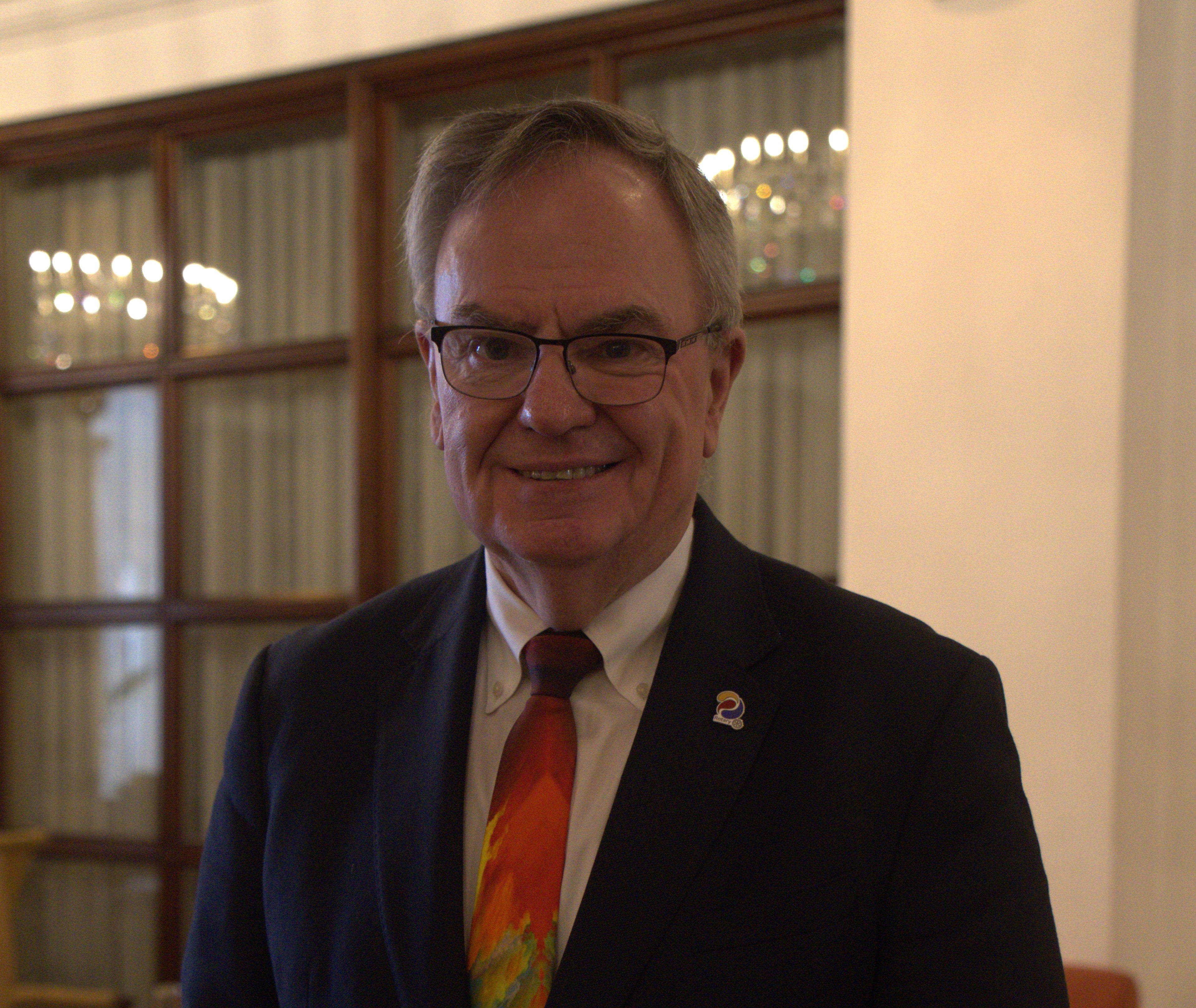
DSC00490.jpg
Photo by Alvin Veri / Manila Bulletin

Furthermore, as Rotary International commemorates its 119th anniversary, McInally extends his heartfelt gratitude to the organization's 1.4 million members worldwide, acknowledging their invaluable contributions to Rotary's mission of service and peacebuilding.

Related Tags

poliovirus Rotary International Gordon McInally mental health cleft palate
ADVERTISEMENT
.most-popular .layout-ratio{ padding-bottom: 79.13%; } @media (min-width: 768px) and (max-width: 1024px) { .widget-title { font-size: 15px !important; } }

{{ articles_filter_1561_widget.title }}

.most-popular .layout-ratio{ padding-bottom: 79.13%; } @media (min-width: 768px) and (max-width: 1024px) { .widget-title { font-size: 15px !important; } }

{{ articles_filter_1562_widget.title }}

.most-popular .layout-ratio{ padding-bottom: 79.13%; } @media (min-width: 768px) and (max-width: 1024px) { .widget-title { font-size: 15px !important; } }

{{ articles_filter_1563_widget.title }}

{{ articles_filter_1564_widget.title }}

.mb-article-details { position: relative; } .mb-article-details .article-body-preview, .mb-article-details .article-body-summary{ font-size: 17px; line-height: 30px; font-family: "Libre Caslon Text", serif; color: #000; } .mb-article-details .article-body-preview iframe , .mb-article-details .article-body-summary iframe{ width: 100%; margin: auto; } .read-more-background { background: linear-gradient(180deg, color(display-p3 1.000 1.000 1.000 / 0) 13.75%, color(display-p3 1.000 1.000 1.000 / 0.8) 30.79%, color(display-p3 1.000 1.000 1.000) 72.5%); position: absolute; height: 200px; width: 100%; bottom: 0; display: flex; justify-content: center; align-items: center; padding: 0; } .read-more-background a{ color: #000; } .read-more-btn { padding: 17px 45px; font-family: Inter; font-weight: 700; font-size: 18px; line-height: 16px; text-align: center; vertical-align: middle; border: 1px solid black; background-color: white; } .hidden { display: none; }
function initializeAllSwipers() { // Get all hidden inputs with cms_article_id document.querySelectorAll('[id^="cms_article_id_"]').forEach(function (input) { const cmsArticleId = input.value; const articleSelector = '#article-' + cmsArticleId + ' .body_images'; const swiperElement = document.querySelector(articleSelector); if (swiperElement && !swiperElement.classList.contains('swiper-initialized')) { new Swiper(articleSelector, { loop: true, pagination: false, navigation: { nextEl: '#article-' + cmsArticleId + ' .swiper-button-next', prevEl: '#article-' + cmsArticleId + ' .swiper-button-prev', }, }); } }); } setTimeout(initializeAllSwipers, 3000); const intersectionObserver = new IntersectionObserver( (entries) => { entries.forEach((entry) => { if (entry.isIntersecting) { const newUrl = entry.target.getAttribute("data-url"); if (newUrl) { history.pushState(null, null, newUrl); let article = entry.target; // Extract metadata const author = article.querySelector('.author-section').textContent.replace('By', '').trim(); const section = article.querySelector('.section-info ').textContent.replace(' ', ' '); const title = article.querySelector('.article-title h1').textContent; // Parse URL for Chartbeat path format const parsedUrl = new URL(newUrl, window.location.origin); const cleanUrl = parsedUrl.host + parsedUrl.pathname; // Update Chartbeat configuration if (typeof window._sf_async_config !== 'undefined') { window._sf_async_config.path = cleanUrl; window._sf_async_config.sections = section; window._sf_async_config.authors = author; } // Track virtual page view with Chartbeat if (typeof pSUPERFLY !== 'undefined' && typeof pSUPERFLY.virtualPage === 'function') { try { pSUPERFLY.virtualPage({ path: cleanUrl, title: title, sections: section, authors: author }); } catch (error) { console.error('ping error', error); } } // Optional: Update document title if (title && title !== document.title) { document.title = title; } } } }); }, { threshold: 0.1 } ); function showArticleBody(button) { const article = button.closest("article"); const summary = article.querySelector(".article-body-summary"); const body = article.querySelector(".article-body-preview"); const readMoreSection = article.querySelector(".read-more-background"); // Hide summary and read-more section summary.style.display = "none"; readMoreSection.style.display = "none"; // Show the full article body body.classList.remove("hidden"); } document.addEventListener("DOMContentLoaded", () => { let loadCount = 0; // Track how many times articles are loaded const offset = [1, 2, 3, 4, 5, 6, 7, 8, 9, 10]; // Offset values const currentUrl = window.location.pathname.substring(1); let isLoading = false; // Prevent multiple calls if (!currentUrl) { console.log("Current URL is invalid."); return; } const sentinel = document.getElementById("load-more-sentinel"); if (!sentinel) { console.log("Sentinel element not found."); return; } function isSentinelVisible() { const rect = sentinel.getBoundingClientRect(); return ( rect.top < window.innerHeight && rect.bottom >= 0 ); } function onScroll() { if (isLoading) return; if (isSentinelVisible()) { if (loadCount >= offset.length) { console.log("Maximum load attempts reached."); window.removeEventListener("scroll", onScroll); return; } isLoading = true; const currentOffset = offset[loadCount]; window.loadMoreItems().then(() => { let article = document.querySelector('#widget_1690 > div:nth-last-of-type(2) article'); intersectionObserver.observe(article) loadCount++; }).catch(error => { console.error("Error loading more items:", error); }).finally(() => { isLoading = false; }); } } window.addEventListener("scroll", onScroll); });

Sign up by email to receive news.