






 Philippines
National
Family dispute eyed as possible motive behind bus shooting in Nueva Ecija
Philippines
National
Family dispute eyed as possible motive behind bus shooting in Nueva Ecija
Family dispute eyed as possible motive behind bus shooting in Nueva Ecija


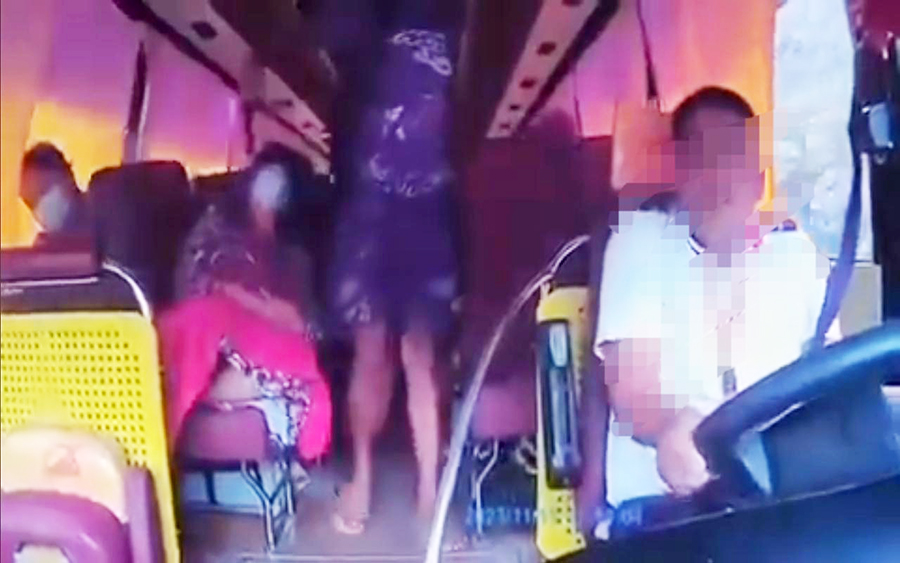
Police investigators are eyeing family dispute as a possible motive behind the killing of two bus passengers in Nueva Ecija last Wednesday, Nov. 15.
In a press conference, the Philippine National Police (PNP) said one of the two victims -- a 60-year-old woman who was a resident of Cauayan, Isabela -- had an argument with her son which led her to file a case for carnapping against him.
The other victim was her live-in partner for five years, a 55-year-old man from South Cotabato.
"On the part of the Nueva Ecija police, the investigators have started their backtracking of the CCTV and they are considering several persons of interest. Prior to the incident, the female victim got into an argument with her son," PNP spokesperson Col. Jean Fajardo said.
"Apparently, the car of the victim was forcibly taken by her son that led to the filing of a criminal case. So will this case lead to a planned killing? We are not yet on that stage although in the spirit of transparency, this is one of the possible motives being eyed by the investigators," she noted.
According to Fajardo, the son denied any involvement in the case but he is still considered as a person of interest.
"We will not stop there. We are hoping to gather enough evidence that would lead to the possible identification of the two suspects and the mastermind behind this killing," Fajardo noted.
Police have also talked to one of the siblings of the female victim who said that the latter had a possible "threat" on her life.
"The sibling also said that she [victim] had an argument with her son and in fact, it even reached the court. There was a case filed and, according to the sibling, a video recording where the victim was saying there was a threat on her life. That's what the police investigators are trying to recover," Fajardo revealed.
To recall, the female victim and her live-in partner boarded a bus at a terminal in Cauayan last Nov. 15 for a "scheduled trip" to Tarlac for their business. Also onboard the bus were four other passengers.
Meanwhile, the two suspects boarded the same bus in Bayombong, Nueva Vizcaya -- about three kilometers from the terminal in Cauayan.
While the bus was traversing Barangay Minuli in Carranglan, Nueva Ecija, the two men asked the driver to stop the vehicle as they were alighting. But before they got out of the bus, one of the two men pulled out a gun and shot the live-in partners point blank.
The grim shooting was caught in a dashcam video which has been uploaded online and immediately went viral.
Fajardo said investigators were also looking at the possibility that the two suspects had a "spotter" inside the bus.
"We are looking at that possibility if someone gave them information that the victims were traveling that day and taking that route," she said. "There is a possibility that the suspects really know the movement of the victims."
The police have also conducted a crossmatch examination on the empty shells recovered at the site of the incident to determine if it will match any evidence from the previous shootings in Nueva Vizcaya or Isabela.