ADVERTISEMENT

Scientists have traced the origin of the modern horse to a lineage that emerged 4,200 years ago

Published Jun 7, 2024 04:36 am
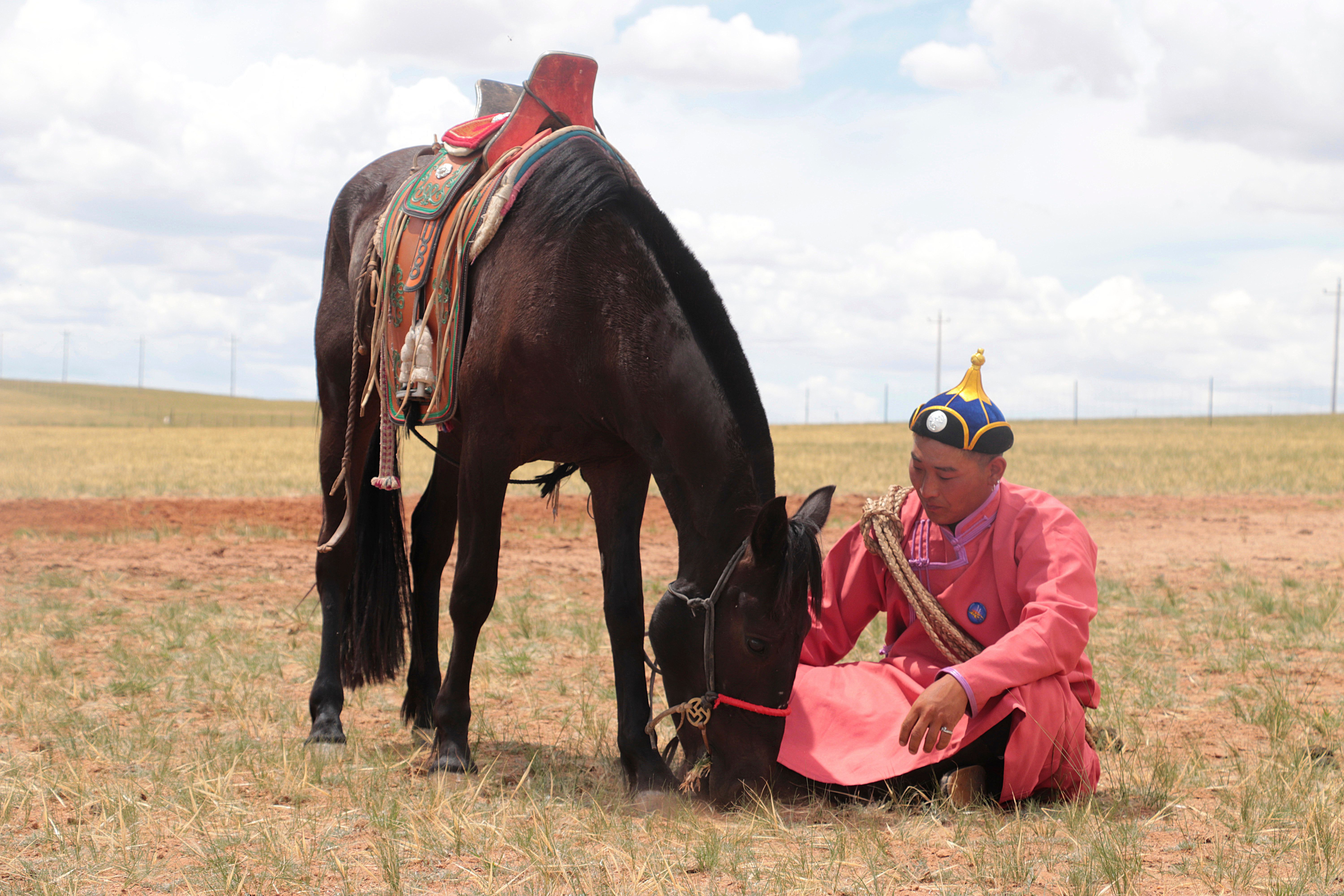
IMG_0062.jpeg
A herder sits with his horse on an open plain in Inner Mongolia, China, July 2019. Scientists analyzed ancient horse genomes to calculate dates for the domestication of the modern horse -- 4,200 years ago, according to new research published Thursday, June 6, 2024, in the journal Nature. (Ludovic Orlando/Centre for Anthropobiology and Genomics of Toulouse, CAGT via AP)

WASHINGTON (AP) ― The horse transformed human history – and now scientists have a clearer idea of when humans began to transform the horse.

Around 4,200 years ago, one particular lineage of horse quickly became dominant across Eurasia, suggesting that's when humans started to spread domesticated horses around the world, according to research published Thursday in the journal Nature.

There was something special about this horse: It had a genetic mutation that changed the shape of its back, likely making it easier to ride.

"In the past, you had many different lineages of horses," said Pablo Librado, an evolutionary biologist at the Spanish National Research Council in Barcelona and co-author of the new study. That genetic diversity was evident in ancient DNA samples the researchers analyzed from archaeological sites across Eurasia dating back to 50,000 years ago.

But their analysis of 475 ancient horse genomes showed a notable change around 4,200 years ago.

That's when a specific lineage that first arose in what's known as the Pontic-Caspian Steppe, a plains region that stretches from what is now northeastern Bulgaria across Ukraine and through southern Russia, began to pop up all across Eurasia and quickly replaced other lineages. Within three hundred years, the horses in Spain were similar to those in Russia.

"We saw this genetic type spreading almost everywhere in Eurasia ― clearly this horse type that was local became global very fast," said co-author Ludovic Orlando, a molecular archaeologist at the Centre for Anthropobiology and Genomics of Toulouse in France.

The researchers believe that this change was because a Bronze Age people called the Sintashta had domesticated their local horse and begun to use these animals to help them dramatically expand their territory.

Domesticating wild horses on the plains of Eurasia was a process, not a single event, scientists say.

Archaeologists have previously found evidence of people consuming horse milk in dental remains dating to around 5,500 years ago, and the earliest evidence of horse ridership dates to around 5,000 years ago. But it was the Sintashta who spread the particular horses they had domesticated across Eurasia, the new study suggests.

Researchers believe the very earliest horse ancestors arose in North America, then sauntered across the Bering Strait into Asia around a million years ago. They flourished in Asia, but went extinct in the Americas.

People had domesticated other animals several thousand years before horses ― including dogs, pigs, cattle, goats and sheep. But the new research shows that the shrinking genetic diversity associated with domestication happened much faster in horses.

"Humans changed the horse genome stunningly quickly, perhaps because we already had experience dealing with animals," said Laurent Frantz, who studies the genetics of ancient creatures at the Ludwig Maximilian University of Munich and was not involved in the study.

"It shows the special place of horses in human societies."

ADVERTISEMENT
.most-popular .layout-ratio{ padding-bottom: 79.13%; } @media (min-width: 768px) and (max-width: 1024px) { .widget-title { font-size: 15px !important; } }

{{ articles_filter_1561_widget.title }}

.most-popular .layout-ratio{ padding-bottom: 79.13%; } @media (min-width: 768px) and (max-width: 1024px) { .widget-title { font-size: 15px !important; } }

{{ articles_filter_1562_widget.title }}

.most-popular .layout-ratio{ padding-bottom: 79.13%; } @media (min-width: 768px) and (max-width: 1024px) { .widget-title { font-size: 15px !important; } }

{{ articles_filter_1563_widget.title }}

{{ articles_filter_1564_widget.title }}

.mb-article-details { position: relative; } .mb-article-details .article-body-preview, .mb-article-details .article-body-summary{ font-size: 17px; line-height: 30px; font-family: "Libre Caslon Text", serif; color: #000; } .mb-article-details .article-body-preview iframe , .mb-article-details .article-body-summary iframe{ width: 100%; margin: auto; } .read-more-background { background: linear-gradient(180deg, color(display-p3 1.000 1.000 1.000 / 0) 13.75%, color(display-p3 1.000 1.000 1.000 / 0.8) 30.79%, color(display-p3 1.000 1.000 1.000) 72.5%); position: absolute; height: 200px; width: 100%; bottom: 0; display: flex; justify-content: center; align-items: center; padding: 0; } .read-more-background a{ color: #000; } .read-more-btn { padding: 17px 45px; font-family: Inter; font-weight: 700; font-size: 18px; line-height: 16px; text-align: center; vertical-align: middle; border: 1px solid black; background-color: white; } .hidden { display: none; }
function initializeAllSwipers() { // Get all hidden inputs with cms_article_id document.querySelectorAll('[id^="cms_article_id_"]').forEach(function (input) { const cmsArticleId = input.value; const articleSelector = '#article-' + cmsArticleId + ' .body_images'; const swiperElement = document.querySelector(articleSelector); if (swiperElement && !swiperElement.classList.contains('swiper-initialized')) { new Swiper(articleSelector, { loop: true, pagination: false, navigation: { nextEl: '#article-' + cmsArticleId + ' .swiper-button-next', prevEl: '#article-' + cmsArticleId + ' .swiper-button-prev', }, }); } }); } setTimeout(initializeAllSwipers, 3000); const intersectionObserver = new IntersectionObserver( (entries) => { entries.forEach((entry) => { if (entry.isIntersecting) { const newUrl = entry.target.getAttribute("data-url"); if (newUrl) { history.pushState(null, null, newUrl); let article = entry.target; // Extract metadata const author = article.querySelector('.author-section').textContent.replace('By', '').trim(); const section = article.querySelector('.section-info ').textContent.replace(' ', ' '); const title = article.querySelector('.article-title h1').textContent; // Parse URL for Chartbeat path format const parsedUrl = new URL(newUrl, window.location.origin); const cleanUrl = parsedUrl.host + parsedUrl.pathname; // Update Chartbeat configuration if (typeof window._sf_async_config !== 'undefined') { window._sf_async_config.path = cleanUrl; window._sf_async_config.sections = section; window._sf_async_config.authors = author; } // Track virtual page view with Chartbeat if (typeof pSUPERFLY !== 'undefined' && typeof pSUPERFLY.virtualPage === 'function') { try { pSUPERFLY.virtualPage({ path: cleanUrl, title: title, sections: section, authors: author }); } catch (error) { console.error('ping error', error); } } // Optional: Update document title if (title && title !== document.title) { document.title = title; } } } }); }, { threshold: 0.1 } ); function showArticleBody(button) { const article = button.closest("article"); const summary = article.querySelector(".article-body-summary"); const body = article.querySelector(".article-body-preview"); const readMoreSection = article.querySelector(".read-more-background"); // Hide summary and read-more section summary.style.display = "none"; readMoreSection.style.display = "none"; // Show the full article body body.classList.remove("hidden"); } document.addEventListener("DOMContentLoaded", () => { let loadCount = 0; // Track how many times articles are loaded const offset = [1, 2, 3, 4, 5, 6, 7, 8, 9, 10]; // Offset values const currentUrl = window.location.pathname.substring(1); let isLoading = false; // Prevent multiple calls if (!currentUrl) { console.log("Current URL is invalid."); return; } const sentinel = document.getElementById("load-more-sentinel"); if (!sentinel) { console.log("Sentinel element not found."); return; } function isSentinelVisible() { const rect = sentinel.getBoundingClientRect(); return ( rect.top < window.innerHeight && rect.bottom >= 0 ); } function onScroll() { if (isLoading) return; if (isSentinelVisible()) { if (loadCount >= offset.length) { console.log("Maximum load attempts reached."); window.removeEventListener("scroll", onScroll); return; } isLoading = true; const currentOffset = offset[loadCount]; window.loadMoreItems().then(() => { let article = document.querySelector('#widget_1690 > div:nth-last-of-type(2) article'); intersectionObserver.observe(article) loadCount++; }).catch(error => { console.error("Error loading more items:", error); }).finally(() => { isLoading = false; }); } } window.addEventListener("scroll", onScroll); });

Sign up by email to receive news.