







Adapting education for the modern student
Mapua's Tri-X: Your education, your way


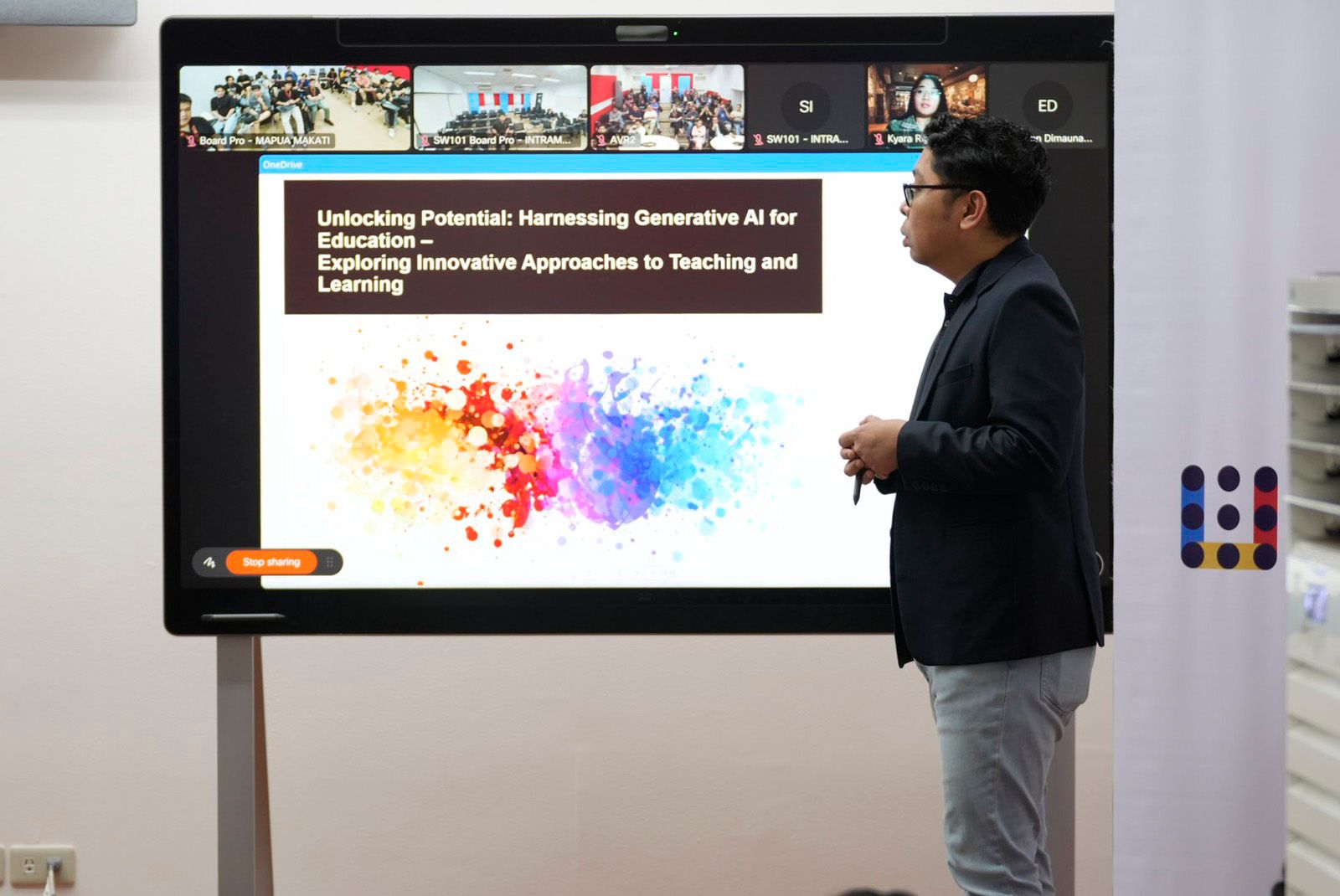
If the past couple of years have been any indication, it’s that we need to be more flexible and adaptable to situations. This is tricky and complex. It’s something that cannot be taught but learned through experience.
Mapua University has taken such leaps anyway. They recently launched the Tri-X program, which stands for triple experience. This gives students the option to choose how they will take their classes each week through the semester. They may attend online, synchronously, or asynchronously.
Essentially, a student may escape the frustrations of commuting, especially against bad weather and the crucible known as the LRT. Jokes aside. The weather is treacherous. I recall the academic year was shifted to avoid class suspensions due to typhoons. And now, there are instances where classes get suspended over fears of heat strokes.
Mapua’s Tri-X approach is a step to address these challenges, while also giving students more opportunities.
An Industrial Engineering student, who has preferred to remain anonymous, said: “I think this Tri-X program helped me manage my time wisely and I can do a lot more extracurricular activities.”
Mapua speaks to students to arrange the schedules. A student may even choose to take their entire semester asynchronously, if they so desire, which opens all sorts of doors for students. They can attend their semesters while remaining in their provinces, closer to their families. If an internet connection has been disrupted due to any of the dozen reasons, a student won’t be overly stressed and pressured to attend class or submit deadlines. Most commonly, if the streets of Manila begin to flood, students will still be able to attend their classes. Better still, if it’s raining, a student won’t have to keep checking social media posts or news if classes will be suspended. Too often, these announcements come at a time when students are already halfway to the university, all drenched. I’m sure some of you reading this can relate.
“I would say that it is indeed flexible since the majority of the students can opt to stay at home or attend the class face to face,” said David Narboneta, a second-year Civil Engineering student. “Provided that the instructor will permit them to do so.
According to Narboneta, in his own experience, it is the professors who determine how Tri-X will be utilized.
“In my own experience, the instructor will be the one to set parameters regarding the use of Tri-X for the specific course,” Narboneta said. “While some may provide the students to attend class online during the Monday and Wednesday schedules, other professors tend to require the class to come to school and attend face-to-face. It also noted that the type of course is considered before instructors opt for Tri-X setting. Most likely, if the course is considered an SCC (Super Critical Course), the instructor would require face-to-face meetings and by the end of the week, they will either choose whether to have the class online/asynchronously.”
“I prefer this mode of learning instead of the normal one. Tri-X has been beneficial to me and others as well, especially when weather conditions deem it impossible for students to go to school for face-to-face classes,” he added. “At this moment, staying home due to bad weather conditions is the only benefit I could think of for students particularly due to reduced hassle and also the ensured safety it provides.”
The Industrial Engineering student we spoke to also shared, “Many students appreciate the flexibility and the ability to tailor their learning experiences to their personal needs and schedules. They might value the opportunity to blend online, synchronous, and asynchronous learning modes according to their preferences or life circumstances.”
The mention of life circumstances here is interesting. The Tri-X program should be beneficial to working students, giving them more time to balance between jobs to support themselves or their families and their studies.
The Industrial Engineering student added that, with the Tri-X program, educators have remained considerate of situations, and provide teaching methods to provide the best experiences for students.
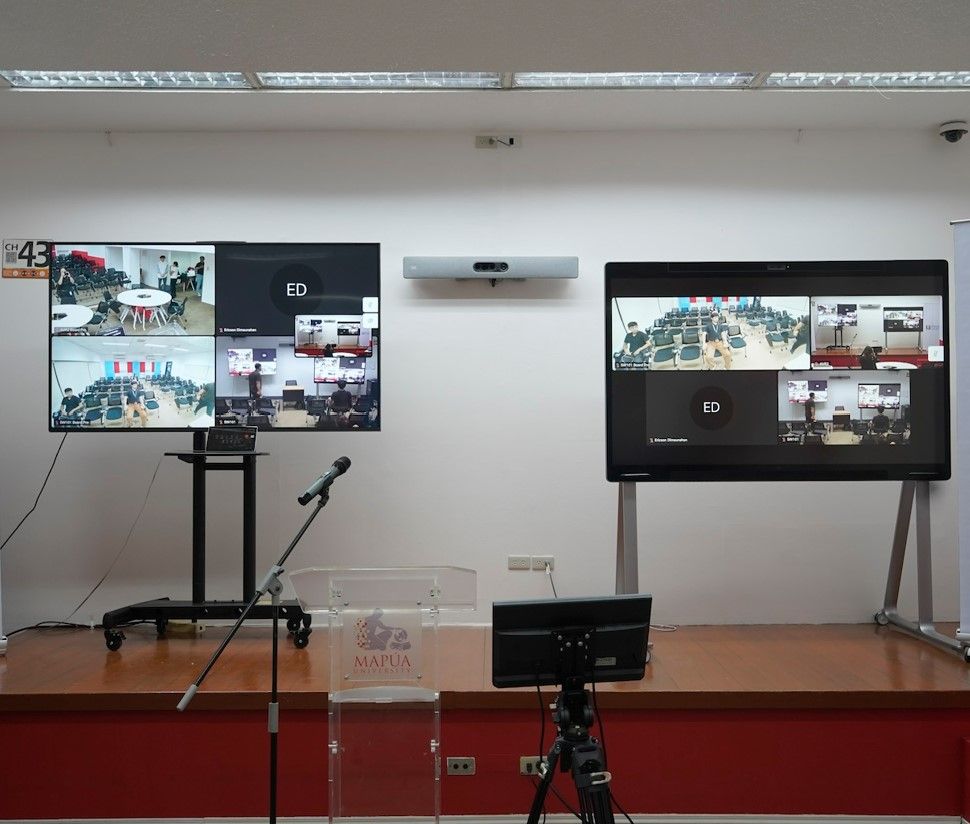
Classrooms have received updates as well. They are now equipped with technologies to benefit both in-person students and students attending online. Some of these include the OBSBOT camera, which is AI-powered for auto-framing and has gesture controls, allowing professors to control the camera seamlessly. It’s also used to record classes accordingly at 4K resolutions. Jabra speakers and mics are used to help professors deliver their lectures with clarity. And LED screens for an interactive and collaborative discussion–probably to also save cost on chalk and markers.
Engineer Ericson D. Dimaunahan, director, Center for Teaching and Learning at Institute of Digital Learning Mapua University, mentioned that these new technologies have allowed educators to adapt to the changing needs of the students. This sounds like a crucial highlight. It emphasizes that Mapua University is putting forward a student-centric approach to education, by considering, as our Industrial Engineering student has said earlier, “preferences and life circumstances.”
Based on what I’m hearing about the Tri-X program, instead of putting students in a survival environment, Mapua has built a center where they could foster talent and encourage growth.
The technology is here, after all. Why not make the most out of it, right?
“With the use of technology,” Engineer Dimaunahan said. “Teachers can incorporate a variety of teaching methods that were not possible before. Such as online lectures, interactive exercises, and virtual field trips. This has led to a student-centered approach, where teachers can tailor their lessons to meet the unique needs and interests of individual students.”
It is too soon to see how effective this approach will be for students and Mapua itself. But this is a testament to the institution’s commitment to adapting to the evolving needs of its students. By offering flexibility and options for adaptability, Mapua is empowering students to navigate academic challenges, personal commitments, and unforeseen circumstances–like bad weather. As technology helps shape the education landscape, Mapua positions itself as a pioneer in providing a student-centered learning experience.