ADVERTISEMENT

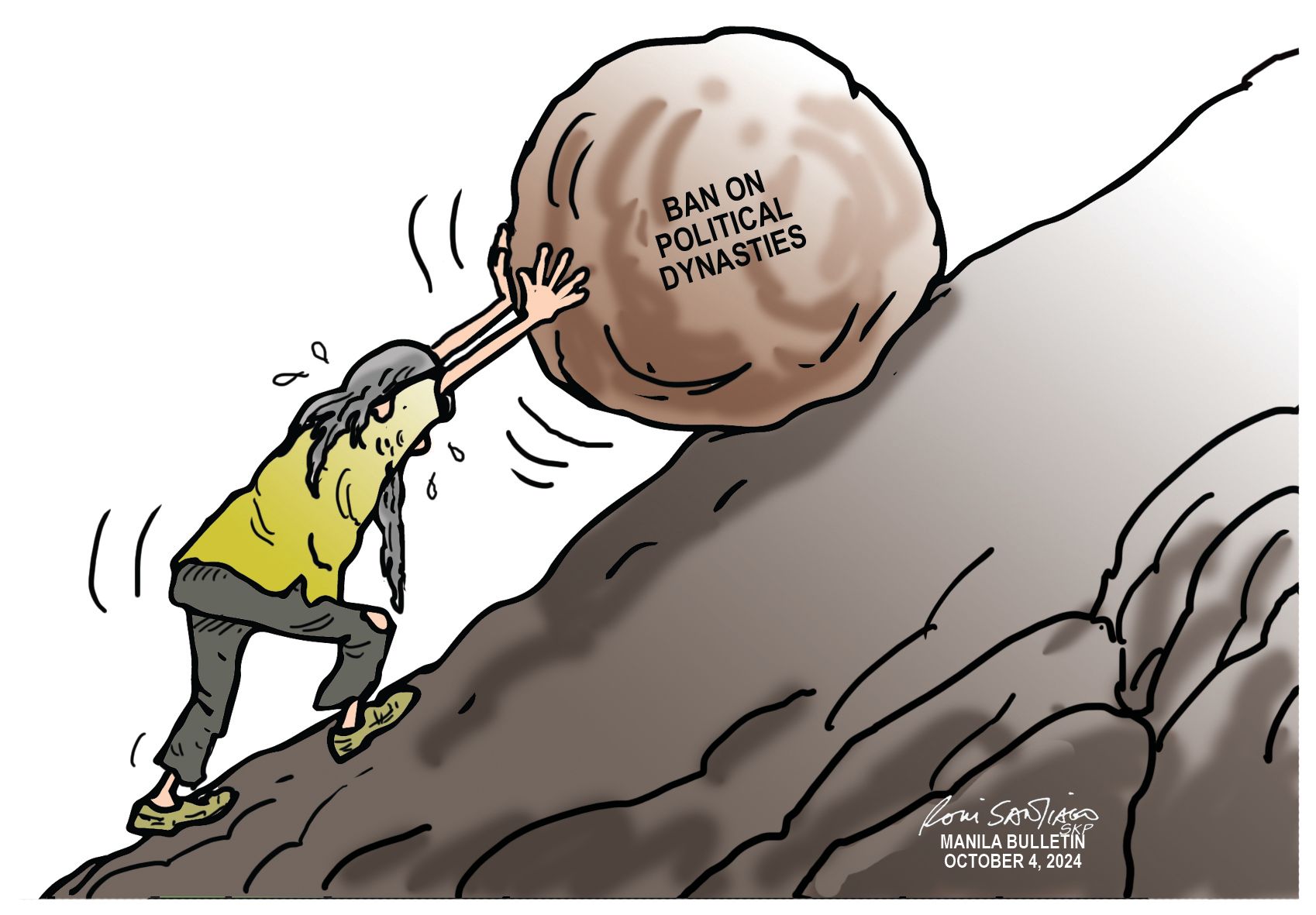
Constitutional ban on political dynasties: Will it ever be enforced?

Published Oct 3, 2024 04:07 pm

E CARTOON OCT 4, 2024.jpg

The 1987 Philippine Constitution explicitly prohibits political dynasties to ensure fair and equitable access to opportunities for public service. 


However, 37 years since the Constitution was approved, no enabling law has been passed to enforce the ban. This glaring gap in legislation raises critical questions about the commitment of the Senate and the House of Representatives to uphold democratic principles.


The delay in passing an enabling law to ban political dynasties may be attributed to several factors, among these are self-interest, political influence, and lack of political will.


Many lawmakers themselves belong to political dynasties. Passing such a law would directly affect their political careers and those of their family members.


Political dynasties often have significant influence and resources, which they use to maintain their power.


In general, there is lack of political will among legislators to push for reforms that would disrupt the status quo.


In 2018, the Senate Committee on Constitutional Amendments and Revision of Codes approved Senate Bill No. 1765 or the proposed Anti-Political Dynasty Act of 2018. It defines political dynasty as the “concentration, consolidation, and/or perpetuation of public office and political powers by persons related to one another within the second degree of consanguinity or affinity.” It covers spouses (legal and common-law), siblings (full or half-blood), parents, and children (legitimate, illegitimate, and adopted) and the spouses of these second-degree relatives. It ended there.


A year later, in 2019, then Sen. Panfilo Lacson filed another anti-political dynasty measure but it got stuck at the committee level.


Now comes Senate President Francis Escudero who said on Wednesday, Oct. 2, that he is willing to vote for a measure that bans political dynasties.
“If my vote is needed to pass it, I will vote for it because it goes against my interest,” Escudero said.


While the Constitution bans political dynasties as may be defined by law, not everything is bad about it.


Those in favor argue that political dynasties bring experience and continuity in governance. Families with a long history in politics may have a better understanding of the political landscape and established networks that can be beneficial for effective governance.


Some voters may trust political families due to their familiarity and perceived track record. This trust can translate into consistent voter support.


Political dynasties can potentially lead to more efficient governance as family members may share similar political ideologies and goals, reducing conflicts and fostering smoother transitions of power.


On the other hand, among the adverse arguments on the issue are political dynasties could lead to the concentration of power within a few families, thus undermining democratic principles and limiting political diversity. Dominance of political families can perpetuate inequality as these families may prioritize their interests over the public good.


Political dynasties can stifle new and potentially more capable leaders from emerging, as the political arena becomes monopolized by a few families. With power concentrated in a few hands, there may be less accountability and transparency, leading to governance issues and public distrust.


While political dynasties can bring certain advantages, the risks they pose to democratic principles and governance often outweigh these benefits. Ensuring a fair and competitive political environment is crucial for the health of any democracy. Let’s adhere to the wisdom of the Constitution.
 

Related Tags

Editorial
ADVERTISEMENT
.most-popular .layout-ratio{ padding-bottom: 79.13%; } @media (min-width: 768px) and (max-width: 1024px) { .widget-title { font-size: 15px !important; } }

{{ articles_filter_1561_widget.title }}

.most-popular .layout-ratio{ padding-bottom: 79.13%; } @media (min-width: 768px) and (max-width: 1024px) { .widget-title { font-size: 15px !important; } }

{{ articles_filter_1562_widget.title }}

.most-popular .layout-ratio{ padding-bottom: 79.13%; } @media (min-width: 768px) and (max-width: 1024px) { .widget-title { font-size: 15px !important; } }

{{ articles_filter_1563_widget.title }}

{{ articles_filter_1564_widget.title }}

.mb-article-details { position: relative; } .mb-article-details .article-body-preview, .mb-article-details .article-body-summary{ font-size: 17px; line-height: 30px; font-family: "Libre Caslon Text", serif; color: #000; } .mb-article-details .article-body-preview iframe , .mb-article-details .article-body-summary iframe{ width: 100%; margin: auto; } .read-more-background { background: linear-gradient(180deg, color(display-p3 1.000 1.000 1.000 / 0) 13.75%, color(display-p3 1.000 1.000 1.000 / 0.8) 30.79%, color(display-p3 1.000 1.000 1.000) 72.5%); position: absolute; height: 200px; width: 100%; bottom: 0; display: flex; justify-content: center; align-items: center; padding: 0; } .read-more-background a{ color: #000; } .read-more-btn { padding: 17px 45px; font-family: Inter; font-weight: 700; font-size: 18px; line-height: 16px; text-align: center; vertical-align: middle; border: 1px solid black; background-color: white; } .hidden { display: none; }
function initializeAllSwipers() { // Get all hidden inputs with cms_article_id document.querySelectorAll('[id^="cms_article_id_"]').forEach(function (input) { const cmsArticleId = input.value; const articleSelector = '#article-' + cmsArticleId + ' .body_images'; const swiperElement = document.querySelector(articleSelector); if (swiperElement && !swiperElement.classList.contains('swiper-initialized')) { new Swiper(articleSelector, { loop: true, pagination: false, navigation: { nextEl: '#article-' + cmsArticleId + ' .swiper-button-next', prevEl: '#article-' + cmsArticleId + ' .swiper-button-prev', }, }); } }); } setTimeout(initializeAllSwipers, 3000); const intersectionObserver = new IntersectionObserver( (entries) => { entries.forEach((entry) => { if (entry.isIntersecting) { const newUrl = entry.target.getAttribute("data-url"); if (newUrl) { history.pushState(null, null, newUrl); let article = entry.target; // Extract metadata const author = article.querySelector('.author-section').textContent.replace('By', '').trim(); const section = article.querySelector('.section-info ').textContent.replace(' ', ' '); const title = article.querySelector('.article-title h1').textContent; // Parse URL for Chartbeat path format const parsedUrl = new URL(newUrl, window.location.origin); const cleanUrl = parsedUrl.host + parsedUrl.pathname; // Update Chartbeat configuration if (typeof window._sf_async_config !== 'undefined') { window._sf_async_config.path = cleanUrl; window._sf_async_config.sections = section; window._sf_async_config.authors = author; } // Track virtual page view with Chartbeat if (typeof pSUPERFLY !== 'undefined' && typeof pSUPERFLY.virtualPage === 'function') { try { pSUPERFLY.virtualPage({ path: cleanUrl, title: title, sections: section, authors: author }); } catch (error) { console.error('ping error', error); } } // Optional: Update document title if (title && title !== document.title) { document.title = title; } } } }); }, { threshold: 0.1 } ); function showArticleBody(button) { const article = button.closest("article"); const summary = article.querySelector(".article-body-summary"); const body = article.querySelector(".article-body-preview"); const readMoreSection = article.querySelector(".read-more-background"); // Hide summary and read-more section summary.style.display = "none"; readMoreSection.style.display = "none"; // Show the full article body body.classList.remove("hidden"); } document.addEventListener("DOMContentLoaded", () => { let loadCount = 0; // Track how many times articles are loaded const offset = [1, 2, 3, 4, 5, 6, 7, 8, 9, 10]; // Offset values const currentUrl = window.location.pathname.substring(1); let isLoading = false; // Prevent multiple calls if (!currentUrl) { console.log("Current URL is invalid."); return; } const sentinel = document.getElementById("load-more-sentinel"); if (!sentinel) { console.log("Sentinel element not found."); return; } function isSentinelVisible() { const rect = sentinel.getBoundingClientRect(); return ( rect.top < window.innerHeight && rect.bottom >= 0 ); } function onScroll() { if (isLoading) return; if (isSentinelVisible()) { if (loadCount >= offset.length) { console.log("Maximum load attempts reached."); window.removeEventListener("scroll", onScroll); return; } isLoading = true; const currentOffset = offset[loadCount]; window.loadMoreItems().then(() => { let article = document.querySelector('#widget_1690 > div:nth-last-of-type(2) article'); intersectionObserver.observe(article) loadCount++; }).catch(error => { console.error("Error loading more items:", error); }).finally(() => { isLoading = false; }); } } window.addEventListener("scroll", onScroll); });

Sign up by email to receive news.