ADVERTISEMENT

Farmers honor 'Peanuts' creator with corn mazes across US and Canada

Published Aug 8, 2024 09:33 am
AP24218713770645.jpg
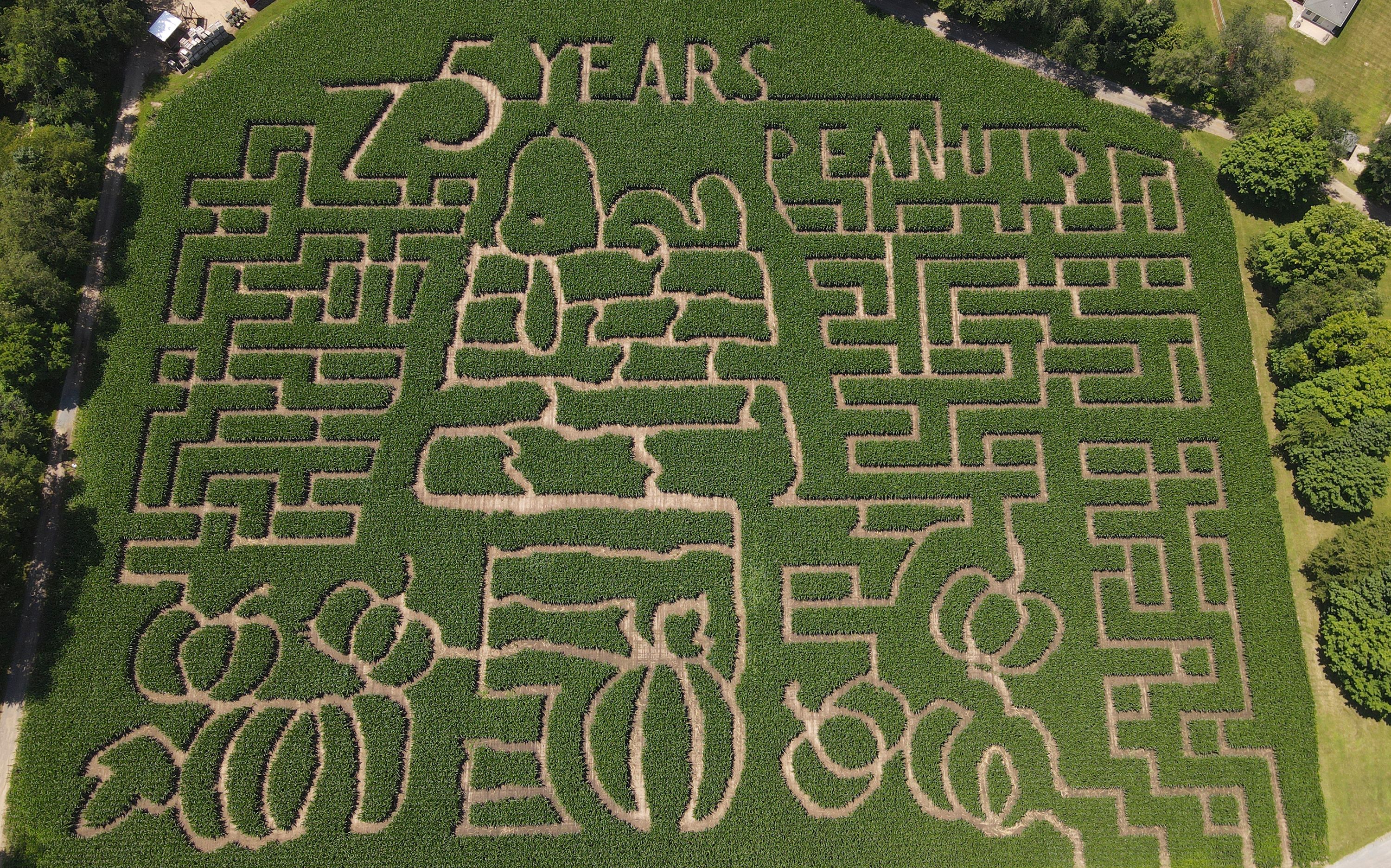
THIS JULY 17, 2024 image released by Gull Meadow Farms shows a corn maze honoring the 75th anniversary of the Peanuts comic strip in Richland, Mich. (AP)


NEW YORK (AP) — Visitors to corn mazes across the country are finding a familiar and joyous figure in the winding labyrinth of tall stalks. Snoopy.
More than 80 farms in the US and Canada have teamed up with Peanuts Worldwide to create “Peanuts”-themed mazes to celebrate the beloved strip's 75th birthday this summer and fall.


A massive Snoopy rests on top of his doghouse in a maze at Dull’s Tree Farm in Thorntown, Indiana, and he's depicted gleefully atop a pumpkin at Downey’s Farm in Caledon, Ontario.


“All of these events helps keep my dad’s legacy alive,” says Jill Schulz, an actor and daughter of “Peanuts” creator Charles M. Schulz.
“As someone who can't even keep houseplants alive, the fact that they can do that with a corn maze and get the artwork right and create a fun experience for all ages is pretty incredible,” she adds, laughing.


The mazes — which span 35 states and provinces, from California to New York, Ontario to Texas — are expected to attract more than two million visitors. Farmers are signing up for the free service because the mazes are part of the customer lure, in addition to things like hay rides, fresh produce and pumpkin carvings.


Each maze is designed for the size of the farm — from 1.5 acres to 20 acres — and are mostly corn but also sunflowers. They're custom created by the world’s largest corn maze consulting company, The MAiZE Inc.


The Utah-based Brett Herbst, who leads the company and who launched his first corn maze in 1996, says technology has only somewhat changed the way corn mazes are made.


“The first year we did it, we just used a weed whacker with a saw blade on it when the corn was fully grown,” he says. “Now we do it when it’s short and we go in and either mow it or rototill it. We design it all on a computer, but most of it we actually just go draw it out on the ground by hand.”


He and his team have over the years designed mazes with everything from the faces of presidential candidates, Oprah Winfrey, zombies, John Wayne and Chris LeDoux. Charlie Brown and Co. just work well, he says.


“It’s very nostalgic and just seemed like a very natural fit from the get-go to embrace that with ‘Peanuts,’” he says. “It’s harvest time. It's kind of become this iconic thing.”


There's an art and a science to maze building, a balance between maintaining the integrity of the image, but also making it a true maze where people can actually get lost in. “That’s definitely a challenge there,” says Herbst. “You want to accomplish both as much as possible.”


“Peanuts” made its debut Oct. 2, 1950. The travails of the “little round-headed kid” Charlie Brown and his pals eventually ran in more than 2,600 newspapers, reaching millions of readers in 75 countries.


The strip offers enduring images of kites in trees, Charlie Brown trying to kick a football, tart-tongued Lucy handing out advice for a nickel and Snoopy taking the occasional flight of fancy to the skies. Phrases such as “security blanket” and “good grief” are a part of the global vernacular. Schulz died in 2000.
 

Related Tags

Specialstoryonline Featurestory Agriculture
ADVERTISEMENT
.most-popular .layout-ratio{ padding-bottom: 79.13%; } @media (min-width: 768px) and (max-width: 1024px) { .widget-title { font-size: 15px !important; } }

{{ articles_filter_1561_widget.title }}

.most-popular .layout-ratio{ padding-bottom: 79.13%; } @media (min-width: 768px) and (max-width: 1024px) { .widget-title { font-size: 15px !important; } }

{{ static_articles_1562_widget.title }}

.most-popular .layout-ratio{ padding-bottom: 79.13%; } @media (min-width: 768px) and (max-width: 1024px) { .widget-title { font-size: 15px !important; } }

{{ articles_filter_1563_widget.title }}

{{ articles_filter_1564_widget.title }}

.mb-article-details { position: relative; } .mb-article-details .article-body-preview, .mb-article-details .article-body-summary{ font-size: 17px; line-height: 30px; font-family: "Libre Caslon Text", serif; color: #000; } .mb-article-details .article-body-preview iframe , .mb-article-details .article-body-summary iframe{ width: 100%; margin: auto; } .read-more-background { background: linear-gradient(180deg, color(display-p3 1.000 1.000 1.000 / 0) 13.75%, color(display-p3 1.000 1.000 1.000 / 0.8) 30.79%, color(display-p3 1.000 1.000 1.000) 72.5%); position: absolute; height: 200px; width: 100%; bottom: 0; display: flex; justify-content: center; align-items: center; padding: 0; } .read-more-background a{ color: #000; } .read-more-btn { padding: 17px 45px; font-family: Inter; font-weight: 700; font-size: 18px; line-height: 16px; text-align: center; vertical-align: middle; border: 1px solid black; background-color: white; } .hidden { display: none; }
function initializeAllSwipers() { // Get all hidden inputs with cms_article_id document.querySelectorAll('[id^="cms_article_id_"]').forEach(function (input) { const cmsArticleId = input.value; const articleSelector = '#article-' + cmsArticleId + ' .body_images'; const swiperElement = document.querySelector(articleSelector); if (swiperElement && !swiperElement.classList.contains('swiper-initialized')) { new Swiper(articleSelector, { loop: true, pagination: false, navigation: { nextEl: '#article-' + cmsArticleId + ' .swiper-button-next', prevEl: '#article-' + cmsArticleId + ' .swiper-button-prev', }, }); } }); } setTimeout(initializeAllSwipers, 3000); const intersectionObserver = new IntersectionObserver( (entries) => { entries.forEach((entry) => { if (entry.isIntersecting) { const newUrl = entry.target.getAttribute("data-url"); if (newUrl) { history.pushState(null, null, newUrl); let article = entry.target; // Extract metadata const author = article.querySelector('.author-section').textContent.replace('By', '').trim(); const section = article.querySelector('.section-info ').textContent.replace(' ', ' '); const title = article.querySelector('.article-title h1').textContent; // Parse URL for Chartbeat path format const parsedUrl = new URL(newUrl, window.location.origin); const cleanUrl = parsedUrl.host + parsedUrl.pathname; // Update Chartbeat configuration if (typeof window._sf_async_config !== 'undefined') { window._sf_async_config.path = cleanUrl; window._sf_async_config.sections = section; window._sf_async_config.authors = author; } // Track virtual page view with Chartbeat if (typeof pSUPERFLY !== 'undefined' && typeof pSUPERFLY.virtualPage === 'function') { try { pSUPERFLY.virtualPage({ path: cleanUrl, title: title, sections: section, authors: author }); } catch (error) { console.error('ping error', error); } } // Optional: Update document title if (title && title !== document.title) { document.title = title; } } } }); }, { threshold: 0.1 } ); function showArticleBody(button) { const article = button.closest("article"); const summary = article.querySelector(".article-body-summary"); const body = article.querySelector(".article-body-preview"); const readMoreSection = article.querySelector(".read-more-background"); // Hide summary and read-more section summary.style.display = "none"; readMoreSection.style.display = "none"; // Show the full article body body.classList.remove("hidden"); } document.addEventListener("DOMContentLoaded", () => { let loadCount = 0; // Track how many times articles are loaded const offset = [1, 2, 3, 4, 5, 6, 7, 8, 9, 10]; // Offset values const currentUrl = window.location.pathname.substring(1); let isLoading = false; // Prevent multiple calls if (!currentUrl) { console.log("Current URL is invalid."); return; } const sentinel = document.getElementById("load-more-sentinel"); if (!sentinel) { console.log("Sentinel element not found."); return; } function isSentinelVisible() { const rect = sentinel.getBoundingClientRect(); return ( rect.top < window.innerHeight && rect.bottom >= 0 ); } function onScroll() { if (isLoading) return; if (isSentinelVisible()) { if (loadCount >= offset.length) { console.log("Maximum load attempts reached."); window.removeEventListener("scroll", onScroll); return; } isLoading = true; const currentOffset = offset[loadCount]; window.loadMoreItems().then(() => { let article = document.querySelector('#widget_1690 > div:nth-last-of-type(2) article'); intersectionObserver.observe(article) loadCount++; }).catch(error => { console.error("Error loading more items:", error); }).finally(() => { isLoading = false; }); } } window.addEventListener("scroll", onScroll); });

Sign up by email to receive news.