






 Opinion
On Philippine-American Friendship Day, we celebrate a year of historic achievements
Opinion
On Philippine-American Friendship Day, we celebrate a year of historic achievements
On Philippine-American Friendship Day, we celebrate a year of historic achievements


By US AMBASSADOR TO THE PHILIPPINES MARYKAY CARLSON
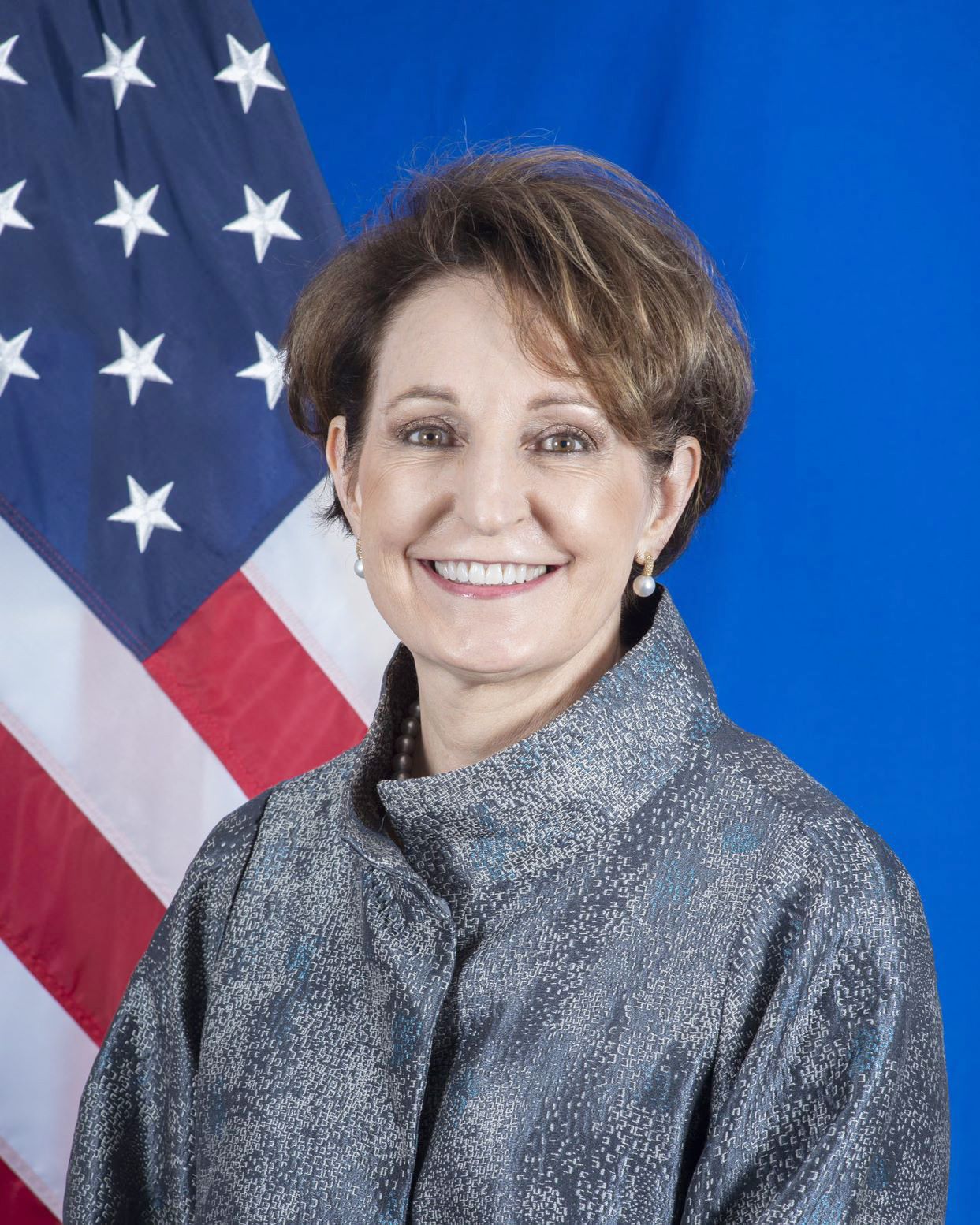
On the Fourth of July – US Independence Day and Philippine-American Friendship Day – we look back on what the US-Philippine partnership has achieved over the past 12 months. We’ve reached incredible milestones together as friends, partners, and allies, setting a bold agenda to build a more secure and prosperous future for our peoples.
The Trilateral Leaders’ Summit among President Biden, President Marcos, and Japanese Prime Minister Kishida in Washington was a historic moment in a year of exceptional achievements. The leaders committed to advancing the security and prosperity of all three nations, the Indo-Pacific region, and the world through cooperation on economic growth, critical technologies, the digital economy, climate and clean energy, infrastructure, and peace and security. They announced the Luzon Economic Corridor under the Partnership for Global Infrastructure and Investment and the Indo-Pacific Economic Framework (IPEF) Investment Accelerator, which will support transformative public and private investments from Subic Bay to Batangas – home to 40 percent of the Philippines’ population and 50 percent of its economic activity. The three leaders also announced $8 million for Open Radio Access Network (RAN) field trials that will pave the way for more affordable and secure telecommunications.
As President Marcos has said, economic security is national security. Our commitment to bring greater private investment to the Philippines is multifaceted. In March, Secretary of Commerce Raimondo led the first-ever Presidential Trade and Investment Mission to the Philippines, where US firms announced more than $1 billion in investments in key sectors and new partnerships to help develop a future-ready Philippine workforce. We built on these engagements in May during the Indo-Pacific Business Forum in Manila, where the US Trade and Development Agency awarded a grant to a Filipino company to deliver affordable, high-quality internet connectivity to underserved communities in the Philippines.
We are accelerating investment in the Philippines with the introduction of new tools and resources. Later this year, the US Development Finance Corporation (DFC) plans to open a Manila office, its fifth location in the Indo-Pacific region. This new office underscores DFC’s growing focus on the Philippines in critical sectors such as renewable energy, agriculture, critical minerals, and infrastructure.
The Millennium Challenge Corporation returned to the Philippines this year and now has a team on the ground to co-develop a threshold program. This program identifies key constraints to economic growth and creates favorable conditions for new investments from the private sector and development partners.
The United States is committed to supporting the Philippines’ clean energy transition. Last November, at the Asia-Pacific Economic Cooperation Leaders’ Week in San Francisco, Secretaries Lotilla and Blinken signed a civil nuclear cooperation agreement, or “123 Agreement,” facilitating US-Philippine cooperation to responsibly develop a peaceful, sustainable nuclear energy program. The Philippines Department of Energy (DOE) and the Philippine-American Educational Foundation are creating scholarships and academic exchanges on nuclear power and clean energy, and the US Agency for International Development (USAID) is partnering with DOE to develop a comprehensive civil nuclear energy policy.
USAID partnered with the Philippine government to launch its first Green Energy Auction Program, in which private sector companies compete to offer the most affordable prices to supply renewable energy to the grid, driving billions of dollars in investments and increasing renewable energy capacity by 65 percent by 2026. The US Departments of State and Energy also launched the US-Philippine Energy Policy Dialogue to deepen cooperation in this field.
Our military alliance continues to flourish. We have improved our bilateral exercises and established new ways to work together to address 21st century security challenges, such as cyber defense. We have reinvigorated our maritime cooperation, conducting joint naval engagements alongside Australia, Canada, France, and Japan. The United States continues to expand funding to help modernize the Armed Forces of the Philippines.
Underpinning all these important endeavors are close and meaningful bonds of friendship and family ties that form not only the foundation upon which our relations are based, but a springboard for reaching new heights in the future.
On this day last year, I hailed the positive momentum in US-Philippine relations. Since then, that momentum has accelerated significantly. As Secretary Blinken described it during his most recent visit to Manila, the US-Philippine relationship is on hyperdrive and has never been stronger. Let’s see what we can accomplish in the next twelve months!