







The upgraded ROG Ally X goes live


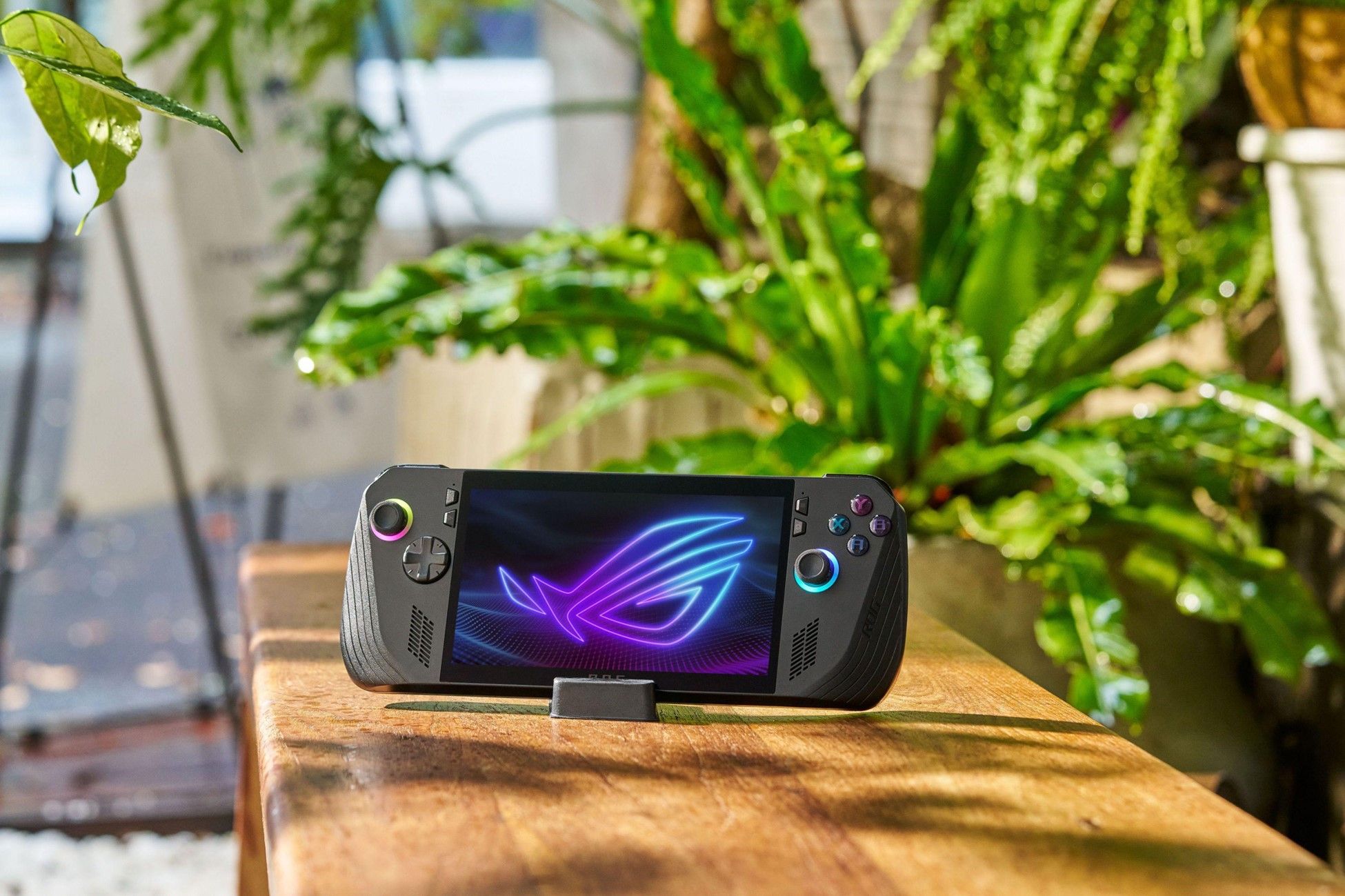
ASUS dropped a big surprise for the long weekend.
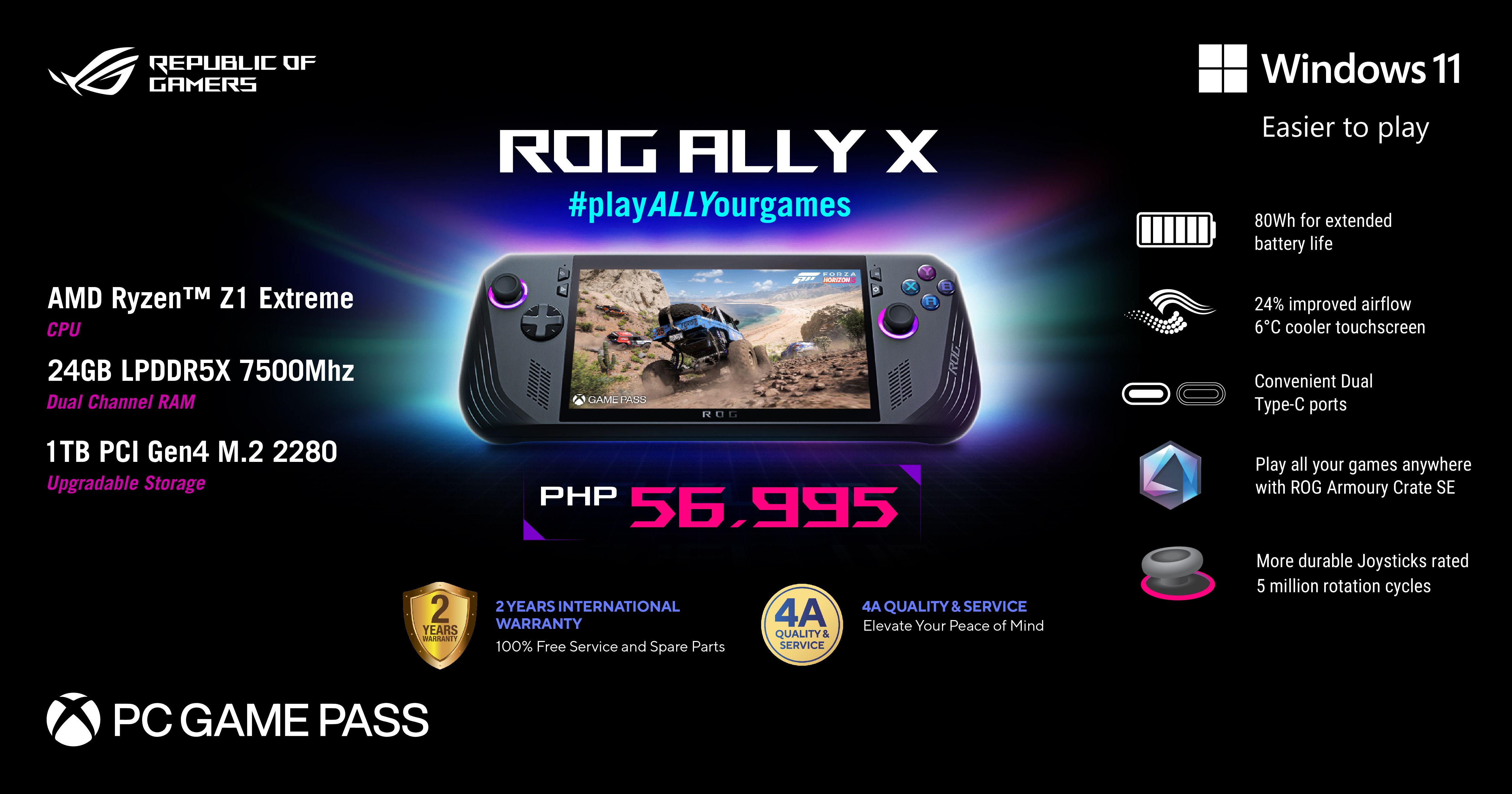
They have officially launched the ROG Ally X. The enhanced version of ASUS’ original handheld console Ally. This new version includes upgraded storage, RAM, and battery life. It also got an improved chassis, improved cooling, and better connectivity.
ASUS focused a lot on the improved ergonomics, giving players a better feel as they game, including adjustment to the triggers for easier access–which sounds weird, since a lot of people should have their fingers already placed on the triggers by default. I suppose ASUS simply meant, these adjustments would make it more comfortable for players during long gameplay hours.
Behind the Ally X are macro buttons and these too, have seen some tweaks. They are now smaller to prevent accidental presses–which, based on experience, does happen more often than one might assume.
ASUS also mentioned about improving the joysticks, which can now have a five million cycle lifespan. That sounds cool. But honestly I have no idea how to measure that in real-world gaming hours. It does sound a lot, at least. ASUS made no mention if the sticks have hall effects–the stuff that prevents stick drifting. But, doing a bit of research, these sticks are modular, which means they are easy to replace when they finally bust, or easy to install hall effect sticks if players prefer them more.
According to ASUS, users overwhelmingly requested more universal I/O, so the original XG Mobile port has been replaced with two USB-C ports on the ROG Ally X, one of which is Thunderbolt-compatible for wide interoperability with third-party docks and external GPUs.
The Ally X has new fans that are smaller with thinner blades to improve airflow, thus, improving cooling. The design doesn’t only keep the internal parts cooled, but also the touchscreen.
Priced at P56,995, the ASUS Ally X is available now, August 23, 2024, through ROG Exclusive Stores nationwide.
Along with it comes a three-month complimentary PC Game Pass subscription, the ASUS 4A Quality and Service warranty package, and the ASUS Preventive Maintenance Service.
Specs, below:
| Product | ROG Ally X (RC72LA) |
| Operating System | Windows 11 Home |
| Display | 7” FHD (1920x1080) 16:9, 500 nits brightness, 100% sRGB, Corning® Gorilla® Glass Victus™ with Gorilla® Glass DXC coating, touchscreen, 120 Hz refresh rate, 7 ms response time, AMD FreeSync Premium |
| CPU | AMD Ryzen™ Z1 Extreme Processor ("Zen4" architecture with 4 nm process, 8-core /16-threads, 24MB total cache, up to 5.10 GHz boost) |
| GPU | AMD Radeon™ Graphics (AMD RDNA™ 3, 12 CUs, up to 2.7 GHz, up to 8.6 Teraflops) |
| Memory | 24 GB LPDDR5X on board (7500 MHz dual channel |
| Storage | 1 TB M.2 2280 NVMe™ PCIe® G4x4 Value SSD |
| I/O Ports | 1 x Audio combo jack 1 x Micro SD Card reader (UHS-II, 312MB/s) 1 x USB-C® supports USB 3.2 Gen 2 (DisplayPort™ 1.4 with Freesync support, Power Delivery 3.0 (Input: 20V/5A, Output 5V/1.5A)) 1 x USB4® (Thunderbolt™ 4 compliance, DisplayPort™ 1.4 with Freesync support, Power Delivery 3.0 (Input: 20V/5A, output:5V/3A) |
| Audio | 2-speaker system with Smart Amplifier Technology Dolby Atmos® AI noise-canceling technology Hi-Res Audio certification Built-in array microphone |
| Battery | 80 Wh |
| Power Supply | USB-C®, 65W AC Adapter, Output: 20V DC, 3.25 A, 65 W, Input: 100~240V AC 50 / 60 Hz universal |
| Dimension | 28.0 x 11.1 x 2.47 cm |
| Weight | 678 g |
| Price | P56,995 |