ADVERTISEMENT

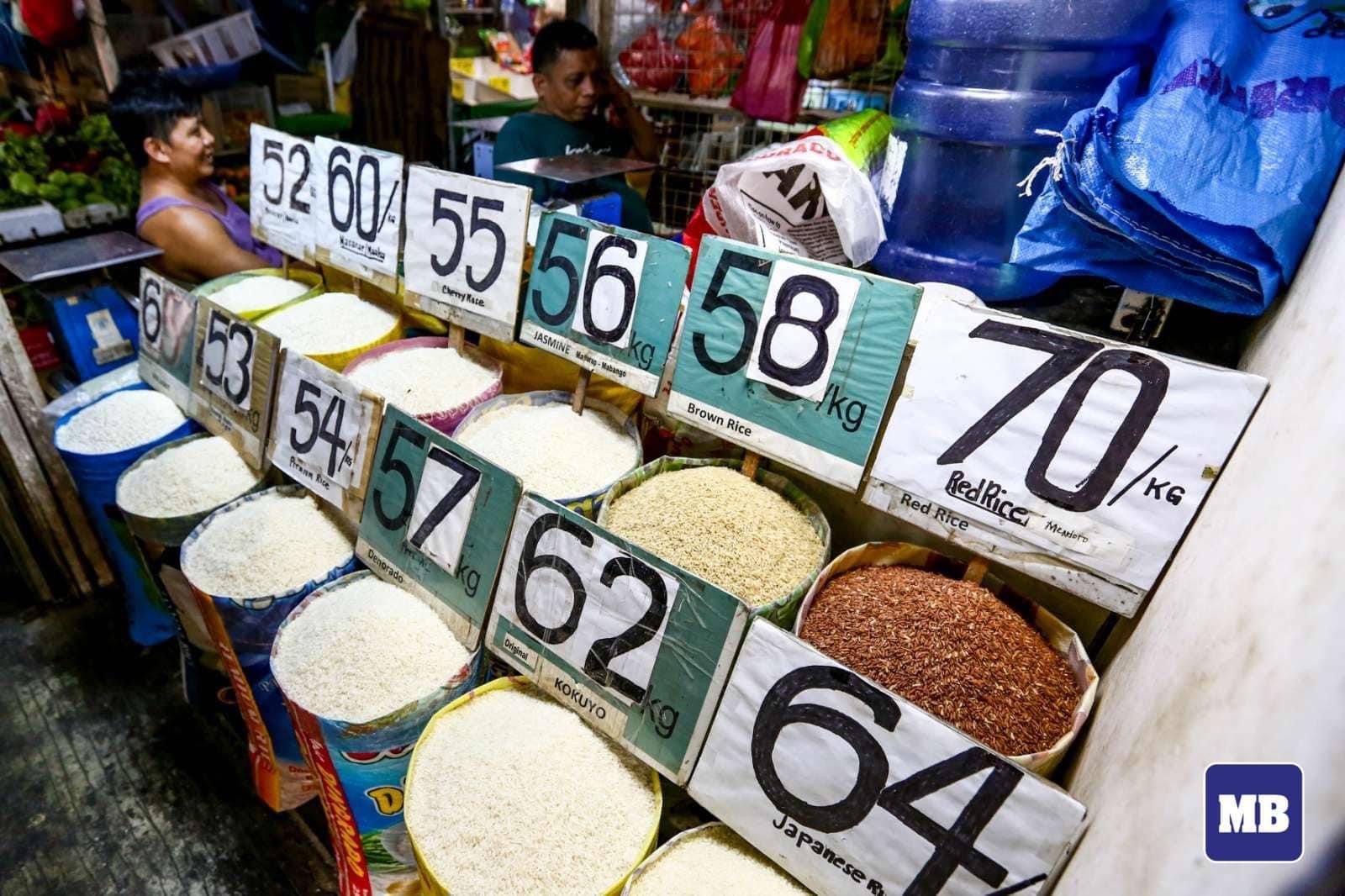
Lower rice price due to tariff cuts to be felt by next year–DA chief

Published Sep 24, 2024 10:32 am
IMG_7551.jpeg
(MB FILE PHOTO)

Department of Agriculture (DA) Secretary Francisco Tiu Laurel Jr. on Tuesday, Sept. 24, said the full effects of the tariff reduction will be felt by the public by January 2025.

On June 20, President Marcos enacted Executive Order (EO) 62, which lowered rice tariffs from 35 percent to 15 percent, leading to the influx of imported rice into the country.

“The DA estimates by mid-October  dapat pababa na iyan slowly, but the full effects should be felt by January of 2025 (The DA estimates that by mid-October, it should start decreasing slowly, but the full effects should be felt by January 2025),” Laurel said, referring to the price of rice.

“Marami pa tayong stocks ng, iyong stocks na imported na nabili ng mahal paubos na (We still have a lot of stocks, but the expensive imported stocks that were purchased are nearly depleted),” he went on.

Also, the DA chief said that there are still many stocks of local “palay (unmilled rice)” purchased at very high price.

“But the problem is maraming nabiling local palay at a very high price of ₱30.00 per kilo from January to June of this year. Marami pang stock noon (But the problem is, a lot of local palay was bought at a very high price of ₱30.00 per kilo from January to June of this year. There is still plenty of that stock),” he stated.

Laurel said the local unmilled rice will run out by November, so the public will see cheaper rice.

In addition, he said the price of rice in the international market has also gone down.

“But the full effects, para sa akin, ₱5 to ₱7 ang range, so, I will put it at ₱5 na dapat bumaba, kung ₱52 ngayon ang bigas, dapat by January nasa ₱48 na lag iyan, kung ₱50 ang bigas ngayon, ₱45 dapat iyan by January. Iyan ang aking estimates (But the full effects, for me, will be in the range of ₱5 to ₱7, so I would put it at a ₱5 decrease. If rice is ₱52 now, it should be at ₱48 by January. If it's ₱50 now, it should be ₱45 by January. Those are my estimates),” said Laurel.

For his part, Department of Finance (DOF) Secretary Ralph Recto said: “Initially, I don’t have the numbers right now exactly, but more or less mga ₱ 6 iyon eh on the imported rice.”

“But it all depends on what world prices will look like, kasi we make naman, world  prices din eh. But, I think,  by November, December, it should be, by that time dapat pababa na iyan (it should go down),” he added.

Farmers' group Samahang Industriya ng Agrikultura (SINAG), meanwhile, lauded Laurel for stating the “true picture on the ground.”

“DA’s own bantay presyo (price monitoring), PSA survey and the daily reports from the field suggest that rice prices hardly moved, almost three months into the effectivity of EO,” Jayson Cainglet, the executive director of SINAG, said.

“We await the January figures but figures don’t lie; 800,000 MT of imported rice have arrived since the effectivity of EO 62, but rice prices remain high.”

SINAG said what they are worried about is the big drop in farmgate price of rice during these lean months.

“Currently nasa ₱14-₱16/kilo (freshly harvest) and ₱17-₱19/kilo (dry), down from the pre-EO 62 level of ₱22-₱25/ kilo (fresh) ₱25-₱29/kilo (dry) (Currently at ₱14-₱16/kilo (freshly harvest) and ₱17-₱19/kilo (dry), down from the pre-EO 62 level of ₱22-₱25/kilo (fresh) ₱25-₱29/ kilo (dry)),” said Cainglet.

“Ano ang gagawin ng NEDA and those other personalities who pushed EO 62, come this peak harvest, if farmgate price of palay fall within or below production cost (What will NEDA and those other personalities who pushed EO 62, come this peak harvest, do if the farmgate price of palay falls within or below production cost)?”

Earlier, former DA secretary, Leonardo Montemayor, told National Economic and Development Authority (NEDA) Secretary Arnesio Balisacan should explain to the public why the NEDA-backed EO No. 62 “failed” to decrease the retail price of rice in the market.

The former DA chief noted that 96 percent of the imported rice arrivals are already out in the market.

SINAG had also reported that local farmers are now complaining about the ₱4 to ₱5 per kilo decrease in the farmgate price of “palay (unmilled rice).”

Despite this decrease in the farmgate of unmilled rice, the group stated that the rice retail prices have not fallen because the increased profits are benefiting exporting countries and importers.

ADVERTISEMENT
.most-popular .layout-ratio{ padding-bottom: 79.13%; } @media (min-width: 768px) and (max-width: 1024px) { .widget-title { font-size: 15px !important; } }

{{ articles_filter_1561_widget.title }}

.most-popular .layout-ratio{ padding-bottom: 79.13%; } @media (min-width: 768px) and (max-width: 1024px) { .widget-title { font-size: 15px !important; } }

{{ articles_filter_1562_widget.title }}

.most-popular .layout-ratio{ padding-bottom: 79.13%; } @media (min-width: 768px) and (max-width: 1024px) { .widget-title { font-size: 15px !important; } }

{{ articles_filter_1563_widget.title }}

{{ articles_filter_1564_widget.title }}

.mb-article-details { position: relative; } .mb-article-details .article-body-preview, .mb-article-details .article-body-summary{ font-size: 17px; line-height: 30px; font-family: "Libre Caslon Text", serif; color: #000; } .mb-article-details .article-body-preview iframe , .mb-article-details .article-body-summary iframe{ width: 100%; margin: auto; } .read-more-background { background: linear-gradient(180deg, color(display-p3 1.000 1.000 1.000 / 0) 13.75%, color(display-p3 1.000 1.000 1.000 / 0.8) 30.79%, color(display-p3 1.000 1.000 1.000) 72.5%); position: absolute; height: 200px; width: 100%; bottom: 0; display: flex; justify-content: center; align-items: center; padding: 0; } .read-more-background a{ color: #000; } .read-more-btn { padding: 17px 45px; font-family: Inter; font-weight: 700; font-size: 18px; line-height: 16px; text-align: center; vertical-align: middle; border: 1px solid black; background-color: white; } .hidden { display: none; }
function initializeAllSwipers() { // Get all hidden inputs with cms_article_id document.querySelectorAll('[id^="cms_article_id_"]').forEach(function (input) { const cmsArticleId = input.value; const articleSelector = '#article-' + cmsArticleId + ' .body_images'; const swiperElement = document.querySelector(articleSelector); if (swiperElement && !swiperElement.classList.contains('swiper-initialized')) { new Swiper(articleSelector, { loop: true, pagination: false, navigation: { nextEl: '#article-' + cmsArticleId + ' .swiper-button-next', prevEl: '#article-' + cmsArticleId + ' .swiper-button-prev', }, }); } }); } setTimeout(initializeAllSwipers, 3000); const intersectionObserver = new IntersectionObserver( (entries) => { entries.forEach((entry) => { if (entry.isIntersecting) { const newUrl = entry.target.getAttribute("data-url"); if (newUrl) { history.pushState(null, null, newUrl); let article = entry.target; // Extract metadata const author = article.querySelector('.author-section').textContent.replace('By', '').trim(); const section = article.querySelector('.section-info ').textContent.replace(' ', ' '); const title = article.querySelector('.article-title h1').textContent; // Parse URL for Chartbeat path format const parsedUrl = new URL(newUrl, window.location.origin); const cleanUrl = parsedUrl.host + parsedUrl.pathname; // Update Chartbeat configuration if (typeof window._sf_async_config !== 'undefined') { window._sf_async_config.path = cleanUrl; window._sf_async_config.sections = section; window._sf_async_config.authors = author; } // Track virtual page view with Chartbeat if (typeof pSUPERFLY !== 'undefined' && typeof pSUPERFLY.virtualPage === 'function') { try { pSUPERFLY.virtualPage({ path: cleanUrl, title: title, sections: section, authors: author }); } catch (error) { console.error('ping error', error); } } // Optional: Update document title if (title && title !== document.title) { document.title = title; } } } }); }, { threshold: 0.1 } ); function showArticleBody(button) { const article = button.closest("article"); const summary = article.querySelector(".article-body-summary"); const body = article.querySelector(".article-body-preview"); const readMoreSection = article.querySelector(".read-more-background"); // Hide summary and read-more section summary.style.display = "none"; readMoreSection.style.display = "none"; // Show the full article body body.classList.remove("hidden"); } document.addEventListener("DOMContentLoaded", () => { let loadCount = 0; // Track how many times articles are loaded const offset = [1, 2, 3, 4, 5, 6, 7, 8, 9, 10]; // Offset values const currentUrl = window.location.pathname.substring(1); let isLoading = false; // Prevent multiple calls if (!currentUrl) { console.log("Current URL is invalid."); return; } const sentinel = document.getElementById("load-more-sentinel"); if (!sentinel) { console.log("Sentinel element not found."); return; } function isSentinelVisible() { const rect = sentinel.getBoundingClientRect(); return ( rect.top < window.innerHeight && rect.bottom >= 0 ); } function onScroll() { if (isLoading) return; if (isSentinelVisible()) { if (loadCount >= offset.length) { console.log("Maximum load attempts reached."); window.removeEventListener("scroll", onScroll); return; } isLoading = true; const currentOffset = offset[loadCount]; window.loadMoreItems().then(() => { let article = document.querySelector('#widget_1690 > div:nth-last-of-type(2) article'); intersectionObserver.observe(article) loadCount++; }).catch(error => { console.error("Error loading more items:", error); }).finally(() => { isLoading = false; }); } } window.addEventListener("scroll", onScroll); });

Sign up by email to receive news.