







What's in the DSWD food pack for typhoon evacuees?


The Department of Social Welfare and Development (DSWD) has prepositioned 500,000 family food packs around the country for the victims of Super Typhoon Pepito, which is currently battering the Bicol region, but what are in these food packs and how long will they last?
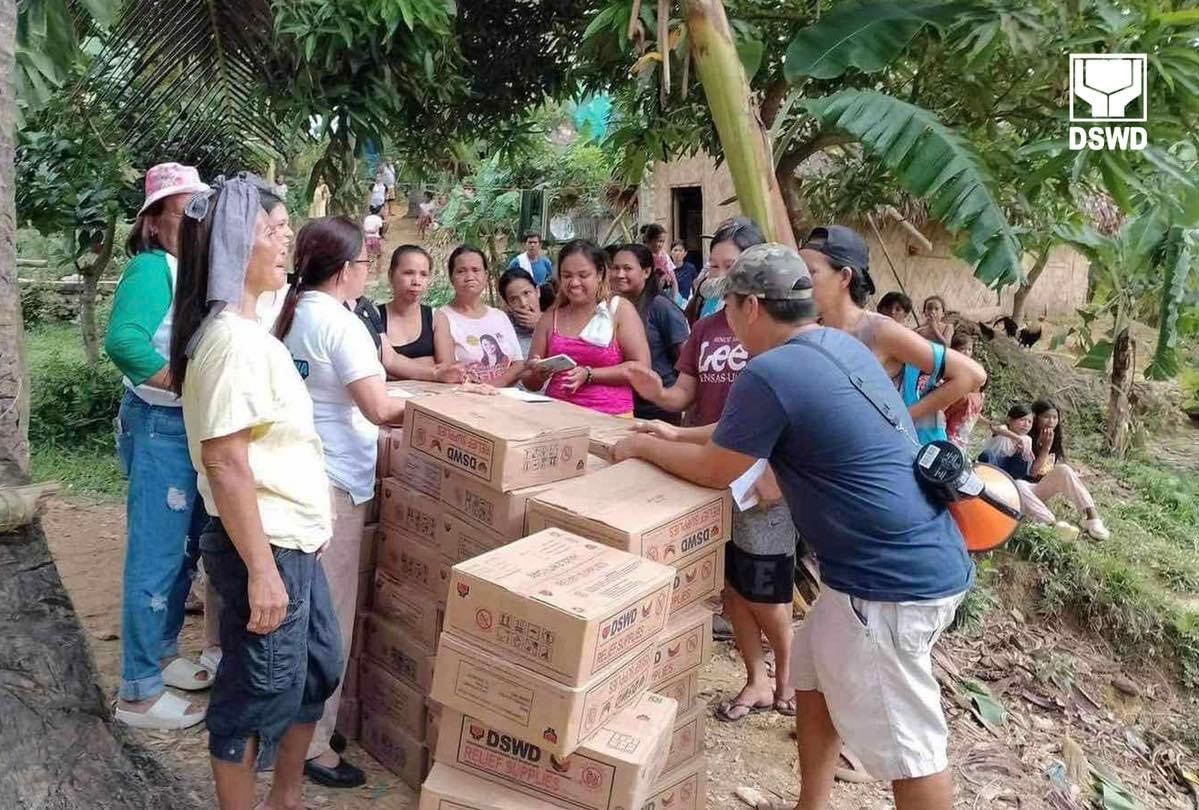 DSWD personnel distribute food packs to affected families in Siruma, Camarines Sur on Saturday, Nov. 16, amid ‘Pepito’ onslaught. (DSWD/Facebook)
DSWD Assistant Secretary Irene Dumlao gave a rundown of what evacuees can find inside these food packs during the Quezon City media forum on Saturday, Nov. 16.
“A family food pack that is being distributed by the DSWD contains six kilograms of rice, mayroon po iyang sampung assorted na delata – apat na corned beef, apat na tuna flakes and then dalawang sardines (it has 10 assorted canned goods—four corned beef, four tuna fakes, and two sardines),” she said.
“Gayundin po, mayroon iyang limang sachets ng instant coffee and limang sachets din po ng choco malt (It also has five sachets of instant coffee and five sachets of choco malt),” she added.
Dumlao assured that one food pack is “good” for a family of five and can last for two to three days.
Furthermore, the official said that the composition of the food packs had been studied by the DSWD, the Department of Science and Technology-Food and Nutrition Research Institute (DOST-FNRI), and the National Nutrition Council (NNC).
“Tinitiyak natin na iyong nutritional requirements ng mga kababayan po natin na naapektuhan ng mga iba’t ibang mga sakuna or emergencies or disasters ay maibibigay po natin sa pamamagitan nga nitong mga immediate relief items po (We’re making sure that these immediate relief items can provide the nutritional requirements of our fellowmen who were affected by these various crises or emergencies or disasters),” Dumlao stressed.
Currently, the DSWD is readying additional ready-to-eat food packs while also reviewing their contents to ensure the items’ nutritional values.
Super Typhoon Pepito is expected to cause massive landslides, flooding, and storm surges, as well as damages to agriculture, infrastructure, and livelihoods in Central Luzon and the Bicol region.