






 Philippines
National
Marcos: 2025 nat'l budget to fulfill Filipinos' needs, aspirations
Philippines
National
Marcos: 2025 nat'l budget to fulfill Filipinos' needs, aspirations
Marcos: 2025 nat'l budget to fulfill Filipinos' needs, aspirations


At A Glance
- The 2025 National Expenditure Program (NEP) is equivalent to 22.1 percent of the Gross Domestic Product (GDP) and 10.1 percent higher than the FY 2024 General Appropriations Act (GAA) worth P5.768 trillion.
President Marcos cited the need to maintain the momentum in achieving the country's economic and social transformation as he urged Congress anew to approve the proposed P6.352-trillion 2025 national budget.
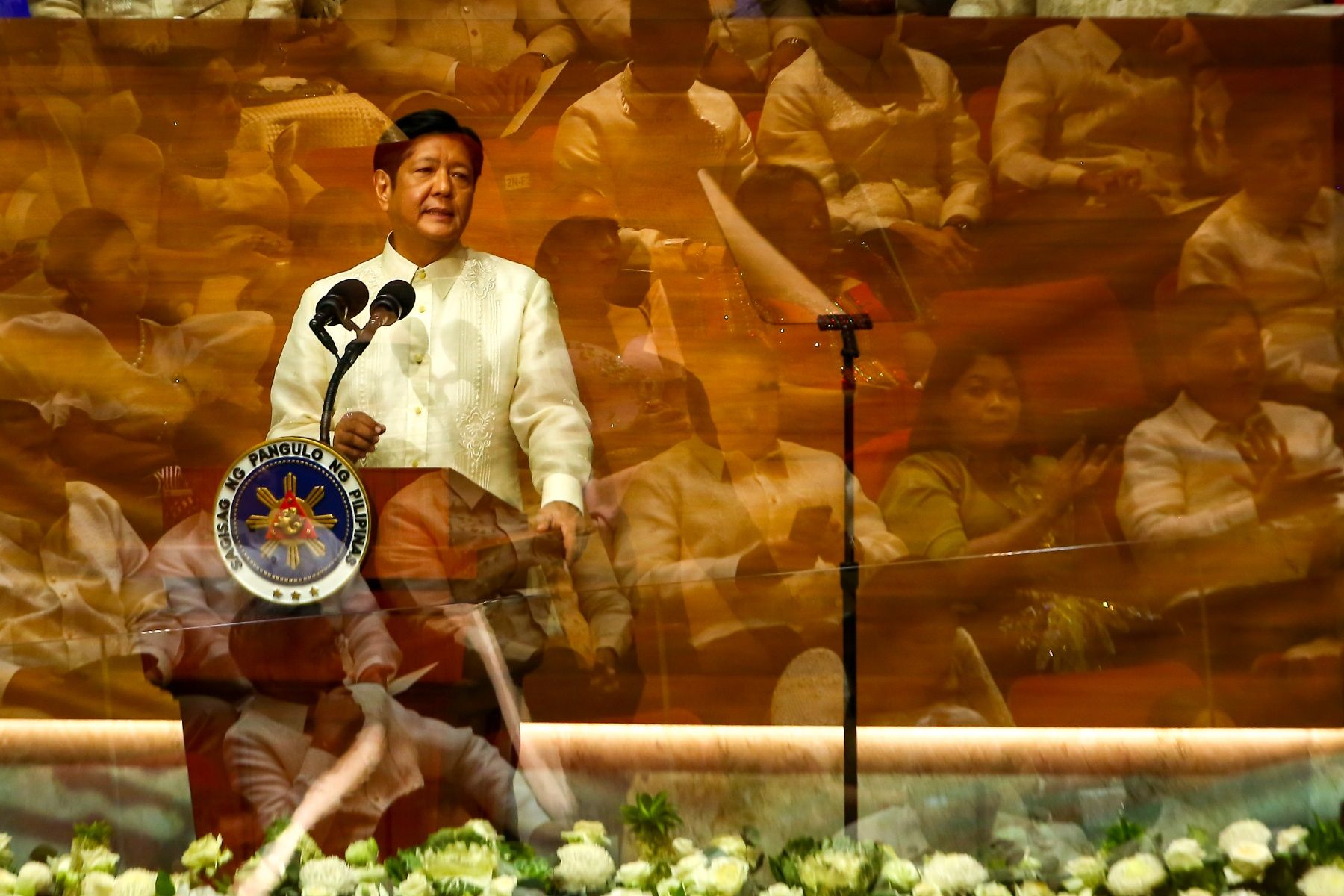
"Let us stay on track with our Agenda for Prosperity. Let us not lose the momentum for the economic and social transformation of our nation," Marcos said in his budget message.
According to the President, the budget was vital in fulfilling the government's duty to the Filipino people, noting that it is anchored on the theme, "Agenda for Prosperity: Fulfilling the Needs and Aspirations of the Filipino People."
"Fulfilling the needs and aspirations of the Filipino people is not only a dream—it is our duty," he said.
"I therefore urge Congress to approve the proposed FY 2025 National Budget, in fulfillment of our duty to the Filipino people as we strive to achieve our dream of a Bagong Pilipinas," he added.
The 2025 National Expenditure Program (NEP) is equivalent to 22.1 percent of the Gross Domestic Product (GDP) and 10.1 percent higher than the FY 2024 General Appropriations Act (GAA) worth P5.768 trillion.
In his State of the Nation Address (SONA) last week, Marcos urged Congress to pass the 2025 NEP as quickly and as close to their proposal as possible to build on the economic gains that the country has earned over the past year.
"Building on these, and guided by strong fiscal discipline, our proposed government budget for this year was crafted with utmost care, diligence, and meticulous attention," he said.
"We look to the cooperation of our colleagues in the Legislature, not only that our proposed National Budget be approved in your usual timely manner, but that it be adhered to as closely as possible," he added.
According to Budget Secretary Amenah Pangandaman, P4,247 billion will be appropriated for government programs already authorized under existing laws. Meanwhile, 2.1 percent of the proposed budget will be allocated under unprogrammed appropriations as standby funds that can only be released when certain conditions are met.
The top 10 of the proposed FY 2025 Total Expenditure Program are in:
- Education
- Public Works
- Health (including PhilHealth)
- Interior and Local Government
- Defense
- Social Welfare
- Agriculture
- Transportation
- Judiciary
- Justice
Economic momentum
In his message, President Marcos said that the "Agenda for Prosperity," the administration's economic agenda, has propelled the economy to make the Philippines the frontrunner among emerging markets in the Asia Pacific region. He noted that the Philippines concluded 2023 with a strong GDP growth rate of 5.5 percent, beating Indonesia (5.0 percent), Vietnam (5.0 percent), Malaysia (3.8 percent), Thailand (1.9 percent), and Singapore (1.1 percent).
In its Philippines Economic Update for June 2024, the World Bank noted the Philippines' robust growth leading to the following:
- Creation of jobs
- Lower inflation
- A stable banking system
- Steady progress in fiscal consolidation
- An improving growth outlook, with economic growth projected to average 5.9 percent in 2024 to 2026
- Sustained poverty reduction
The Chief Executive said multilateral organizations have affirmed the Philippine economy's resilience, with the International Monetary Fund (IMF) giving the Philippines a 6.0 percent growth outlook for 2024—the highest among countries with similar credit ratings, such as Indonesia, Thailand, and Malaysia.
Macroeconomic Assumptions
In his message, President Marcos said the country's real GDP growth is projected to reach 6.5 to 7.5 percent in 2025, consistent with the average growth forecast of multilateral organizations and private sector analysts.
"This will be sustained, if not exceeded in 2026 to 2028, projected at 6.5 to 8.0 percent," he said.
"The projections are based on expected improved domestic demand, recovery in global trade, increased private investments, implementation of structural reforms, and strategic investments in infrastructure and human capital development," he added.
Infrastructure
According to Marcos, infrastructure development will continue to be a central pillar of his administration's economic agenda, maintained at the strategic range of 5.0 to 6.0 percent of GDP annually until 2028.
"For 2025, we project overall infrastructure disbursements to reach P1.538 trillion, or 5.4 percent of GDP, catering to the Build Better More infrastructure program," he said.
"By 2028, infrastructure spending is targeted to reach P2.140 trillion, equivalent to 5.8 percent of GDP," he added.
The Build Better More infrastructure program aims to address congestion, enhance physical connectivity, stimulate economic activities, and create quality jobs.
Inflation
President Marcos said inflation in the medium term is expected to stabilize at 2.0 to 4.0 percent from 2025 to 2028 through the proactive implementation of monetary policy measures and well-targeted government interventions.
"Inflation is expected to decline to 3.5 percent in 2024—much lower than the projected inflation of emerging markets (8.3 percent) and developing economies (5.9 percent)—and further decrease to 3.3 percent in 2025, as projected by the Bangko Sentral ng Pilipinas," he said.
Foreign Exchange
Marcos said the Philippine Peso is expected to remain stable, competitive, and resilient against persisting global headwinds, supported by increasing tourism receipts, growing Business Process Outsourcing (BPO) revenues, and robust overseas Filipinos' remittances.
In the medium term, the administration's target exchange rate will be P56 to P58/US dollar (USD) for 2024 and P55 to P58/USD from 2025 to 2028.
Dubai Crude Oil Price
In the short term, the Chief Executive said global oil prices are expected to stabilize at $70 to $85 per barrel in 2024 as the members and allies of the Organization of the Petroleum Exporting Countries (OPEC+) are expected to start relaxing voluntary production cuts.
"This is expected to narrow down to $65 to $85 per barrel from 2025 to 2028 as global oil production rebounds over the medium-term, consistent with the backwardation observed in oil futures markets," he said.
Imports and Exports
According to the President, goods imports are expected to reach 2.0 percent in 2024 and 5.0 percent in 2025, supported by sustained infrastructure investments, but may be limited by the impact of global inflation and tight monetary policy. Nonetheless, this is expected to rebound to 8.0 percent from 2026 to 2028.
Meanwhile, goods export growth is projected to ascend to 6.0 percent from 2025 to 2028 from 5.0 percent in 2024, given an improved outlook for the global semiconductor market, among other factors.
Fiscal Program
With the evolving economic landscape, Marcos said the revised MTFP aims to balance fiscal consolidation with economic revitalization amid elevated inflation, high-interest conditions, and ongoing geopolitical conflicts.
He likewise cited the urgent need to address climate change and environmental vulnerabilities.
The President said the government aims to reduce the deficit-to-GDP ratio from 5.6 percent in 2024 to 3.7 percent by 2028, upholding fiscal prudence while addressing the nation's development needs.
He added that revenue collections will rise from P4.270 trillion in 2024 to P4.644 trillion in 2025 and reach P6.250 trillion in 2028.
Meanwhile, President Marcos said the administration will usher in key tax reforms that will revolutionize the tax system and enhance revenue, including Value-Added Tax on non-resident Digital Service Providers, Excise Tax on Single-use Plastics, Package 4 of the Comprehensive Tax Reform Program, the rationalization of the Mining Fiscal Regime, and the reform of the Motor Vehicle Users' Charge.
The government likewise plans to escalate spending from P5.754 trillion in 2024 to P7.621 trillion by 2028, averaging 21.1 percent of GDP.
"[This is] a vital measure to support our nation's growth and development—while prioritizing ongoing programs and shovel-ready projects in line with our Cash Budgeting System," he said.
The National Budget also takes into account the 2025 National and Local Election spending ban, ensuring uninterrupted budget execution through the comprehensive release of appropriations.
Lastly, Marcos said the deficit, which registered at P1.512 trillion or 6.2 percent of GDP in 2023, is programmed to improve at P1.483 trillion (5.6 percent) in 2024 and to continue to decline to P1.372 trillion (3.7 percent) in 2028.