ADVERTISEMENT

Ukrainian President Zelenskyy says Kyiv troops have full control of the Russian town of Sudzha

Published Aug 15, 2024 01:30 pm
AP24228251677504.jpg
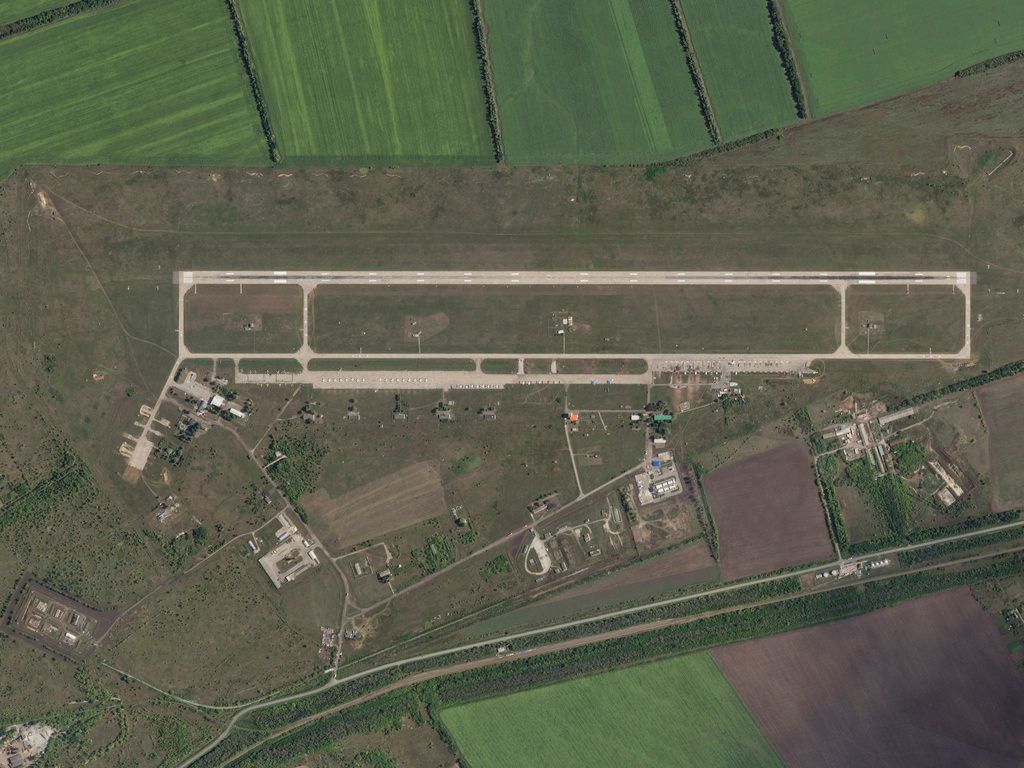
This satellite photo from Planet Labs PBC shows the Borisoglebsk Air Base in Russia after an attack by Ukrainian drones on Wednesday, Aug. 14, 2024. (Planet Labs PBC via AP)

KYIV, Ukraine (AP) — Ukrainian President Volodymyr Zelenskyy said Thursday that Kyiv troops have full control of the Russian town of Sudzha in the Kursk region in their incursion into Russian territory.

The town, the largest that Ukraine has reportedly seized so far, had a prewar population of around 5,000 people. Natural gas flows from West Siberian gas fields through pipes that pass through Sudzha and cross the Ukrainian border into Ukraine’s system.

Zelenskyy said a Ukrainian military commander’s office is being set up in Sudzha. He didn’t elaborate on the details or the functions of the office.

The claims couldn’t be independently verified.

THIS IS A BREAKING NEWS UPDATE. AP’s earlier story follows below.

KYIV, Ukraine (AP) — A Ukrainian drone attack on Russian air bases damaged at least two hangars and other areas, satellite images analyzed by The Associated Press on Thursday show.

Images taken Wednesday by Planet Labs PBC analyzed by the AP show that two hangars at Borisoglebsk Air Base had been struck, with a field of debris seen around both. It was not immediately clear what purpose the hangars served. There also appeared to be damage potentially done to two fighter aircraft at the base.

Separately, at Savasleika Air Base, one burn mark could be seen on the apron in images Wednesday, though there was no apparent damage visible to the fighter jets and other aircraft there.

Kursk acting Governor Alexei Smirnov on Thursday ordered the evacuation of the Glushkovo region, about 45 kilometers (28 miles) northwest of Sudzha, where heavy battles are taking place, as Ukraine's daring incursion into the bordering Kursk region entered its second week.

The evacuation order suggests Ukrainian forces are gradually advancing toward the area. Authorities say more than 120,000 residents in the Kursk region already have been evacuated.

At a facility receiving evacuees, Tatyana Anikeyeva told of her flight from the fighting. “We were rushing from Sudzha. … We hid in the bushes. Volunteers were handing out water, food, bread to people on the go. The sound of the cannonade continued without any break. The house was shaking,” she told Russian state television.

Evacuees milled around and waited in long lines for food and other supplies. One man stroked his pet dog and tried to comfort her, while saying that he felt nauseous and couldn’t eat himself.

Russia also declared a federal-level state of emergency in the Belgorod region. A regional-level state of emergency had been declared a day earlier in Belgorod, and the change in status suggests officials believe the situation is worsening and hampering the region’s ability to deliver aid.

Residents who suffer severe health damage will be eligible to receive payments of up to 600,000 rubles ($6,600). Those who experience a loss of property are eligible for up to 150,000 rubles ($1,700), Russia’s Emergencies Ministry said.

Ukraine’s chief military officer, Gen. Oleksandr Syrskyi declared that Ukrainian forces have taken 1,000 square kilometers (about 390 square miles) of the Kursk region. That claim couldn’t be independently verified. The contact lines in Kursk have remained fluid, allowing both sides to maneuver easily unlike the static frontline in eastern Ukraine where it has taken Russian forces months to achieve even incremental gains.

Russian military bloggers have claimed that Russian reserves arriving in the region have stemmed Ukrainian advances, but they also noted that Ukrainian small mechanized groups have continued to probe Russian defenses.

Speaking to reporters at the U.N. on Wednesday, Russia’s Deputy U.N. Ambassador Dmitry Polyansky dismissed Syrskyi’s claim of having gained 1,000 square kilometers of the Russian territory.

“What’s happening in Kursk is the incursion of terrorist sabotage groups, so there is no front line as such,” Polyansky said. “There is an incursion because there are forests that are very difficult to control.”

He said Ukrainian troops in the forests will be singled out and eliminated within “a very brief period of time.”

Polyansky called the Ukrainian incursion an “absolutely reckless and mad operation,” and said Ukraine's aim to force Russia to move its troops from eastern Ukraine is not happening because “we have enough troops there.”

Related Tags

WORLDNEWS
ADVERTISEMENT
.most-popular .layout-ratio{ padding-bottom: 79.13%; } @media (min-width: 768px) and (max-width: 1024px) { .widget-title { font-size: 15px !important; } }

{{ articles_filter_1561_widget.title }}

.most-popular .layout-ratio{ padding-bottom: 79.13%; } @media (min-width: 768px) and (max-width: 1024px) { .widget-title { font-size: 15px !important; } }

{{ articles_filter_1562_widget.title }}

.most-popular .layout-ratio{ padding-bottom: 79.13%; } @media (min-width: 768px) and (max-width: 1024px) { .widget-title { font-size: 15px !important; } }

{{ articles_filter_1563_widget.title }}

{{ articles_filter_1564_widget.title }}

.mb-article-details { position: relative; } .mb-article-details .article-body-preview, .mb-article-details .article-body-summary{ font-size: 17px; line-height: 30px; font-family: "Libre Caslon Text", serif; color: #000; } .mb-article-details .article-body-preview iframe , .mb-article-details .article-body-summary iframe{ width: 100%; margin: auto; } .read-more-background { background: linear-gradient(180deg, color(display-p3 1.000 1.000 1.000 / 0) 13.75%, color(display-p3 1.000 1.000 1.000 / 0.8) 30.79%, color(display-p3 1.000 1.000 1.000) 72.5%); position: absolute; height: 200px; width: 100%; bottom: 0; display: flex; justify-content: center; align-items: center; padding: 0; } .read-more-background a{ color: #000; } .read-more-btn { padding: 17px 45px; font-family: Inter; font-weight: 700; font-size: 18px; line-height: 16px; text-align: center; vertical-align: middle; border: 1px solid black; background-color: white; } .hidden { display: none; }
function initializeAllSwipers() { // Get all hidden inputs with cms_article_id document.querySelectorAll('[id^="cms_article_id_"]').forEach(function (input) { const cmsArticleId = input.value; const articleSelector = '#article-' + cmsArticleId + ' .body_images'; const swiperElement = document.querySelector(articleSelector); if (swiperElement && !swiperElement.classList.contains('swiper-initialized')) { new Swiper(articleSelector, { loop: true, pagination: false, navigation: { nextEl: '#article-' + cmsArticleId + ' .swiper-button-next', prevEl: '#article-' + cmsArticleId + ' .swiper-button-prev', }, }); } }); } setTimeout(initializeAllSwipers, 3000); const intersectionObserver = new IntersectionObserver( (entries) => { entries.forEach((entry) => { if (entry.isIntersecting) { const newUrl = entry.target.getAttribute("data-url"); if (newUrl) { history.pushState(null, null, newUrl); let article = entry.target; // Extract metadata const author = article.querySelector('.author-section').textContent.replace('By', '').trim(); const section = article.querySelector('.section-info ').textContent.replace(' ', ' '); const title = article.querySelector('.article-title h1').textContent; // Parse URL for Chartbeat path format const parsedUrl = new URL(newUrl, window.location.origin); const cleanUrl = parsedUrl.host + parsedUrl.pathname; // Update Chartbeat configuration if (typeof window._sf_async_config !== 'undefined') { window._sf_async_config.path = cleanUrl; window._sf_async_config.sections = section; window._sf_async_config.authors = author; } // Track virtual page view with Chartbeat if (typeof pSUPERFLY !== 'undefined' && typeof pSUPERFLY.virtualPage === 'function') { try { pSUPERFLY.virtualPage({ path: cleanUrl, title: title, sections: section, authors: author }); } catch (error) { console.error('ping error', error); } } // Optional: Update document title if (title && title !== document.title) { document.title = title; } } } }); }, { threshold: 0.1 } ); function showArticleBody(button) { const article = button.closest("article"); const summary = article.querySelector(".article-body-summary"); const body = article.querySelector(".article-body-preview"); const readMoreSection = article.querySelector(".read-more-background"); // Hide summary and read-more section summary.style.display = "none"; readMoreSection.style.display = "none"; // Show the full article body body.classList.remove("hidden"); } document.addEventListener("DOMContentLoaded", () => { let loadCount = 0; // Track how many times articles are loaded const offset = [1, 2, 3, 4, 5, 6, 7, 8, 9, 10]; // Offset values const currentUrl = window.location.pathname.substring(1); let isLoading = false; // Prevent multiple calls if (!currentUrl) { console.log("Current URL is invalid."); return; } const sentinel = document.getElementById("load-more-sentinel"); if (!sentinel) { console.log("Sentinel element not found."); return; } function isSentinelVisible() { const rect = sentinel.getBoundingClientRect(); return ( rect.top < window.innerHeight && rect.bottom >= 0 ); } function onScroll() { if (isLoading) return; if (isSentinelVisible()) { if (loadCount >= offset.length) { console.log("Maximum load attempts reached."); window.removeEventListener("scroll", onScroll); return; } isLoading = true; const currentOffset = offset[loadCount]; window.loadMoreItems().then(() => { let article = document.querySelector('#widget_1690 > div:nth-last-of-type(2) article'); intersectionObserver.observe(article) loadCount++; }).catch(error => { console.error("Error loading more items:", error); }).finally(() => { isLoading = false; }); } } window.addEventListener("scroll", onScroll); });

Sign up by email to receive news.