







Dodgers hit 4 homers in 1st, then rally to beat Cubs


At A Glance
- Shohei Ohtani hit his 47th home run and stole his 48th base while three other Dodgers went deep in the first inning for the NL West leaders, whose magic number to clinch the division dropped to 11 after San Diego lost at Seattle.
LOS ANGELES (AP) — Gavin Lux singled in the go-ahead run with two outs in the seventh inning and the Los Angeles Dodgers rallied after blowing a 7-3 lead to beat the Chicago Cubs 10-8 on Wednesday night, Sept. 12, and avoid a series sweep.
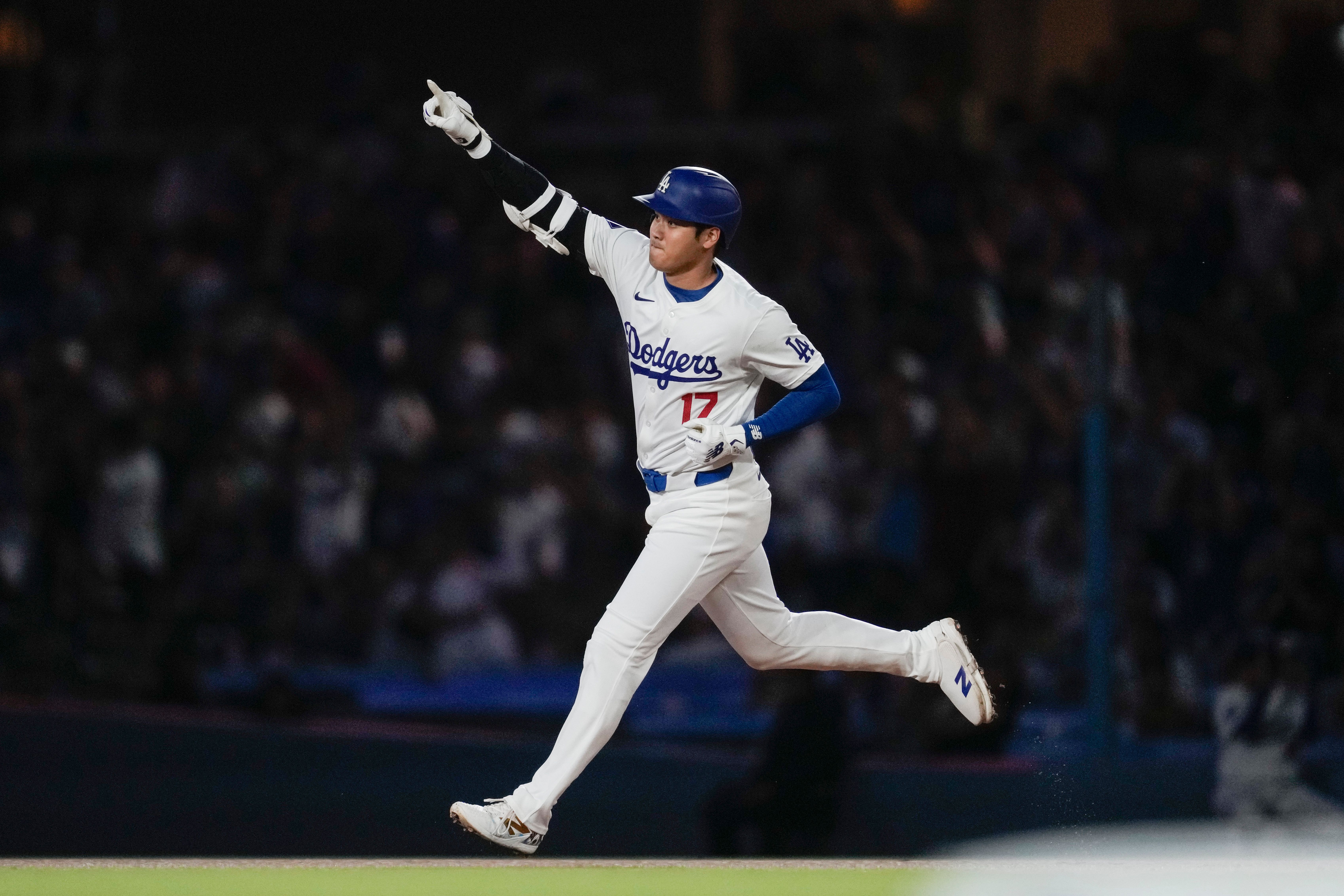
Shohei Ohtani hit his 47th home run and stole his 48th base while three other Dodgers went deep in the first inning for the NL West leaders, whose magic number to clinch the division dropped to 11 after San Diego lost at Seattle.
The Dodgers walked 10 batters, including four by starter Bobby Miller.
“It was frustrating again, but it’s baseball. Not everything is going to be clicking at the same time,” third baseman Max Muncy said. “We had guys battling up there and it was good to see everyone not giving up.”
Switch hitting Tommy Edman homered for the fourth time in 24 hours. His two-out, two-run shot off Trey Wingenter in the eighth extended the Dodgers’ lead to 10-7. He also went deep in the first from the right side and later from the left, the first time he’s homered from both sides in the same game.
“Tommy is otherworldly these days,” Dodgers manager Dave Roberts said.
Trailing by three, the Cubs threatened in the ninth. Michael Kopech loaded the bases on consecutive walks to Dansby Swanson, Seiya Suzuki and former Dodger Cody Bellinger.
Kopech was called for a pitch-clock violation, giving an automatic ball to Isaac Paredes, whose sacrifice fly cut Chicago’s deficit to 10-8. Suzuki was thrown out trying to steal third and former Dodger Michael Busch struck out swinging to end the game as Kopech eked out his 13th save.
Alex Vesia (3-4) got the win with one inning of relief.
The Cubs outscored the Dodgers 16-7 in winning the first two games. They took the season series, 4-2.
The Dodgers blew a lead for the second straight game. They were ahead 3-1 on Tuesday and lost 6-3. After their big first inning Wednesday, they eventually led 7-3 only to watch the Cubs tie it in the fifth.
Will Smith doubled off Shawn Armstrong (3-3) in the seventh and scored on Lux’s single to center, putting the Dodgers back in front, 8-7.
Miller put the Dodgers in a 2-0 hole in the first. He gave up back-to-back, two-out walks before Paredes and Busch drove in runs.
The Dodgers answered with four homers in the bottom of the inning to take a 5-2 lead.
Ohtani moved closer to becoming the first player in major league history with 50 homers and 50 stolen bases in a season. He led off with a 405-foot shot to center and then walked and stole second in the second.
“Every night I feel like he does something that we haven’t seen,” Muncy said, citing the 118 mph exit velocity with a launch angle of 19 degrees on Ohtani’s homer. “I feel sorry for the fan that tried to catch it.”
After two outs, Teoscar Hernández singled and scored on Edman’s homer into the left-field pavilion on the first pitch. Edman homered twice on two pitches against the Cubs on Tuesday.
Smith followed with a 404-foot shot to nearly the same spot in left. Muncy came up next and sent a towering 401-foot blast to right field on his bobblehead night.
Bellinger hit a three-run shot in the fifth that chased Miller and left Chicago trailing 7-6. The Cubs loaded the bases on two walks by Daniel Hudson and an error by second baseman Chris Taylor before Pete Crow-Armstrong’s RBI single tied it 7-7.
Trying to make his case for a postseason roster spot, Miller gave up six runs, including his 16th homer, and five hits in 4 1/3 innings. The right-hander’s ERA ballooned to 8.17. He struck out two and walked four, including three with two outs.
“The homers have just been the story every outing now,” Miller said. “I’m going through it right now to say the least. But there’s no doubt in my mind that I’m giving it my all every single time.”