






 Environment and Sustainability
'Kuha sa Tingi' to install more refill hubs in Metro Manila
Environment and Sustainability
'Kuha sa Tingi' to install more refill hubs in Metro Manila
'Kuha sa Tingi' to install more refill hubs in Metro Manila
By Mat Richter


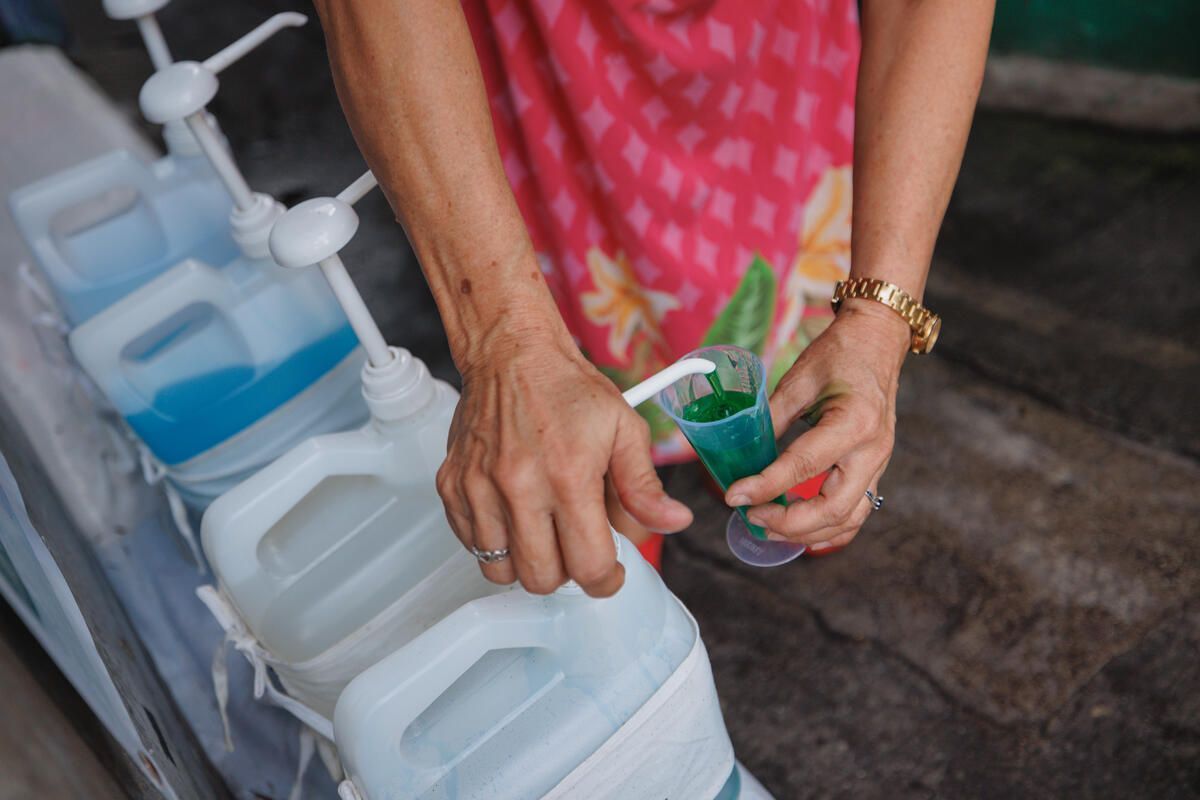
In the Philippines, where low-income families often rely inadvertently on sari-sari stores for affordable packets of shampoo, soap, and dish detergent, single-use sachets remain a threat to the environment. Large corporations that produce disposable items for household use drive much of the plastic crisis, having capitalized on the economic limitations of poor communities which cope by buying in piecemeal portions — a Filipino habit known as "tingi."
Several eco-projects now aim to redefine this habit by helping convert such stores into refill hubs. Here, buyers bring reusable containers to replenish basic cleaning products and help curb plastic use within neighborhoods. The “tingi” concept is retained by allowing consumers to purchase as much or as little as needed.
Offering a sliver of hope to the escalating waste dilemma, “Kuha sa Tingi” — a program of Greenpeace Philippines that converts sundry stores into refill systems — will install more refill hubs across all cities in Metro Manila starting September, following the promising results of pilot runs of the project in Quezon City, San Juan City, and Pasig.
The organization and the Metro Manila Mayors’ Spouses Foundation (MMMSF) have teamed up to expand the initiative and promote reuse and refill systems in barangays. Stores will offer replenishing options for liquid detergent, dishwashing liquid, fabric conditioner, and multipurpose cleaner.
"We are proud to be a partner for this project, and we hope to set an example in making this vision of a plastic-free future a reality for Metro Manila. By promoting reuse and refill, we are not only reducing plastic waste but also empowering our communities to embrace a culture of reuse and responsibility," shared Keri Zamora, president of MMMSF.
Cities including San Juan, Parañaque, Caloocan, Valenzuela, Muntinlupa, and Navotas have already committed to convert eight sari-sari stores into refill hubs.
Consumers averaged 201 percent in savings with refills over sachets, while store owners marked a 15 percent profit increase, according to a report from Greenpeace PH which gathered data from replenish stations in San Juan and Quezon City.
“The expansion of ‘Kuha sa Tingi’ across Metro Manila is a testament to the strength of community-driven solutions. When we shift to refill and reuse systems, we are not just cutting down on plastic waste, we are building a future where people and the planet thrive together,” said Marian Ledesma, zero waste campaigner at Greenpeace PH.
What we throw away on Earth ultimately finds its way back to us in some form. In turn, we must carry forward with the habit of being environmentally sustainable to keep the Earth, our shared home, habitable and abundant in resources. Our society was once plastic-free for decades, and we can help achieve that again by engaging in community-based refill hubs that offer a win-win solution to people and the planet.