ADVERTISEMENT

PH needs to update its 15-year-old disaster risk reduction law —officials

Published Oct 16, 2024 05:36 am
IMG_9973.jpeg
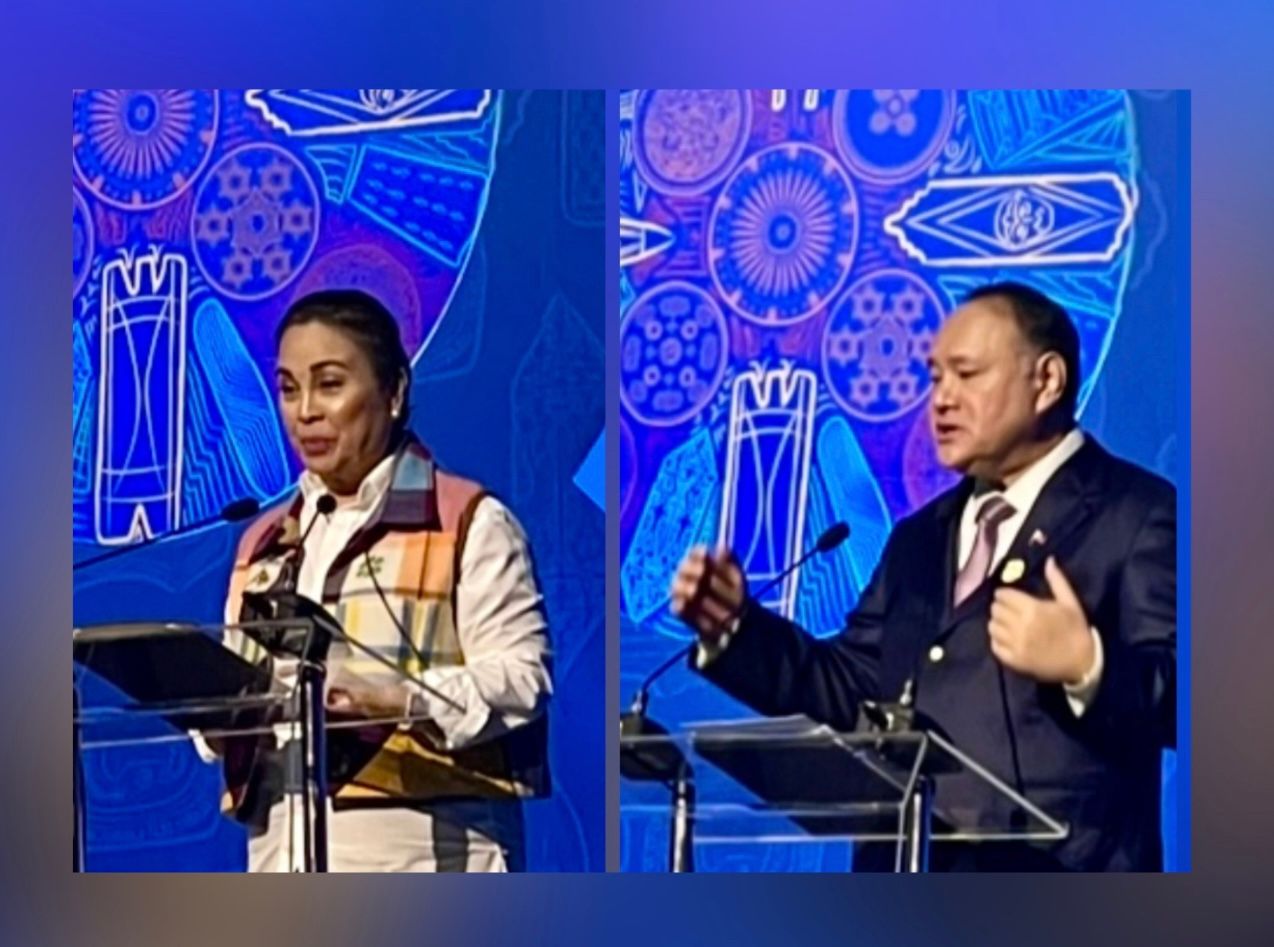
Senator Loren Legarda (left) and DND Secretary Gilbert Teodoro (right)| JEL SANTOS/ MB PHOTO

The Philippines, which is located in the Pacific Ring of Fire and the Pacific Typhoon Belt, needs to update its 15-year-old disaster risk reduction law, two top officials of the country said during a plenary discussion of the Asia-Pacific Ministerial Conference on Disaster Risk Reduction (APMCDRR) in Pasay City on Wednesday, Oct. 16.

“The Philippine Disaster Risk Reduction and Management Act, which, upon consultation with DND Secretary Teodoro and his team, we hope to amend and revise to make it more up-to-date since it's a 15-year-old law,” Senator Loren Legarda said in her speech.

Defense Secretary Gilbert Teodoro said it was also timely to review the disaster risk reduction law which had been enacted 15 years ago.

“Because of changing circumstances, because of experiences in the field, we have been able to identify some gaps that need to be filled, some streamlining that needs to be done,” he said.

“And this is a constant exercise that should happen in most areas of government, but it is critical that it happens in disaster risk reduction in order to optimize and to focus government efforts in all aspects of the topic,” he added.

Teodoro thanked Legarda for being their “partner and champion” in the Senate and for
her advocacy.

Teodoro emphasized the importance of collaboration between policymakers, legislators, and the executive branch in implementing laws effectively.

He highlighted the lawmaker’s point about the critical role of ongoing feedback between lawmakers and agencies, such as the Office of Civil Defense and the National Disaster Risk Reduction and Management Council, in ensuring effective coordination and action.

“Hence, in this interaction between the legislators and us, it prevents the siloing because they are a source of important feedback and vice versa,” he said.

‘Leaving no one behind’

Leaving no one behind, according to Legarda, must drive the renovation of risk governance.

“We must take a look at hazards, risks, and vulnerabilities. Women, girls, persons with disabilities, indigenous peoples' communities, marginalized groups must be at the heart of shaping the post-2030 disaster risk governance framework, post-Sendai, ensuring their leadership in building truly resilient and inclusive systems,” the senator said.

From risk assessment to recovery, she said persons with disabilities (PWDs) must be included in all stages of disaster risk management.

“At the same time, disability-inclusive governance is equally critical,” she added.

Legarda said early warning systems, evacuation procedures, recovery plans must be accessible to everyone, especially in an archipelago of 110 million Filipinos in the most far-flung islands and the highest mountains, with inland rivers and lakes.

The lawmaker stressed that resilience cannot be achieved by working in silos, noting that governments sometimes are “very exclusive to each other and not inclusive.”

“Kanya-kanya, in the Tagalog word, to each his own, and that would spell disaster. Governance, the private sector, civil society, local communities, the education sector, all must collaborate to create inclusive and innovative solutions,” she said.

“Most importantly, local communities who are on the frontlines, whether you are in the provincial level, city, municipality, even barangay, purok, and sitio, at the frontlines of preparedness and disaster response in the whole scheme of things.”

Per the Department of Environment and Natural Resources (DENR), the Philippines is situated both the Pacific Ring of Fire and the Typhoon Belt due to its unique geography.

Environment Secretary Loyzaga said this has “perennially bore the brunt of ever-increasing natural disasters due to rapid and slow onset climate and weather-related hazards.”

“Our large growing population and our steady economic growth are factors resulting in the singular distinction of being among the world’s countries at highest risk for several years running,” she said earlier.

She said this distinction underscores the reality that climate hazards are a fact of life for all Filipinos.

ADVERTISEMENT
.most-popular .layout-ratio{ padding-bottom: 79.13%; } @media (min-width: 768px) and (max-width: 1024px) { .widget-title { font-size: 15px !important; } }

{{ articles_filter_1561_widget.title }}

.most-popular .layout-ratio{ padding-bottom: 79.13%; } @media (min-width: 768px) and (max-width: 1024px) { .widget-title { font-size: 15px !important; } }

{{ articles_filter_1562_widget.title }}

.most-popular .layout-ratio{ padding-bottom: 79.13%; } @media (min-width: 768px) and (max-width: 1024px) { .widget-title { font-size: 15px !important; } }

{{ articles_filter_1563_widget.title }}

{{ articles_filter_1564_widget.title }}

.mb-article-details { position: relative; } .mb-article-details .article-body-preview, .mb-article-details .article-body-summary{ font-size: 17px; line-height: 30px; font-family: "Libre Caslon Text", serif; color: #000; } .mb-article-details .article-body-preview iframe , .mb-article-details .article-body-summary iframe{ width: 100%; margin: auto; } .read-more-background { background: linear-gradient(180deg, color(display-p3 1.000 1.000 1.000 / 0) 13.75%, color(display-p3 1.000 1.000 1.000 / 0.8) 30.79%, color(display-p3 1.000 1.000 1.000) 72.5%); position: absolute; height: 200px; width: 100%; bottom: 0; display: flex; justify-content: center; align-items: center; padding: 0; } .read-more-background a{ color: #000; } .read-more-btn { padding: 17px 45px; font-family: Inter; font-weight: 700; font-size: 18px; line-height: 16px; text-align: center; vertical-align: middle; border: 1px solid black; background-color: white; } .hidden { display: none; }
function initializeAllSwipers() { // Get all hidden inputs with cms_article_id document.querySelectorAll('[id^="cms_article_id_"]').forEach(function (input) { const cmsArticleId = input.value; const articleSelector = '#article-' + cmsArticleId + ' .body_images'; const swiperElement = document.querySelector(articleSelector); if (swiperElement && !swiperElement.classList.contains('swiper-initialized')) { new Swiper(articleSelector, { loop: true, pagination: false, navigation: { nextEl: '#article-' + cmsArticleId + ' .swiper-button-next', prevEl: '#article-' + cmsArticleId + ' .swiper-button-prev', }, }); } }); } setTimeout(initializeAllSwipers, 3000); const intersectionObserver = new IntersectionObserver( (entries) => { entries.forEach((entry) => { if (entry.isIntersecting) { const newUrl = entry.target.getAttribute("data-url"); if (newUrl) { history.pushState(null, null, newUrl); let article = entry.target; // Extract metadata const author = article.querySelector('.author-section').textContent.replace('By', '').trim(); const section = article.querySelector('.section-info ').textContent.replace(' ', ' '); const title = article.querySelector('.article-title h1').textContent; // Parse URL for Chartbeat path format const parsedUrl = new URL(newUrl, window.location.origin); const cleanUrl = parsedUrl.host + parsedUrl.pathname; // Update Chartbeat configuration if (typeof window._sf_async_config !== 'undefined') { window._sf_async_config.path = cleanUrl; window._sf_async_config.sections = section; window._sf_async_config.authors = author; } // Track virtual page view with Chartbeat if (typeof pSUPERFLY !== 'undefined' && typeof pSUPERFLY.virtualPage === 'function') { try { pSUPERFLY.virtualPage({ path: cleanUrl, title: title, sections: section, authors: author }); } catch (error) { console.error('ping error', error); } } // Optional: Update document title if (title && title !== document.title) { document.title = title; } } } }); }, { threshold: 0.1 } ); function showArticleBody(button) { const article = button.closest("article"); const summary = article.querySelector(".article-body-summary"); const body = article.querySelector(".article-body-preview"); const readMoreSection = article.querySelector(".read-more-background"); // Hide summary and read-more section summary.style.display = "none"; readMoreSection.style.display = "none"; // Show the full article body body.classList.remove("hidden"); } document.addEventListener("DOMContentLoaded", () => { let loadCount = 0; // Track how many times articles are loaded const offset = [1, 2, 3, 4, 5, 6, 7, 8, 9, 10]; // Offset values const currentUrl = window.location.pathname.substring(1); let isLoading = false; // Prevent multiple calls if (!currentUrl) { console.log("Current URL is invalid."); return; } const sentinel = document.getElementById("load-more-sentinel"); if (!sentinel) { console.log("Sentinel element not found."); return; } function isSentinelVisible() { const rect = sentinel.getBoundingClientRect(); return ( rect.top < window.innerHeight && rect.bottom >= 0 ); } function onScroll() { if (isLoading) return; if (isSentinelVisible()) { if (loadCount >= offset.length) { console.log("Maximum load attempts reached."); window.removeEventListener("scroll", onScroll); return; } isLoading = true; const currentOffset = offset[loadCount]; window.loadMoreItems().then(() => { let article = document.querySelector('#widget_1690 > div:nth-last-of-type(2) article'); intersectionObserver.observe(article) loadCount++; }).catch(error => { console.error("Error loading more items:", error); }).finally(() => { isLoading = false; }); } } window.addEventListener("scroll", onScroll); });

Sign up by email to receive news.