







Sell more tires by rating restaurants
The surprising origins of the Michelin Guide
By Inigo Roces


No doubt many are familiar with the Michelin Star — the mark of an excellent restaurant from the big red book that lists some of the world’s finest. Aspiring chefs dream to work at a Michelin Star restaurant, while foodies want nothing more than to sample the dishes of a Michelin Star restaurant.
For any restaurant that has earned even just one Michelin Star rating (out of three), it’s a badge of honor; a recognition that puts the establishment among the world’s best. As such, the number of Michelin Stars earned often preface introductions of truly luminary chefs, such as Gordon Ramsay or Alain Ducasse. The same can be said of restaurants like Le Louis XV in Monaco, L'Ambroisie in Paris, or Eleven Madison Park in New York.
Surely, some of the world’s finest gourmands are behind such a trusted guide? Actually, it’s all the idea of a tire company. The name may give it away, but the connection may not be immediately apparent. In truth, these ratings are given out by the very same Michelin company that makes car tires. Yes, that Michelin.
Early Michelin Guide
Yet the Michelin Guide didn’t quite start as the illustrious restaurant list we know it as today. In fact, the Michelin Guide was first created in 1900, compiled by Michelin Tire founders and French industrialist brothers, Andre and Edouard Michelin.
These were created to encourage motorists to drive further, out of town, especially. These long trips would use up a car’s tires, and eventually encourage the readers to buy more tires to go on more trips. The small guide was created to help motorists plan their trips, filled with handy information for travelers, such as maps, information on how to change a tire, where to fill up on gas — and its trademark feature to this day — a list of places to eat at or stay for the night.
The French guide was handed out for free. Its cost was supported by selling some pages for advertisements. While the guide was made with good intentions, it didn’t quite take off right away. Andre Michelin was disappointed to see the free guides being used to prop up a workbench in a workshop one day.
Realizing that the guide didn’t seem quite as useful to their customers, the Michelin brothers dedicated themselves to improving the guide’s quality. First, they removed all advertisements, then they added a list of hotels in Paris, and better categorized the list of restaurants. A brand new Michelin Guide was launched in 1920 and sold for seven francs.
The Michelin Star
To effectively evaluate restaurants, the brothers recruited mystery diners to visit and review restaurants anonymously. The guide began awarding Michelin Star ratings in 1926. The restaurants in this list, all of which were in France at the time, were awarded a single star if they were deemed a “fine dining establishment.” Five years later, a hierarchy of zero, one, two, and three stars was introduced, and in 1936, the criteria for the starred rankings were published.
To this day, that same three-star ranking remains in effect. An establishment with three stars offers “exceptional cuisine and is worth a special journey.” A restaurant with two stars has “excellent cooking and is worth a detour.” A single star is “A very good restaurant in its category.” Notice that the rating is always in relation to the drive required to get there, staying true to the guide’s origins as a roadbook.
In 1955, Michelin came up with a rating system that acknowledged restaurants serving high-quality fare at moderate prices, called the Bib Gourmand. This system highlights dining opportunities that are more reflective of economic standards. Because the ratings are customized by region and country based on the cost of living, the Bib Gourmand gives diners a chance to eat well without breaking the bank.
In the present day, Michelin Guides are best-sellers without equals. They now rate over 30,000 establishments in over 30 territories across three continents, and more than 30 million Michelin Guides have been sold worldwide since.
How is a Michelin Star earned?
To determine who receives the annual award, the Michelin Guide team first selects a number of restaurants in specific locations to be inspected by anonymous reviewers, called inspectors. The inspectors visit multiple times in different seasons and at different times. They eat lunch and dinner and visit on weekends and during the week. This is to determine if the quality is consistent.

Inspectors write a comprehensive report about the total culinary experience, including the quality and presentation of the dishes, among other rating criteria. The group of Michelin inspectors will then meet to analyze the reports and discuss in-depth which restaurants are worthy of a Michelin Star (or two or three).
Michelin Stars are awarded every year, and restaurants that manage to keep their ratings for consecutive years have unquestionable consistency and high quality. It's also possible for a restaurant to lose a star or two if the quality dips. In fact, such a situation was portrayed in the Disney movie, "Ratatouille," when a restaurant's star chef passed away.
Michelin Key ratings
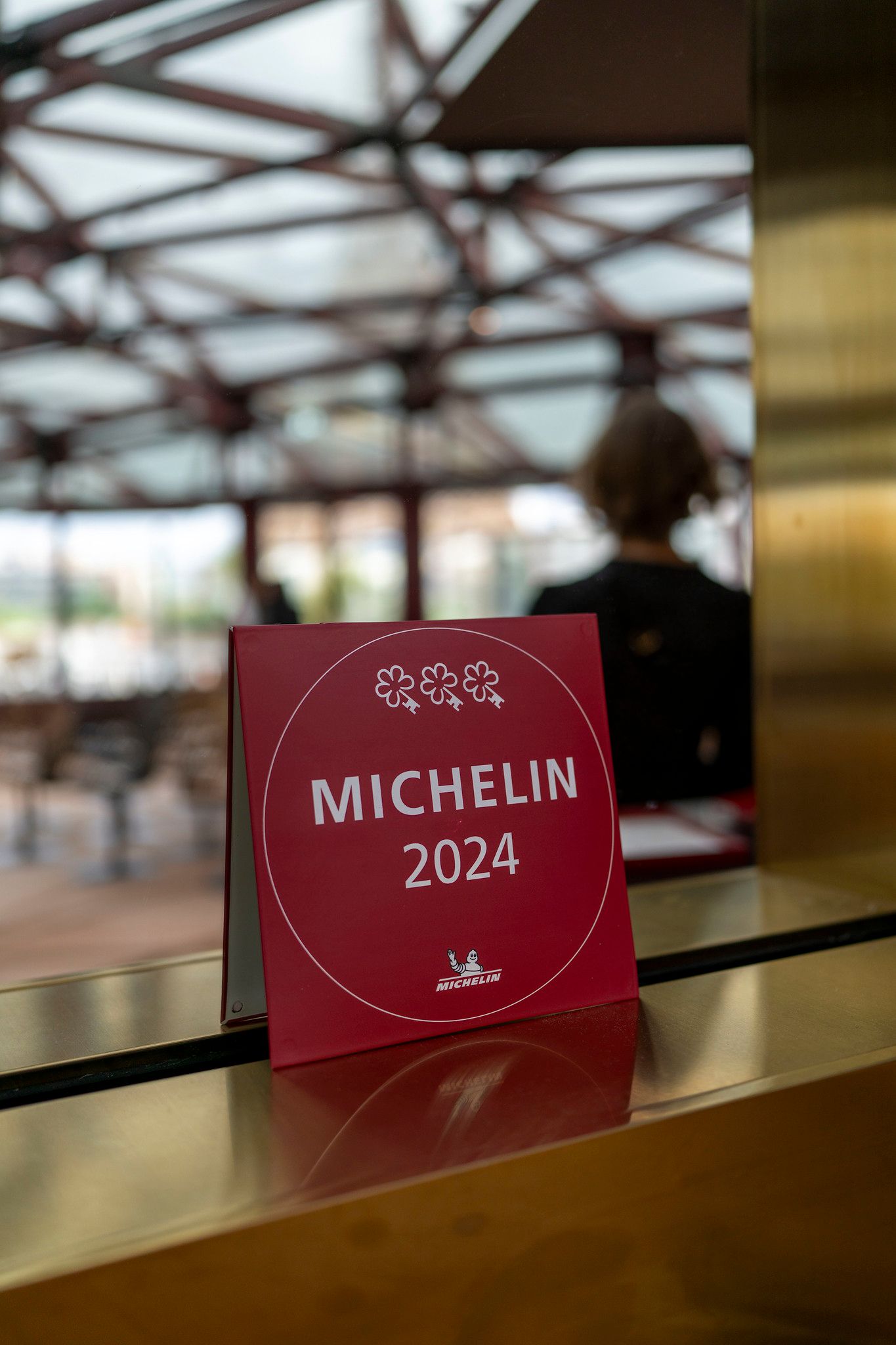
In April 2024, the Michelin Guide debuted a brand new distinction: the Michelin Key. While the Michelin Star recognizes the most outstanding restaurants in the world, the Michelin Key does the same for outstanding hotels.
Hotels that earn key ratings are the crème de la crème; hotels that excel in design, architecture, service and personality.
A Three Michelin Key hotel promises an extraordinary stay. A Two Key hotel offers an exceptional stay. And finally guests can expect a very special stay at a One Key hotel.
The Michelin Guide today
Many know the Michelin Guide by its iconic red printed format. However, these days, only a handful of popular regions, like France, Italy, Japan, and Spain have physically printed Michelin Guides that can be bought. Nonetheless, the restaurant ratings for other regions can be found in the Michelin Guide’s website or mobile app.

The Michelin Guide has yet to include the Philippines in the list of regions it covers. Perhaps in the future, with the growing number of high-end restaurants and hotels, the group will consider the Philippines.
However, it does include some locations Filipino foodies frequently visit, like Hong Kong, Taiwan, Japan, and Thailand. And thanks to the tireless efforts of its inspectors, you can be sure the food and the hotel stay will truly be memorable.