






 Philippines
Metro Manila
Pasig City lands 3rd in performing divisions at Palarong Pambansa 2024
Philippines
Metro Manila
Pasig City lands 3rd in performing divisions at Palarong Pambansa 2024
Pasig City lands 3rd in performing divisions at Palarong Pambansa 2024


The Pasig City local government greeted the athletes, coaches, and trainers who served as the delegation of the city and part of the representatives of the National Capital Region (NCR) for bagging the third place in the Best Performing Division category in this year’s Palarong Pambansa in Cebu City.
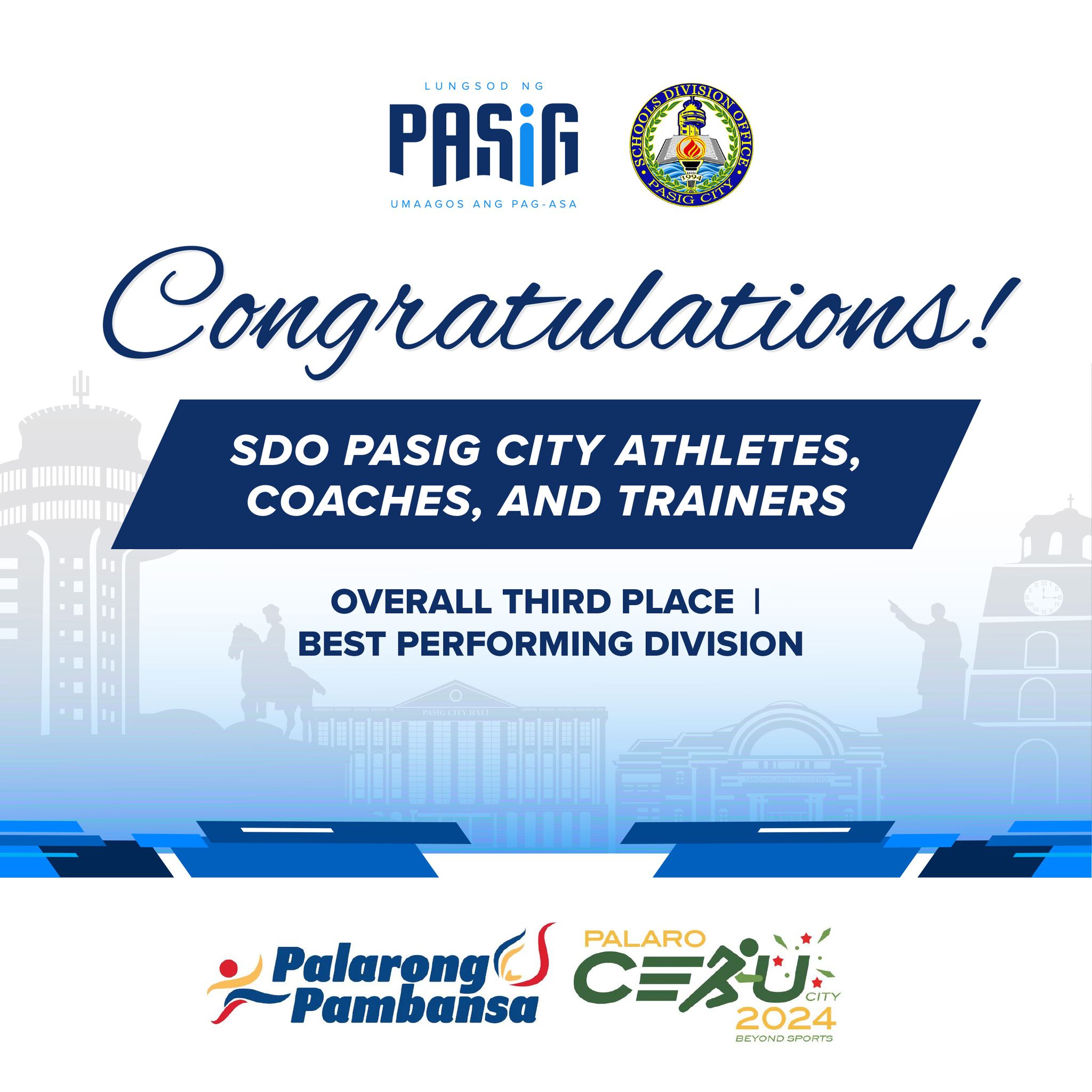
It said that SDO Pasig City was officially awarded during the closing ceremonies on Tuesday, July 16.
“Once again, congratulations to the athletes, coaches, and trainers who represented not only our city but the entire National Capital Region. Pasig City is extremely proud of you!” it stated.
The Department of Education (DepEd) said that aside from Pasig City being in third place in the top-performing category, the City of Manila was cited as first place, Iloilo Province as second, Rizal as fourth, and Quezon City as fifth place.
The city government also extended its greetings to the entire NCR team for winning as the Overall Champion (Elementary/Secondary) of the Palarong Pambansa.
DepEd said that aside from the NCR, the other overall top-performing regions were Region IV-A (Calabarzon), Region VI (Western Visayas), Region XI (Davao Region), and Region VII (Central Visayas).
Meanwhile, the local government said that it is proud of its significant contribution to the NCR's overall championship.