






 Philippines
National
Raise public awareness on 'new normal'—climate change impacts, PBBM says
Philippines
National
Raise public awareness on 'new normal'—climate change impacts, PBBM says
Raise public awareness on 'new normal'—climate change impacts, PBBM says


The massive flooding in Metro Manila and nearby provinces calls for a holistic approach to raise public awareness on the effects of climate change in the Philippines, President Marcos said.
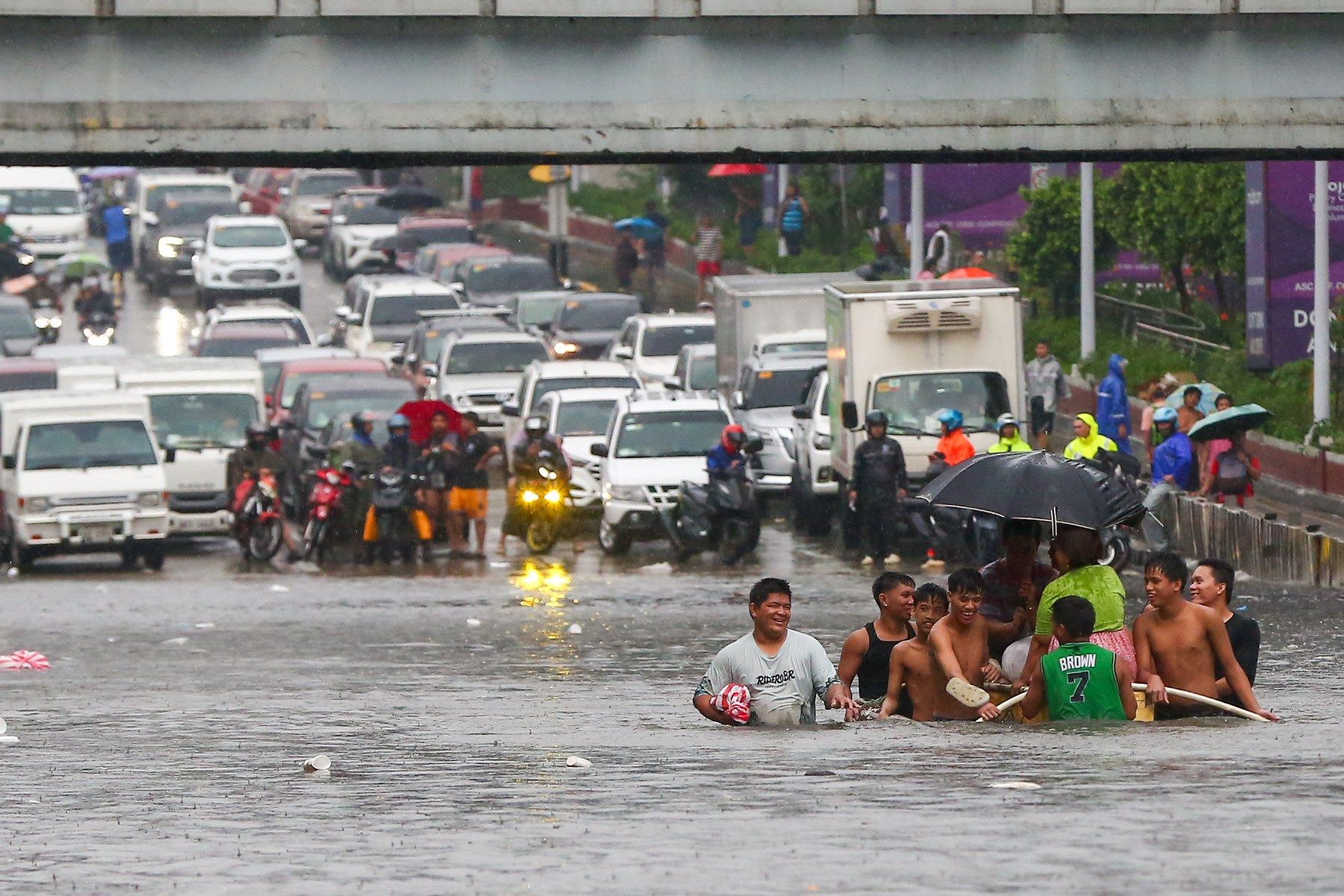
Emphasizing that the impacts of super typhoon Carina and enhanced southwest monsoon or habagat is the "new normal" due to climate change, Marcos ordered the government to intensify efforts to raise awareness on climate change.
“That’s climate change. That’s why we keep talking about it. People have to be conscious about it, especially us who are trying to find ways to mitigate the problem,” Marcos said during a situation briefing in Mauban, Quezon on Friday, July 27.
“We have no choice; we have to do something. We have to learn how to handle the new weather, the new normal,” the President added, referring to how the government should respond to the effects of climate change.
Marcos led the inspection of the Mauban Seawall and Mauban Port in Quezon Province to assess the typhoon's impacts. Officials reported that 986 families or 4,324 individuals were affected by the super typhoon in the province.
During the briefing, the President lauded both the local and national governments for quickly responding to the calamity.
“At the very least, we can say that the provision of relief, shelter and healthcare are ok. We’ve been able to provide that,” he said.
He also recognized the efforts of the national and local governments as they were able to reach isolated areas to deliver help to typhoon victims.