







AI companionship takes shape
Is this the future of friendship?
By Len Amadora


At A Glance
- Introducing "Friend," an AI-powered wearable designed to offer companionship, emotional support, and personal interaction, setting it apart from typical fitness and productivity-focused wearables.
- Describes the inspiration behind Friend, which was created by Schiffmann during solo travels in Japan, aiming to provide companionship rather than just tracking physical activity or productivity.
- Explains Friend's capabilities, including listening and learning from the wearer's experiences, responding to questions, offering spontaneous commentary, and engaging in playful banter.
- Highlights that Friend is powered by Anthropic AI's Claude 3.5 large language model, enabling it to summarize text, answer questions, generate code, and have fast, interactive conversations through a paired smartphone app.
- Details Friend's 15-hour battery life, sleek design, and secure interactions. It communicates via text through a smartphone app, supports iOS devices, requires no cellular service, and encrypts interactions, storing them safely in the cloud.
Wearables have come a long way. It has evolved from a simple step counter into a personal companion promising to revolutionize our lives. However, one wearable, in particular, has sparked interest and controversy as it tries to be more than just a tool or a companion; it wants to be a friend.
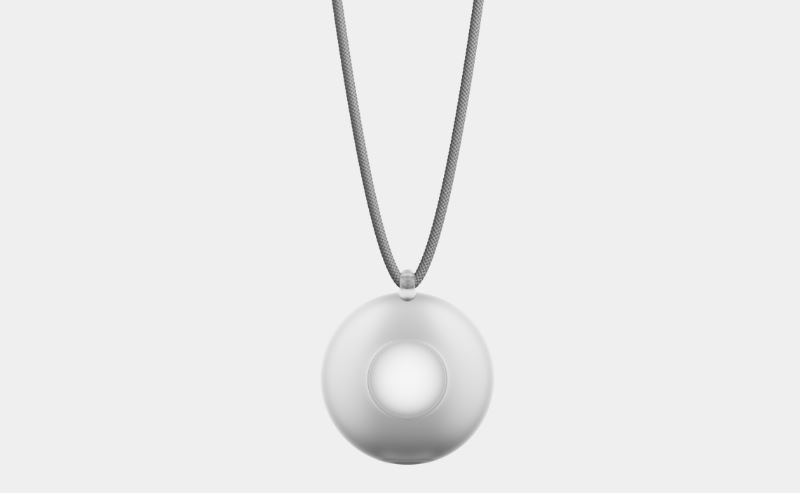
Meet "Friend", an AI-powered companion worn like a simple pendant around the neck. But unlike other wearables that focus on fitness and productivity, Friend is designed to offer companionship, emotional support, and personal interaction. By default, it listens and learns over time creating a special bond with the wearer as it responds and interjects in conversations based on its understanding of the wearer's experiences.
Friend was born out of a desire for a companion when its creator, Schiffmann was traveling solo in Japan. Envisioned to be more than just a gadget for tracking fitness or productivity, Friend was designed with a focus on companionship. Schiffmann wants it to be your best friend.
Unlike true friendships, built on trust, respect and empathy, Friend is a device with a built-in Bluetooth microphone that is always on. It listens to everything happening around the wearer. The wearer/user can simply tap and hold the pendant to ask questions. Typically, an AI system responds to prompts. However, Friend can also send unprompted messages, offering spontaneous commentary on conversations. It can engage in helpful dialogue, provide encouragement, and even playfully participate in good-natured banter or playful insults.
How is this possible? How does it work? The Friend is powered by Anthropic AI's Claude 3.5 large language model. This language model can summarize text, answer questions, extract data, translate text and generate code. It can interpret charts, graphs and transcribe text from images. Claude 3.5 is fast and is capable of conversation, brainstorming ideas, getting answers and analyzing images.
Friend boasts a 15-hour battery life, powering through most of your day. Its sleek, rounded white form fits comfortably around your neck, and a gentle glow signals it is ready. Simply touch the light to start a conversation. Don't expect verbal replies though. Friend communicates seamlessly via text through your paired smartphone app. It currently supports iOS devices. The pendant requires no cellular service and stores nothing. Your interactions are encrypted and safely stored in the cloud, ready for your review. And just like a new pal, Friend learns and grows with each interaction, transforming from acquaintance to confidant.
So, there you have it: Friend, the AI-powered pebble. It is a fascinating blend of technology and companionship, a digital buddy that hangs around your neck. While it is undoubtedly a step forward in AI, the heart of human connection remains irreplaceable. Trust, empathy, vulnerability, shared experiences; someone who offers unconditional love and genuine care - these are the bedrock of true friendship. Something that even the most advanced AI can't fully replicate. But who knows?