

ADVERTISEMENT

Famine imminent in north Gaza, 'unprecedented' crisis: UN

Published Mar 18, 2024 03:31 pm

Rome, Italy - Half of Gazans are experiencing "catastrophic" hunger, with famine projected to hit the north of the territory by May without urgent intervention, a United Nations-backed food security assessment warned on Monday.

"People in Gaza are starving to death right now. The speed at which this man-made hunger and malnutrition crisis has ripped through Gaza is terrifying," the head of the UN's World Food Programme (WFP) Cindy McCain said.
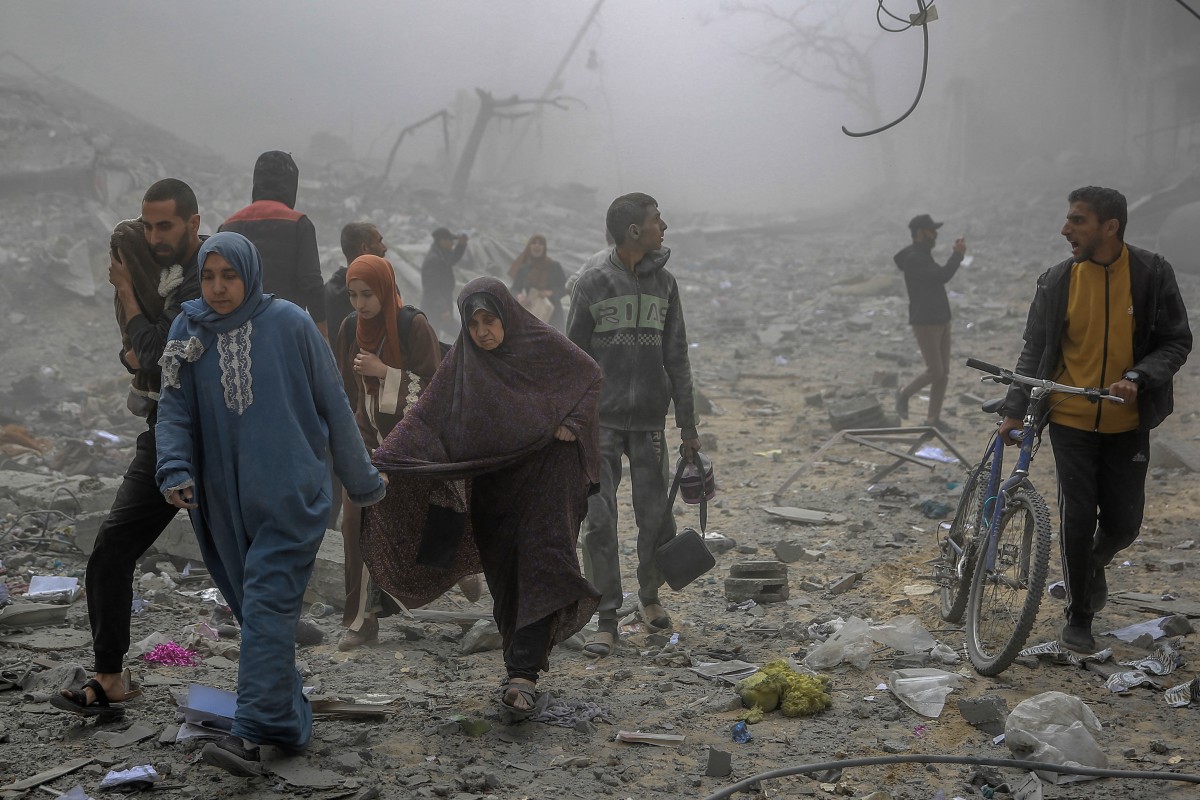
AFP__20240318__34LP8DJ__v2__Preview__TopshotPalestinianIsraelGazaConflict.jpeg

TOPSHOT - Palestinians flee the area after Israeli bombardment in central Gaza City on March 18, 2024, amid the ongoing battles between Israel and the militant group Hamas. (Photo by AFP)

"To have 50 percent of an entire population in catastrophic, near-famine levels, is unprecedented," Beth Bechdol, the deputy director general of the UN's Food and Agriculture Organization (FAO), told AFP.

This amounts to around 1.1 million people "struggling with catastrophic hunger and starvation", according to the WFP.

It added: "This is the highest number of people ever recorded as facing catastrophic hunger" under the Integrated Food Security Phase Classification (IPC) partnership, which published its latest report on Monday.

The situation is particularly dire in the north of the besieged Palestinian territory, where there are about 300,000 people, the UN says -- and where aid agencies have reported huge difficulty distributing food and other aid.

Aid charity Oxfam on Monday accused Israel of continuing to "systematically and deliberately block and undermine" the delivery of aid into Gaza, in violation of international humanitarian law.

The IPC system, conducted by the UN and aid agencies, is used by the UN or governments in deciding whether or not to officially declare a famine.

"Famine is imminent in the northern governorates and projected to occur anytime between mid-March and May 2024," the IPC report said of Gaza.

"All evidence points towards a major acceleration of deaths and malnutrition. Waiting for a retrospective famine classification before acting is indefensible," it said.

'Wasted' children 

A famine is declared when 20 percent of households face an extreme food shortage -- which is the case in Gaza, the UN says -- one in three children are acutely malnourished, and at least two in every 10,000 people die every day of starvation or malnutrition.

Children in Gaza face "extremely critical health conditions... exposing them to high-risk nutritional deterioration", the IPC report said.

According to the WFP, "one in three children below the age of two is now acutely malnourished, or 'wasted'.

"This means they are dangerously thin for their height, which puts them at risk of death."

Arif Husain, WFP's chief economist, warned the final criteria for declaring a famine -- the mortality rate -- would "happen any time from now until the end of May".

FAO's Bechdol said that challenges of data collection and analysis meant it was "possible that famine is already occurring in the north".

Gazans were "turning to alternative sources" for food, including animal feed and "inedible items, purely out of desperation", she told AFP.

Donors have turned to deliveries by air or sea, but air and sea missions are no alternative to land deliveries, UN agencies say.

WFP said meeting basic food needs would require at least 300 trucks to enter Gaza every day and distribute food, especially in the north.

The agency has only managed to get nine convoys into the north since the start of the year, it said.

The latest of these, on Sunday night, involved 18 truckloads of food supplies delivered to Gaza City.

"The convoy, the second to use a coordinated route into Gaza City and the north, delivered some 274 metric tons of wheat flour, food parcels and ready-to-eat rations.

"This route needs to be made available for daily convoys and safe access to the north," it said.

The Rome-based agency said it needed Israel to "provide more entry points into Gaza" and allow use of the Ashdod port to bring in food aid.

The WFP's Husain said: "Our hope is we can still avert a full-fledged famine."

"But the window is shutting and it is shutting very, very fast".


Related Tags

world news
ADVERTISEMENT
.most-popular .layout-ratio{ padding-bottom: 79.13%; } @media (min-width: 768px) and (max-width: 1024px) { .widget-title { font-size: 15px !important; } }

{{ articles_filter_1561_widget.title }}

.most-popular .layout-ratio{ padding-bottom: 79.13%; } @media (min-width: 768px) and (max-width: 1024px) { .widget-title { font-size: 15px !important; } }

{{ articles_filter_1562_widget.title }}

.most-popular .layout-ratio{ padding-bottom: 79.13%; } @media (min-width: 768px) and (max-width: 1024px) { .widget-title { font-size: 15px !important; } }

{{ articles_filter_1563_widget.title }}

{{ articles_filter_1564_widget.title }}

.mb-article-details { position: relative; } .mb-article-details .article-body-preview, .mb-article-details .article-body-summary{ font-size: 17px; line-height: 30px; font-family: "Libre Caslon Text", serif; color: #000; } .mb-article-details .article-body-preview iframe , .mb-article-details .article-body-summary iframe{ width: 100%; margin: auto; } .read-more-background { background: linear-gradient(180deg, color(display-p3 1.000 1.000 1.000 / 0) 13.75%, color(display-p3 1.000 1.000 1.000 / 0.8) 30.79%, color(display-p3 1.000 1.000 1.000) 72.5%); position: absolute; height: 200px; width: 100%; bottom: 0; display: flex; justify-content: center; align-items: center; padding: 0; } .read-more-background a{ color: #000; } .read-more-btn { padding: 17px 45px; font-family: Inter; font-weight: 700; font-size: 18px; line-height: 16px; text-align: center; vertical-align: middle; border: 1px solid black; background-color: white; } .hidden { display: none; }
function initializeAllSwipers() { // Get all hidden inputs with cms_article_id document.querySelectorAll('[id^="cms_article_id_"]').forEach(function (input) { const cmsArticleId = input.value; const articleSelector = '#article-' + cmsArticleId + ' .body_images'; const swiperElement = document.querySelector(articleSelector); if (swiperElement && !swiperElement.classList.contains('swiper-initialized')) { new Swiper(articleSelector, { loop: true, pagination: false, navigation: { nextEl: '#article-' + cmsArticleId + ' .swiper-button-next', prevEl: '#article-' + cmsArticleId + ' .swiper-button-prev', }, }); } }); } setTimeout(initializeAllSwipers, 3000); const intersectionObserver = new IntersectionObserver( (entries) => { entries.forEach((entry) => { if (entry.isIntersecting) { const newUrl = entry.target.getAttribute("data-url"); if (newUrl) { history.pushState(null, null, newUrl); let article = entry.target; // Extract metadata const author = article.querySelector('.author-section').textContent.replace('By', '').trim(); const section = article.querySelector('.section-info ').textContent.replace(' ', ' '); const title = article.querySelector('.article-title h1').textContent; // Parse URL for Chartbeat path format const parsedUrl = new URL(newUrl, window.location.origin); const cleanUrl = parsedUrl.host + parsedUrl.pathname; // Update Chartbeat configuration if (typeof window._sf_async_config !== 'undefined') { window._sf_async_config.path = cleanUrl; window._sf_async_config.sections = section; window._sf_async_config.authors = author; } // Track virtual page view with Chartbeat if (typeof pSUPERFLY !== 'undefined' && typeof pSUPERFLY.virtualPage === 'function') { try { pSUPERFLY.virtualPage({ path: cleanUrl, title: title, sections: section, authors: author }); } catch (error) { console.error('ping error', error); } } // Optional: Update document title if (title && title !== document.title) { document.title = title; } } } }); }, { threshold: 0.1 } ); function showArticleBody(button) { const article = button.closest("article"); const summary = article.querySelector(".article-body-summary"); const body = article.querySelector(".article-body-preview"); const readMoreSection = article.querySelector(".read-more-background"); // Hide summary and read-more section summary.style.display = "none"; readMoreSection.style.display = "none"; // Show the full article body body.classList.remove("hidden"); } document.addEventListener("DOMContentLoaded", () => { let loadCount = 0; // Track how many times articles are loaded const offset = [1, 2, 3, 4, 5, 6, 7, 8, 9, 10]; // Offset values const currentUrl = window.location.pathname.substring(1); let isLoading = false; // Prevent multiple calls if (!currentUrl) { console.log("Current URL is invalid."); return; } const sentinel = document.getElementById("load-more-sentinel"); if (!sentinel) { console.log("Sentinel element not found."); return; } function isSentinelVisible() { const rect = sentinel.getBoundingClientRect(); return ( rect.top < window.innerHeight && rect.bottom >= 0 ); } function onScroll() { if (isLoading) return; if (isSentinelVisible()) { if (loadCount >= offset.length) { console.log("Maximum load attempts reached."); window.removeEventListener("scroll", onScroll); return; } isLoading = true; const currentOffset = offset[loadCount]; window.loadMoreItems().then(() => { let article = document.querySelector('#widget_1690 > div:nth-last-of-type(2) article'); intersectionObserver.observe(article) loadCount++; }).catch(error => { console.error("Error loading more items:", error); }).finally(() => { isLoading = false; }); } } window.addEventListener("scroll", onScroll); });

Sign up by email to receive news.