







Lanao del Sur townsfolk oppose division of municipality
By Bonita Ermac


People in the town of Wao, Lanao del Sur recently gathered at the municipal hall grounds to oppose a proposal by a member of the Bangsamoro Parliament to divide their municipality into two via a legislative measure.
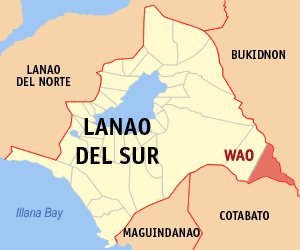
MAP of Lanao del Sur with the town of Wao highlighted.
Proposed Parliament Bill 271 – An Act creating the municipality of Pilintangan in Lanao del Sur – was sponsored by Bangsamoro Parliament member Ali Montaha Datuharon Babao.
Wao has 26 barangays and 11 will be taken out to form a new municipality called Pilintangan.
Mayor Elvino Balicao Jr. said they were surprised to find put that the bill had been posted on social media and first reading had been conducted without consultations with local officials and affected barangays.
Affected barangay captains felt disrespect and said that PB 271 will result into big trouble.
Balicao said there is no discrimination and he treats his constituents fairly.
He asked Babao to withdraw PB 721 as it creates chaos in and will destroy his town.
"Sana maintindihan mo ang sentimento ng taga-Wao, ayaw ng 11 barangay, hindi sila nakonsulta lalo na kami di kami nakonsulta, dapat alam mo iyan, it is illegal (I hope Babao understands the sentiments of the people of Wao, the 11 barangays reject the measure, we were not consulted, Babao should know that, it is illegal)," he said.
Lanao del Sur Vice Gov. Muhammad Khalid Rakiin Adiong said that the provincial government pledged support to the people of Wao in their campaign against the measure.
"Hindi ho tayo papayag, gagawin natin lahat para hindi po maituloy ang BTA bill na ito (We don’t agree and we will do everything we can against this BTA measure)," he said.
Bangsamoro Parliament members Rasul Mitmug and Esmael Suharto, who were present in the rally, calmed protesters and assured that they will oppose the bill.
The 11 barangays affected by the proposal are Balatin, Buntungan, Buot, East Kilikili, Kadingilan, Mimbuaya, Muslim Village, Panang, Park Area, Pilintangan, and Western.