Aquino bans return

of villagers to flood-prone areas
By AGENCE FRANCE PRESSE
December 26, 2011, 7:41pm

MANILA, Philippines — President Benigno S. Aquino III has banned victims of tropical storm “Sendong” from returning to their flood-prone communities in the cities of Cagayan de Oro and Iligan in northern Mindanao, stationing armed police to enforce the measure.

Relief officials said the President’s order will force tens of thousands of flash flood survivors to face life in tent cities for months while safe areas to resettle them are sought.

More than 60,000 people displaced by Sendong are sheltering in government buildings in Cagayan de Oro and Iligan, most of them in schools that reopen after the holidays, National Disaster Risk Reduction Management Council (NDRRMC) Executive Director Benito Ramos said.

“We can’t construct permanent shelters for them immediately. It will take some time. They have to move into tents when schools reopen on January 3,” Ramos said.

Floods unleashed by the storm obliterated entire riverside communities on the north coast of the main southern island of Mindanao before dawn on December 17, many of them populated by poor migrants living in shacks built on sandbars.

The government does not normally build houses for those left homeless by natural disasters, but Aquino was firm on banning victims from returning to the flood-prone areas.

Department of Social Welfare and Development (DSWD) Secretary Corazon “Dinky” Soliman said Philippine Army engineering units were rushing to build temporary bunkhouses and latrines in Cagayan de Oro.

The same would be done in Iligan once the local government finds a suitable relocation area, she added.

“The target is to have transition shelters and bunkhouses in the first two weeks of January so families can feel some personal space that they can’t get at evacuation centers,” she told ABS-CBN television.

But she conceded the temporary buildings would be unlikely to be able to accommodate all the displaced, so others would have to stay in tents.

Ramos said finding a permanent resettlement site in Iligan would not be easy, as the area was “mainly mountainous.”

He said the national government had no definite timetable for building permanent shelters, but he expects them to be ready in six months.

Twenty more fatalities, including a headless body of a girl, were fished out from the sea bringing the death toll to 1,249 as Army troops continued to sweep remote villages devastated by the storm and Navy personnel searched the sea.

Brig. Gen. Roland Amarille, who is in charge of supervising troops engaged in retrieval operations for victims of Sendong in Iligan City, said 20 more bodies were recovered on Monday. Of these, 16 were found floating in the sea at Maigo and Kulambugan towns in Lanao Del Norte, while four of the bodies were recovered off the waters of Plaridel town, Lopez Jaena town, and Oroquieta City in Misamis Occidental.

Local officials have reported more than 1,000 people missing, a figure that Ramos, who also supervises the corpse retrieval operation by military units, considers possibly overstated.

Many of the dead remain unidentified and unclaimed at overflowing local mortuaries.

The focus of the search has shifted to the sea, where bloated bodies lie scattered in debris-strewn Iligan Bay as well as Macajalar Bay near Cagayan de Oro.

“The search is tapering off. The problem is there could still be bodies buried under the uncollected debris in the cities,” Ramos said, adding the public works ministry was repairing shattered roads and bridges while military reservists had been called up to help clear away mud and other debris.

The United Nations on Humanitarians Affairs has estimated that $9.2 million (around P400 million) is needed to properly manage the evacuation centers being used by those displaced in Cagayan de Oro and Iligan.

The amount was determined by the UN in its Emergency Revision of the 2012 Humanitarian Action Plan considering that most evacuation centers in the affected areas lack camp management committees to monitor needs and gaps and coordinate the delivery of relief goods.

At present, 63 evacuation centers in the two ravaged areas host 42,733 persons.

The UN said the information on the profile of displaced people is limited while crowded conditions inside many camps pose risks to health, safety and security of residents.

To ensure good health and proper nutrition to those affected by the calamity, $2 million (P87 million) is needed. The amount will be used to treat those injured, provide psycho-social support to affected population, and establish timely nutrition surveillance and screening.

At least 22 health facilities — mostly village health stations and birthing centers — were damaged as a result of the floods. Health services are being provided by local authorities and civil society organizations in most of the evacuation centers, however medical supplies are limited.

In addition, $8.5 million (P369.6 million) is required to provide immediate life saving and life-sustaining food security assistance to nearly a quarter of a million beneficiaries for 3 months from December 2011 to March 2012.

For child protection and the prevention of sexual- and gender-based violence, $1.7 million (P74 million) is required.

On the other hand, for early recovery, including the clearing of debris and carcasses, $1.06 million (P46 million) is required primarily to reduce health risks.

While $1.4 million (P6 million) is needed for logistics and coordination. This is meant to augment the humanitarian community’s capacity to provide uninterrupted delivery of life-saving relief assistance to most affected population an a rapid manner

Finally, roughly $354,000 (P15.4 million) is needed to facilitate continued access of at least half of the estimated 34,383 school-aged children to safe and secure environment in the cities of Cagayan de Oro and Iligan.

Genting Hong Kong Ltd. has raised HK$3 million (R16.77 million) to be donated to victims of ravaged tropical storm “Sendong” in northern Mindanao and some parts of the Visayas.

The donation was confirmed on Christmas Day by Genting Chairman and CEO Tan Sri Lim Khok Thay, who initiated the companywide donation drive.

“These donations came from Genting Hong Kong, Star Cruises Asia, and Norwegian Cruise Line,” said Tan.

In Malacañang, Deputy Presidential Spokesperson Abigail Valte thanked volunteers and government workers who have extended assistance to the victims and, at the same time, said that “as long as the relief is needed, it will be sent.”

The United Nations Population Fund (UNFPA) said it is mobilizing funds and supplies to address the needs of more than 12,000 pregnant and lactating women in the affected areas.

In addition, the agency said it will distribute clean delivery kits to some 8,500 pregnant women to ensure safe deliveries. Each kit includes soap, a clean razor blade and string to cut and tie the umbilical cord, a plastic sheet and a blanket to protect the baby from hypothermia.

The UNFPA disclosed that nearly 35,000 hygiene kits will be distributed to affected women and girls, including 4,200 mothers who are breastfeeding, in and around the evacuation centers.

Turkish groups led by the ICAD Foundation, based in Manila, also distributed 30,000 kilos of rice in 16 evacuation centers.

Two other Turkish groups – the Pacific Dialogue Foundation (PDF) and Kimse Yok Mu Foundation, based in Istanbul – were involved in the donations.

In Zamboanga City, the Filipino-Turkish Tolerance School donated clothes, pieces of furniture, and relief goods through Mayor Celso Lobregat.

A “cash-for-work” program is also being prepared by government agencies with the DSWD taking the lead.

Sec. Soliman said the program will start immediately in an effort to alleviate the hardship of Sendong victims particularly in Cagayan de Oro and Iligan.

It will be a short-term intervention program through the provision of cash grants in exchange of community works and services rendered by the internally displaced persons (IDPs).

She said “it is one of the ways of the healing process, enabling the IDP’s to help and capacitate themselves, and not mainly rely on the assistance given to them.

Meanwhile, fishermen joined Philippine navy sailors, police and firefighters in an ever wider search for bodies from entire villages swept away in one of the country’s worst flash floods.

More bodies have washed ashore, pushing the death toll to more than 1,249.

“We’ve stopped counting the missing. There are no accurate figures,” Ramos said. “Those recovered, we don’t know who they are. We have a system in place so that families can claim them later, based on fingerprints and dental records.”

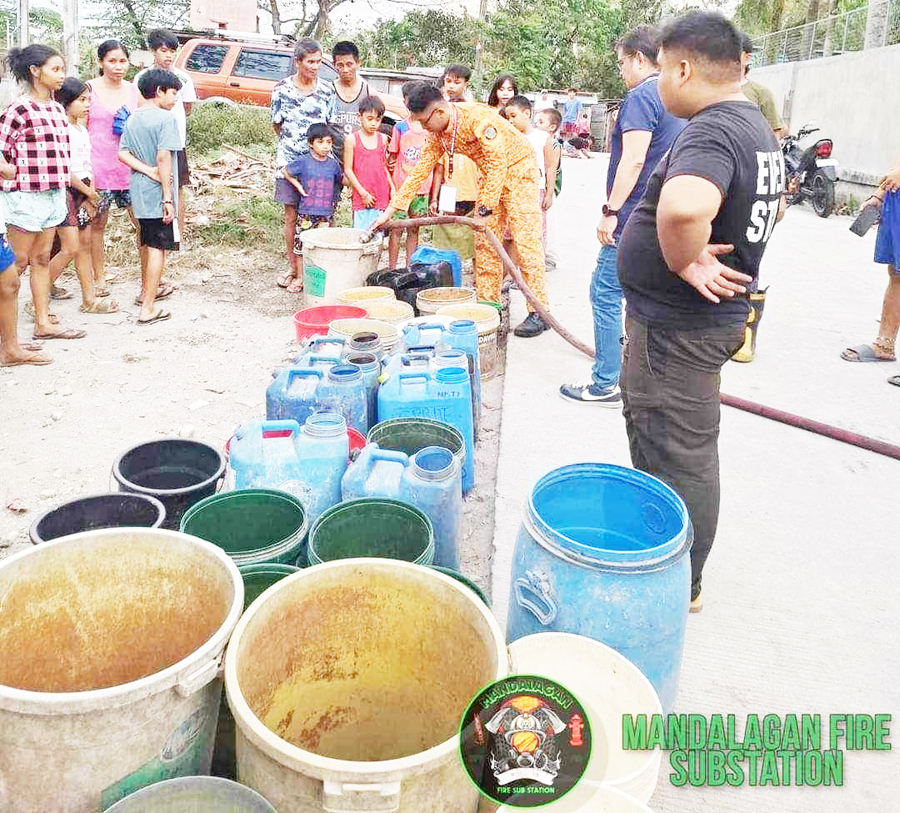
A lack of running water was still a major concern. Many shelters had poor sanitation with open drainage and defecation sites, said Ariel Balofinos, Mindanao manager for Save the Children aid agency.

“Children in particular are susceptible to health threats because immune systems are weak,” he said, adding that many youngsters were also traumatized. (With reports from Roy C. Mabasa, AP, Mike U. Crismundo, Yul Malicse, Madel R.Sabater, and Edd K. Usman)

Comments