







Study finds potential source of antibiotics in bat guano


Researchers have discovered two new species of Streptomyces spp. in a bat guano also known as "bat poop" collected from the Cabalyorisa Cave, Mabini in Pangasinan that may offer a sustainable source of antibiotics.
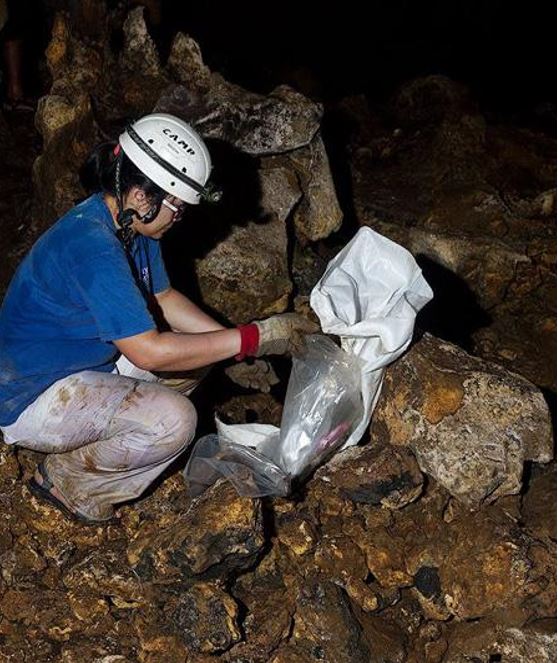
In a statement on Monday, April 8, a study conducted by a member of the Department of Science and Technology-National Research Council of the Philippines (DOST-NRCP) Dr. Marian P. De Leon said these bacteria found are called Streptomyces spp, which are classified as "novel species."
Based on findings of the study, bat guano — "cave walls and rock formations and even bat rinsing" are potential sources of microorganisms that produce antibiotics.
"These identified species from bat guano in Cabalyorisa Cave are not yet seen from any other sources," the statement reads.
It said the streptomyces is known for producing many antibiotics that provides a sustainable and cheaper alternative used in human and veterinary medicine.
The study, meanwhile, mentioned that prior to sampling, a Wildlife Gratuitous Permit (WGP) had been granted by the Department of Environment and Natural Resources (DENR).
"Guano samples were collected from two large chambers of the Cabalyorisa Cave, with seven sites in each chamber," the statement said.
Acoustic monitoring with bat detectors, ocular surveys, and live trapping with mist nets were also used in the study to identify different species of bats.
The council pointed out that these bacteria, viruses, fungi, and parasites become "resistant" to existing antimicrobial medicines which leads to a crisis in access to new and existing vaccines, diagnostics, and medicines.
From there, the group called for new sources of antibiotics as reflected in the concern raised by the World Health Organization (WHO) about the "pipeline" and "access crisis" for antimicrobials.
It explained that when antimicrobial medications become ineffective, infections become difficult or impossible to treat, increasing the risk of disease transmission, severe sickness, disability, and death.
“There is an inadequate research and development pipeline in the face of rising levels of AMR and urgent need for additional measures to ensure equitable access to new and existing vaccines, diagnostics, and medicines,” it said.
"The research reports the near-complete genomes of streptomyces sp. strains AC1-42T and AC1-42W for genome-assisted discovery of novel bioactive secondary metabolites with potential antibacterial, antitumor, or antiviral properties," the study added.