







Obiena to be hailed as 'Sports Idol' in returning Siklab Awards


At A Glance
- Obiena, the World No. 2 pole vaulter, is the hands down winner of the "Sports Idol" plum in the award rites organized by the Philippine Sports Commission and the Philippine Olympic Committee (PSC-POC) Media Group.
MANILA, Philippines – Asian pole vault king Ernest John “EJ” Obiena will share the spotlight with 57 other young athletes from 33 sports during the third Siklab Youth Sports Awards on Monday, Dec. 4 at the Market! Market! Activity Center in Taguig City.
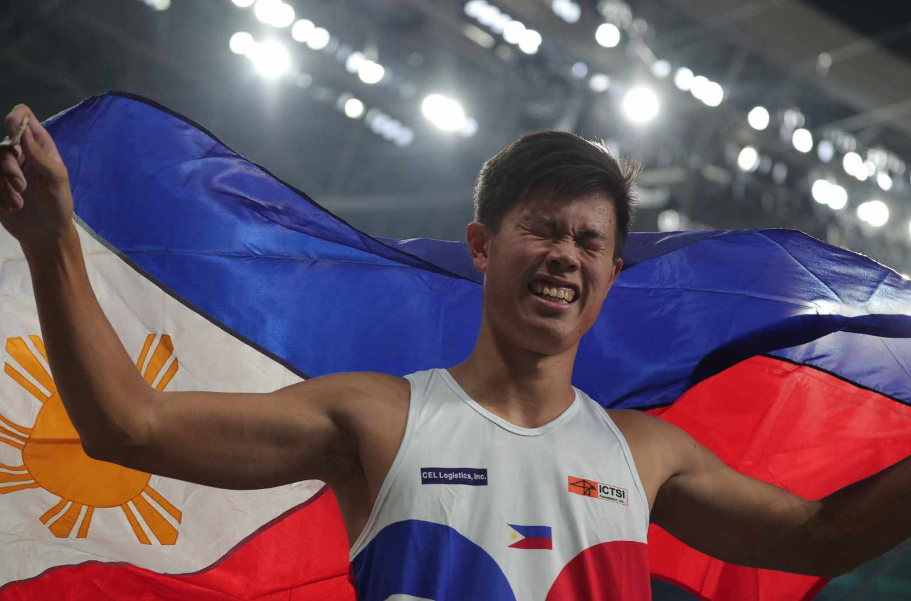
Obiena, the World No. 2 pole vaulter, is the hands down winner of the “Sports Idol” plum in the award rites organized by the Philippine Sports Commission and the Philippine Olympic Committee (PSC-POC) Media Group.
The Siklab Awards will likewise present a special citation to the Youth Football League and the Davao Aguilas Football Club, which is supported by Quezon City 1st District Rep. Juan Carlos "Arjo" Atayde.
Additionally, the Para Youth Star award will be given to Asean Para Games double gold medalist Ariel Alegarbes.
Sports patron Sen. Christopher “Bong” Go will also be recognized with the Godfather Award in the event backed by MVP Sports Foundation, Smart/PLDT, CEL Logistics, JC, NLEX, Pacquiao 3-in-1 Coffee, Blue Hydra and Giligan’s with Market! Market! and Ayala Malls as venue partners.
Joining the bemedalled Obiena in the gala for the finest Filipino junior athletes 18 years old and younger are tennis star Alex Eala, World Combat Games champion Alyssa Kylie Mallari of muay thai, weightlifting world youth champion Prince Keil Delos Santos, gymnast Karl Eldrew Yulo — an Asian championship junior silver medalist — and Southeast Asian Games gold medalists Kira Ellis and Matthew Hermosa, along with 18 others.
They will be receiving the Go for Gold Siklab Young Heroes awards along with SEA Games silver medalist Gennah Malapit of athletics, boxer Ronel Suyom, golfer Rianne Malixi, gymnasts Charlie Manzano and Breanna Labadan, jiu-jitsu’s Santino Luzuriaga and Bianca Bustamante of motor sports.
Meanwhile, feted with the Burlington Super Kids Award will be world champions Joseph Anthony Godbout of modern pentathlon, pitcher Erica Arnaiz of softball, muay’s Jan Brix Ramiscal and Asian championships bronze medalist Jasmine Althea Ramilo of gymnastics, as well as wrestling’s Lucho Aguilar, Trisha Mae Del Rosario of obstacle sports and karate’s Sebastian Niel Mañalac.
Also sharing the limelight are Rising Stars awardees Christian Gian Karlo Arca and Mark Jay Bacojo of chess, jiu-iitsu’s Aielle Aguilar, Princess Reuma, Yanna Marte, skateboarding’s Mazel Alegado and fencer Jodie Danielle Tan.
The awards night was previously held in 2018 and 2019, before being shelved due to the COVID-19 pandemic.
The 28-year-old Obiena has had a banner year highlighted by a gold medal finish in the 19th Asian Games in Hangzhou, China, where he also set a new Asian Games record of 5.90 meters. He holds an Asian record of six meters.
He also bolstered his bid to become this year’s “Sports Idol” by securing a slot to the 2024 Paris Olympics following his feat in the Stockholm Diamond League-Bauhaus Galan in Sweden last July. There, Obiena cleared the entry standard of 5.82 meters and ended up at second place overall to punch his ticket to Paris.