

ADVERTISEMENT

Nearly 12,000 homes are flooded in a Russian region bordering Kazakhstan as water levels keep rising

Published Apr 11, 2024 11:55 pm

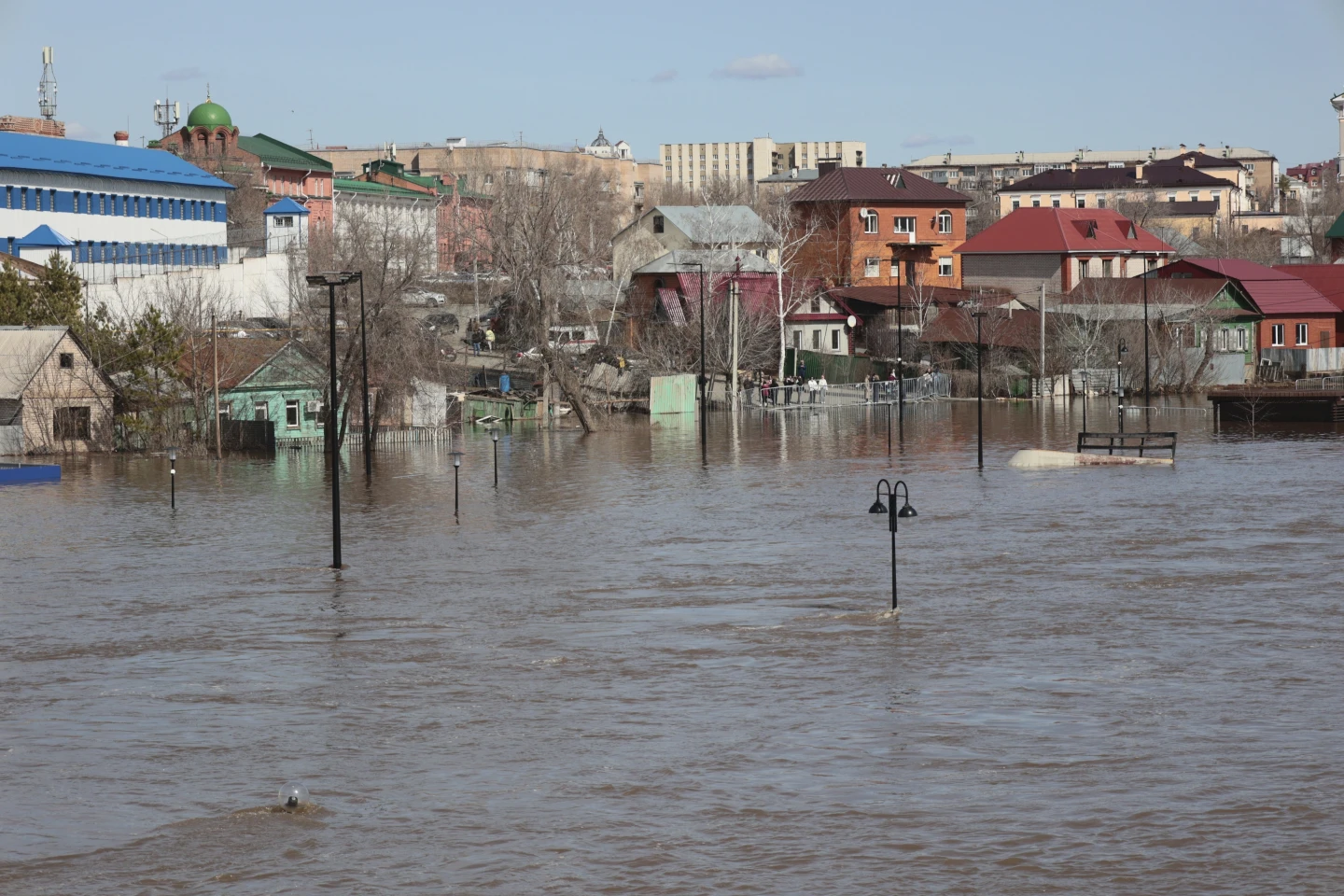
MOSCOW (AP) — Nearly 12,000 houses have been flooded in a Russian region bordering Kazakhstan as water levels in the Ural River keep rising and threatening more deluge, authorities said Thursday.
download.webp
Local residents stand at barriers watching a flooded area in Orenburg, Russia, on Thursday, April 11, 2024. Russian officials are scrambling to help homeowners displaced by floods, as water levels have risen in the Ural River. The river's water level in the city of Orenburg was above 10 meters (33feet) Wednesday, state news agency Ria Novosti reported, citing the regional governor (AP Photo).

The floods sparked evacuations of thousands in the Orenburg region, located some 1,200 kilometers (745 miles), southeast of the capital of Moscow after a dam on the river burst last week under the pressure of surging waters. Local authorities have declared a state of emergency in the region.

In a televised videoconference with President Vladimir Putin, Orenburg governor Denis Pasler reported that a total of 11,972 houses are flooded, as well as 16 state medical facilities. Additionally, 3,600 houses — home to some 20,000 people — are in danger of imminent flooding as water levels continue to rise.

The situation is most dire in the city of Orenburg, the administrative capital of the region, Pasler said, where the water level in the Ural River reached a historical peak of 10.87 meters (about 36 feet).

A total of 7,800 people have been evacuated from the flooded areas so far, he added. The overall damage from the floods is estimated to exceed 40 billion rubles ($428 million).

Further east along the Kazakhstan border, authorities in the regions of Kurgan and Tyumen are also preparing for possible floods as water levels rise in local rivers.

Floods have also hit Kazakhstan, where authorities have declared a state of emergency in 10 out of 17 regions of the country, according to Russia’s state news agency Tass. As of Thursday, the state of emergency was still in place in eight regions, Tass reported. Since March, more than 98,000 people have been evacuated from the affected areas there.

Footage from the flooded regions in Kazakhstan showed water gushing down streets, vast fields covered with water and dozens of houses partially submerged. Kazakh President Kassym-Jomart Tokayev has called the floods “a natural disaster ... the likes of which have not been seen for many years.”

“This is, perhaps, the biggest disaster in terms of its scale and consequences in over 80 years,” he said last week.

Related Tags

WORLDNEWS
ADVERTISEMENT
.most-popular .layout-ratio{ padding-bottom: 79.13%; } @media (min-width: 768px) and (max-width: 1024px) { .widget-title { font-size: 15px !important; } }

{{ articles_filter_1561_widget.title }}

.most-popular .layout-ratio{ padding-bottom: 79.13%; } @media (min-width: 768px) and (max-width: 1024px) { .widget-title { font-size: 15px !important; } }

{{ articles_filter_1562_widget.title }}

.most-popular .layout-ratio{ padding-bottom: 79.13%; } @media (min-width: 768px) and (max-width: 1024px) { .widget-title { font-size: 15px !important; } }

{{ articles_filter_1563_widget.title }}

{{ articles_filter_1564_widget.title }}

.mb-article-details { position: relative; } .mb-article-details .article-body-preview, .mb-article-details .article-body-summary{ font-size: 17px; line-height: 30px; font-family: "Libre Caslon Text", serif; color: #000; } .mb-article-details .article-body-preview iframe , .mb-article-details .article-body-summary iframe{ width: 100%; margin: auto; } .read-more-background { background: linear-gradient(180deg, color(display-p3 1.000 1.000 1.000 / 0) 13.75%, color(display-p3 1.000 1.000 1.000 / 0.8) 30.79%, color(display-p3 1.000 1.000 1.000) 72.5%); position: absolute; height: 200px; width: 100%; bottom: 0; display: flex; justify-content: center; align-items: center; padding: 0; } .read-more-background a{ color: #000; } .read-more-btn { padding: 17px 45px; font-family: Inter; font-weight: 700; font-size: 18px; line-height: 16px; text-align: center; vertical-align: middle; border: 1px solid black; background-color: white; } .hidden { display: none; }
function initializeAllSwipers() { // Get all hidden inputs with cms_article_id document.querySelectorAll('[id^="cms_article_id_"]').forEach(function (input) { const cmsArticleId = input.value; const articleSelector = '#article-' + cmsArticleId + ' .body_images'; const swiperElement = document.querySelector(articleSelector); if (swiperElement && !swiperElement.classList.contains('swiper-initialized')) { new Swiper(articleSelector, { loop: true, pagination: false, navigation: { nextEl: '#article-' + cmsArticleId + ' .swiper-button-next', prevEl: '#article-' + cmsArticleId + ' .swiper-button-prev', }, }); } }); } setTimeout(initializeAllSwipers, 3000); const intersectionObserver = new IntersectionObserver( (entries) => { entries.forEach((entry) => { if (entry.isIntersecting) { const newUrl = entry.target.getAttribute("data-url"); if (newUrl) { history.pushState(null, null, newUrl); let article = entry.target; // Extract metadata const author = article.querySelector('.author-section').textContent.replace('By', '').trim(); const section = article.querySelector('.section-info ').textContent.replace(' ', ' '); const title = article.querySelector('.article-title h1').textContent; // Parse URL for Chartbeat path format const parsedUrl = new URL(newUrl, window.location.origin); const cleanUrl = parsedUrl.host + parsedUrl.pathname; // Update Chartbeat configuration if (typeof window._sf_async_config !== 'undefined') { window._sf_async_config.path = cleanUrl; window._sf_async_config.sections = section; window._sf_async_config.authors = author; } // Track virtual page view with Chartbeat if (typeof pSUPERFLY !== 'undefined' && typeof pSUPERFLY.virtualPage === 'function') { try { pSUPERFLY.virtualPage({ path: cleanUrl, title: title, sections: section, authors: author }); } catch (error) { console.error('ping error', error); } } // Optional: Update document title if (title && title !== document.title) { document.title = title; } } } }); }, { threshold: 0.1 } ); function showArticleBody(button) { const article = button.closest("article"); const summary = article.querySelector(".article-body-summary"); const body = article.querySelector(".article-body-preview"); const readMoreSection = article.querySelector(".read-more-background"); // Hide summary and read-more section summary.style.display = "none"; readMoreSection.style.display = "none"; // Show the full article body body.classList.remove("hidden"); } document.addEventListener("DOMContentLoaded", () => { let loadCount = 0; // Track how many times articles are loaded const offset = [1, 2, 3, 4, 5, 6, 7, 8, 9, 10]; // Offset values const currentUrl = window.location.pathname.substring(1); let isLoading = false; // Prevent multiple calls if (!currentUrl) { console.log("Current URL is invalid."); return; } const sentinel = document.getElementById("load-more-sentinel"); if (!sentinel) { console.log("Sentinel element not found."); return; } function isSentinelVisible() { const rect = sentinel.getBoundingClientRect(); return ( rect.top < window.innerHeight && rect.bottom >= 0 ); } function onScroll() { if (isLoading) return; if (isSentinelVisible()) { if (loadCount >= offset.length) { console.log("Maximum load attempts reached."); window.removeEventListener("scroll", onScroll); return; } isLoading = true; const currentOffset = offset[loadCount]; window.loadMoreItems().then(() => { let article = document.querySelector('#widget_1690 > div:nth-last-of-type(2) article'); intersectionObserver.observe(article) loadCount++; }).catch(error => { console.error("Error loading more items:", error); }).finally(() => { isLoading = false; }); } } window.addEventListener("scroll", onScroll); });

Sign up by email to receive news.