







Support farmers, ensure food security


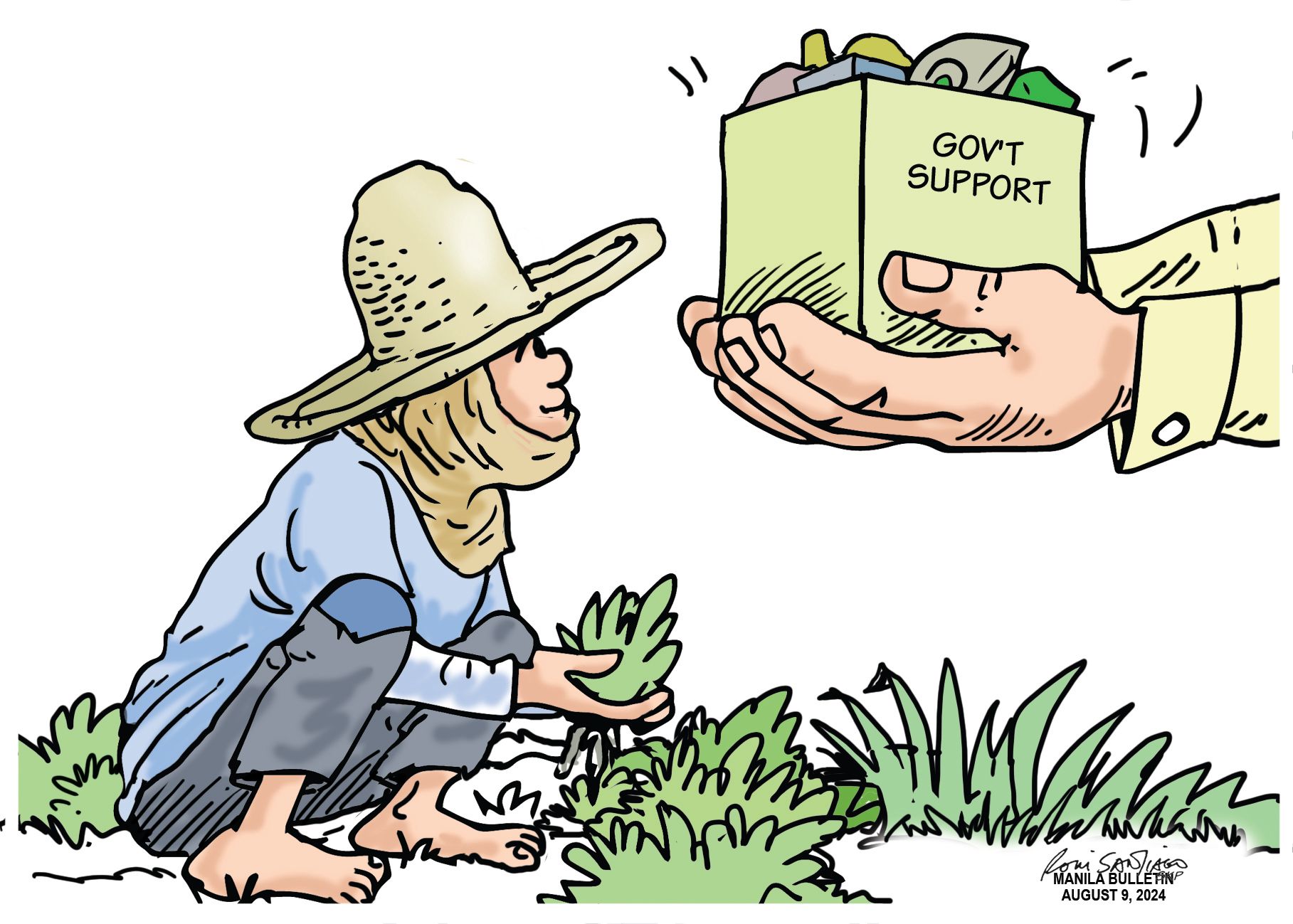
Farmers are the backbone of our food system, playing a pivotal role in ensuring food security.
This is why every 6th of August is marked worldwide as Farmworkers’ Appreciation Day. Sad to state, however, the day is observed without much fanfare.
In the Philippines, where agriculture is a significant part of the economy, the contributions of farmers cannot be overstated. Farmworkers are at the heart of food production. They cultivate the crops and raise the livestock.
Rain or shine, they toil in the farms from dawn to dusk to help ensure we have sufficient food on the table. Their efforts ensure that markets are stocked with fresh produce, grains, and other essential food items. They provide the essential produce that feeds millions of Filipinos daily. Without their hard work, food scarcity would be a much more pressing issue.
However, despite their critical role, many farmers face numerous challenges that hinder their productivity and sustainability.
For all their contributions to food security, it is incumbent upon the government to extend full support to our farmworkers. Supporting the Filipino farmers requires a multifaceted approach that addresses their needs holistically.
To bolster the agricultural sector, both the government and the private sector must take proactive steps to help farmers.
Extending financial assistance and subsidies is one. Providing financial aid and subsidies can help farmers invest in better seeds, fertilizers, and equipment. This support can increase their productivity and reduce the financial burden they often face.
Another assistance may be in the form of infrastructure development. Improving rural infrastructure, such as roads, irrigation systems, and storage facilities, can significantly enhance farmers’ ability to transport and store their produce, reducing post-harvest losses.
Providing farmers access to markets is also crucial. Creating more opportunities for farmers to sell their products directly to consumers or through cooperatives can ensure they receive fair prices for their produce. This can be facilitated by establishing farmers’ markets and supporting farm-to-table initiatives.
Farmers likewise need training and education support. Providing training on modern farming techniques, sustainable practices, and financial management can empower farmers to improve their yields and manage their resources more effectively.
Investing in agricultural research is another way for the government to assist farmers as this could lead to the development of new crop varieties that are more resilient to pests and climate change, ensuring stable food production.
With the crucial role of farmers in the country’s food security, President Marcos’ assurance that farmers will not be left behind in the government’s plans to modernize the agricultural sector is a welcome development.
“We will never forsake you. As we strive to modernize the agriculture sector, we have not forgotten you and we will not leave any of our Filipino farmers behind,” Marcos assured farmers on Aug. 7, a day after the global observance of Farmworkers’ Appreciation Day.
Incidentally, the observance of Farmworkers’ Appreciation Day was inspired by migrant Filipino farmers in California, United States, who stood up to fight for workers’ rights in the mid-1960s.
Our farmers need all the support to continue their vital work. Strengthening the agricultural sector is not just about improving food security; it’s about empowering the farmworkers — the very people who feed us.
Together, we can build a more resilient and sustainable food system for all.